EU Blue Card for Highly Qualified Professionals
ONE PLUS helps highly qualified professionals obtain an EU Blue Card in Wroclaw and throughout Poland. We check whether the role qualifies, review the employment contract and salary, assess the applicant’s degree or professional experience, coordinate the employer’s documents and prepare the electronic application through MOS 2.0.
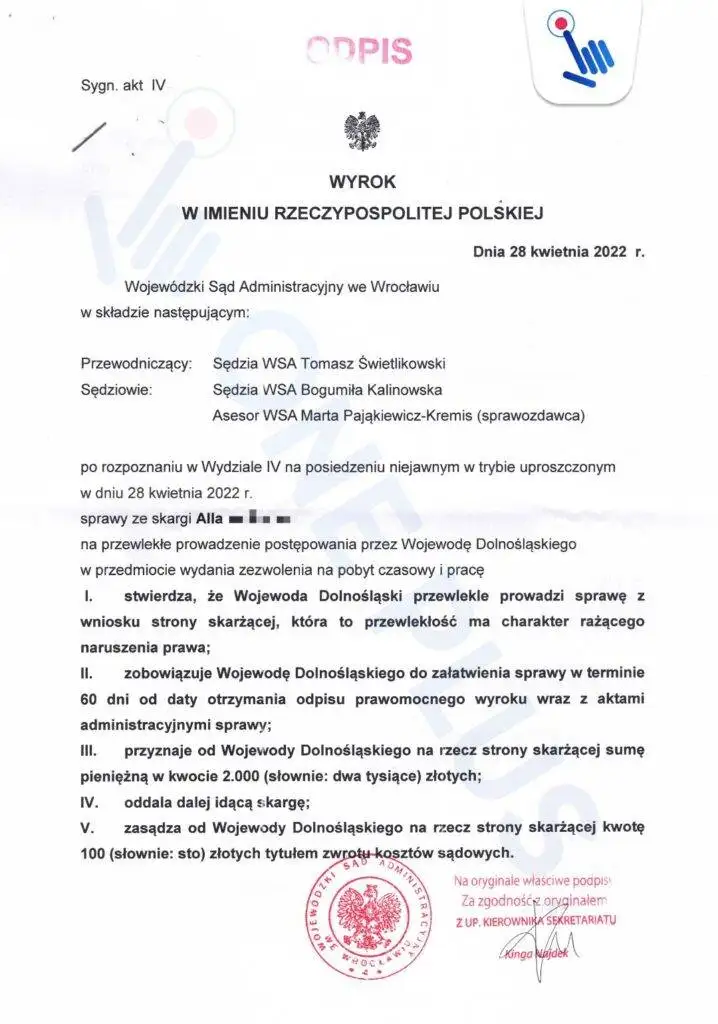
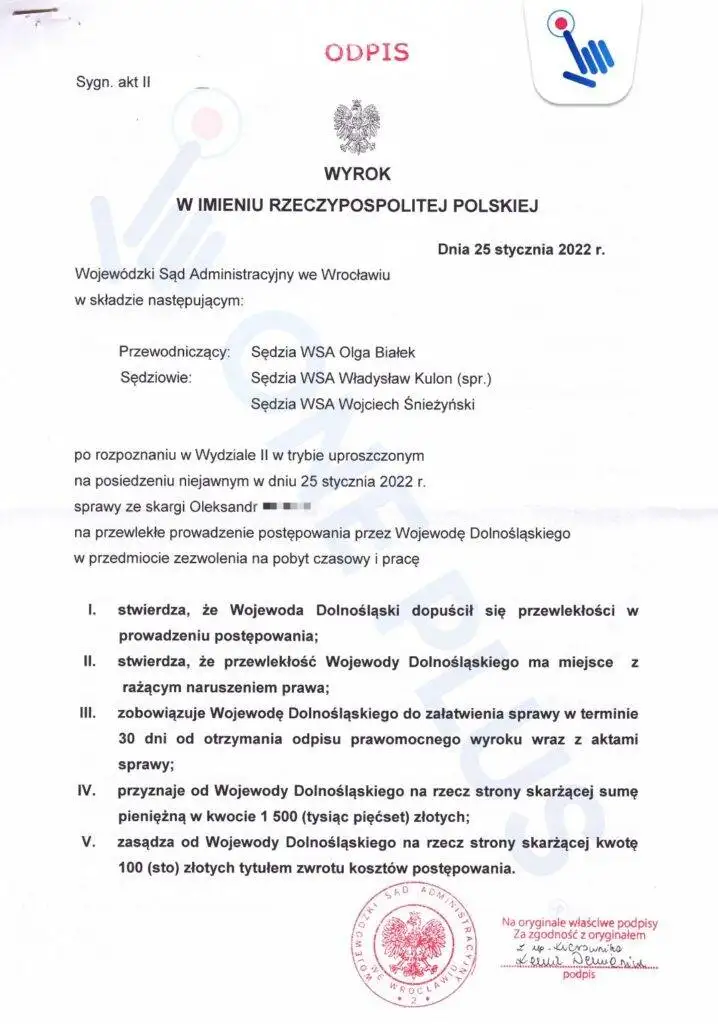
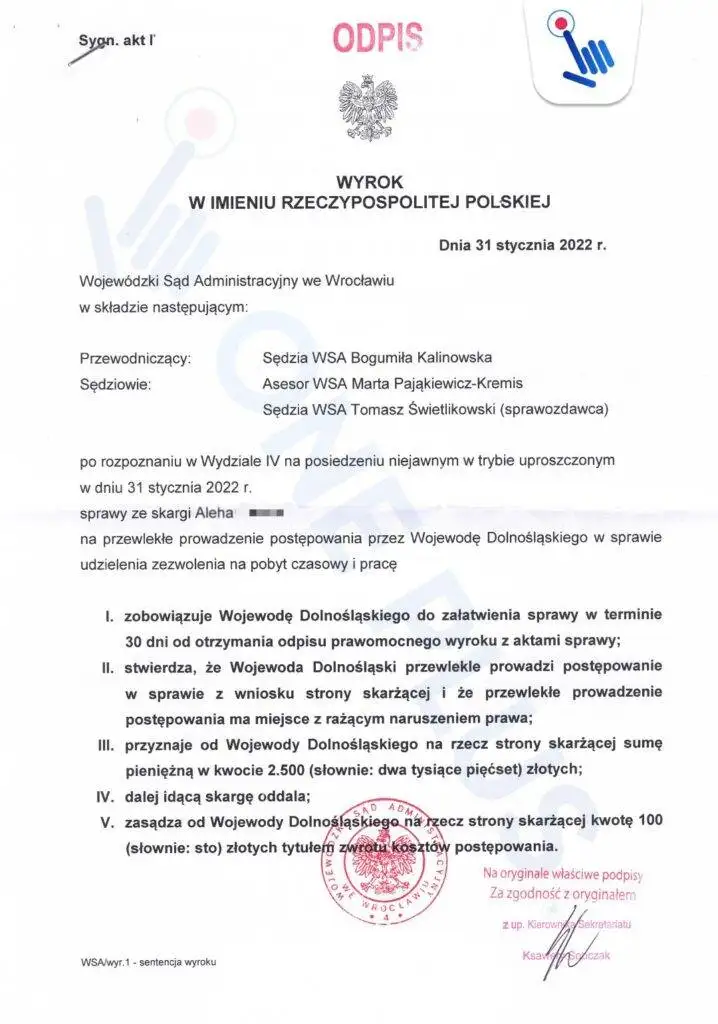
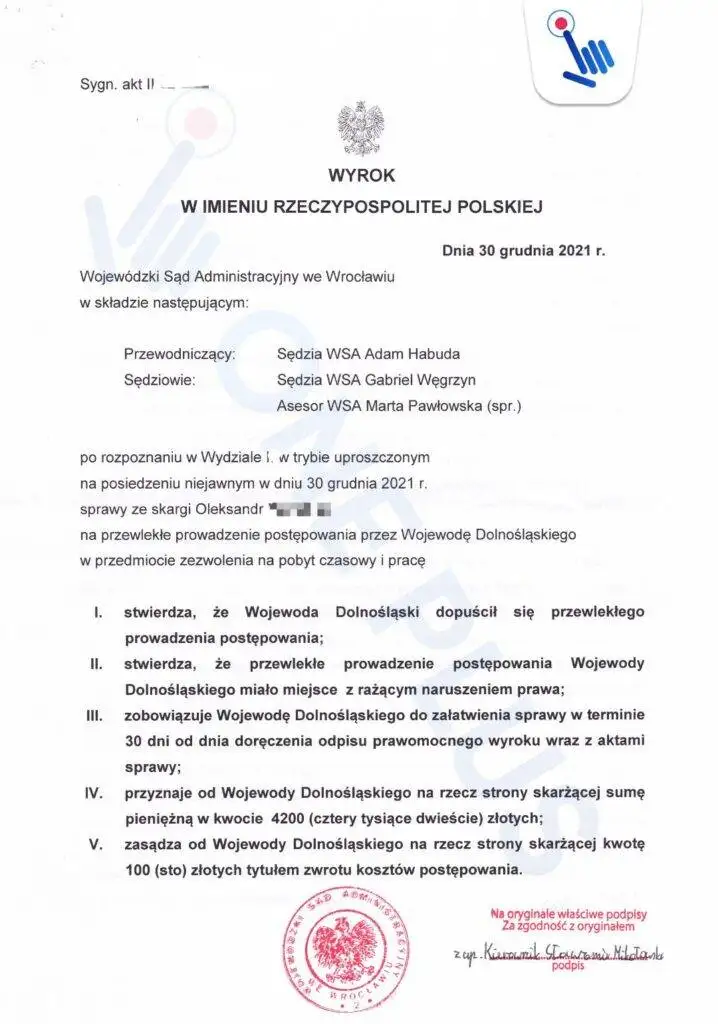
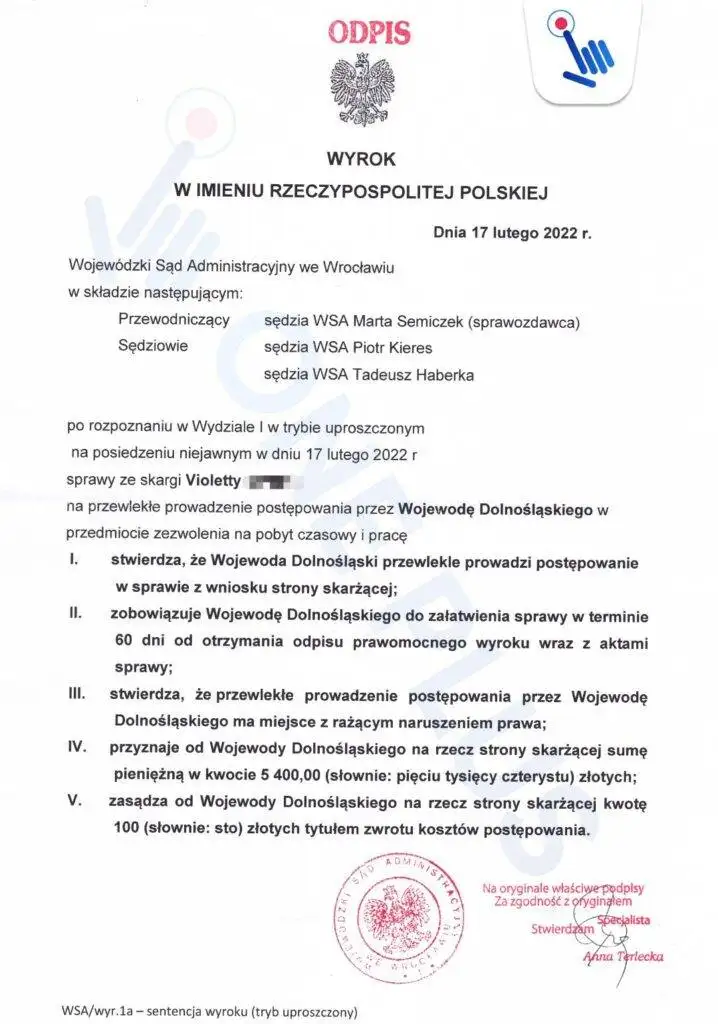
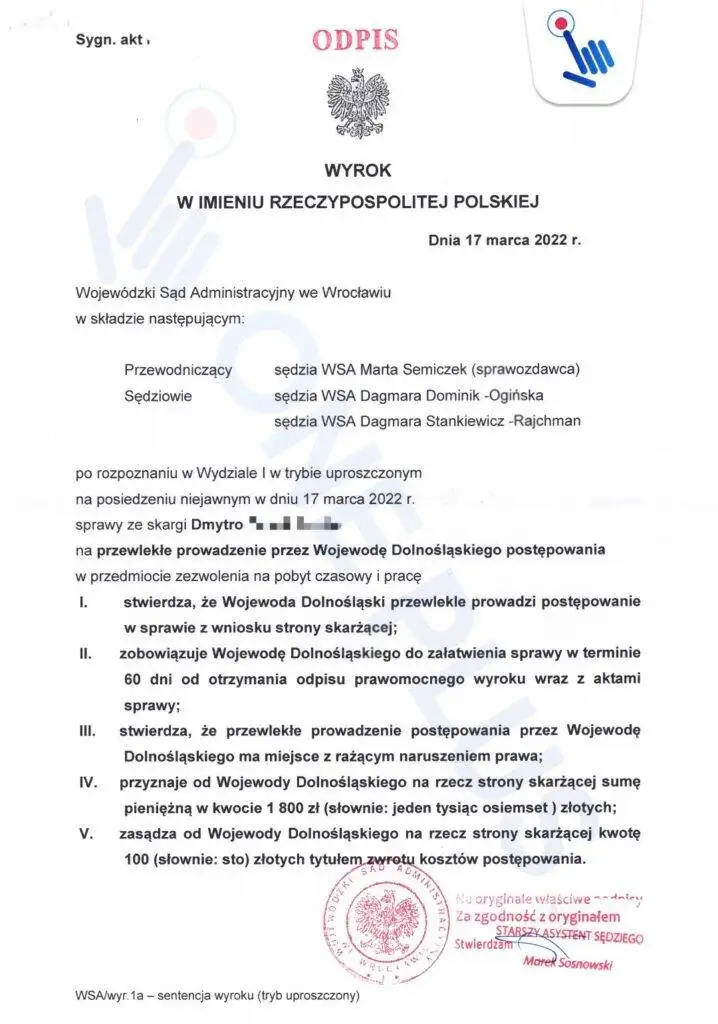
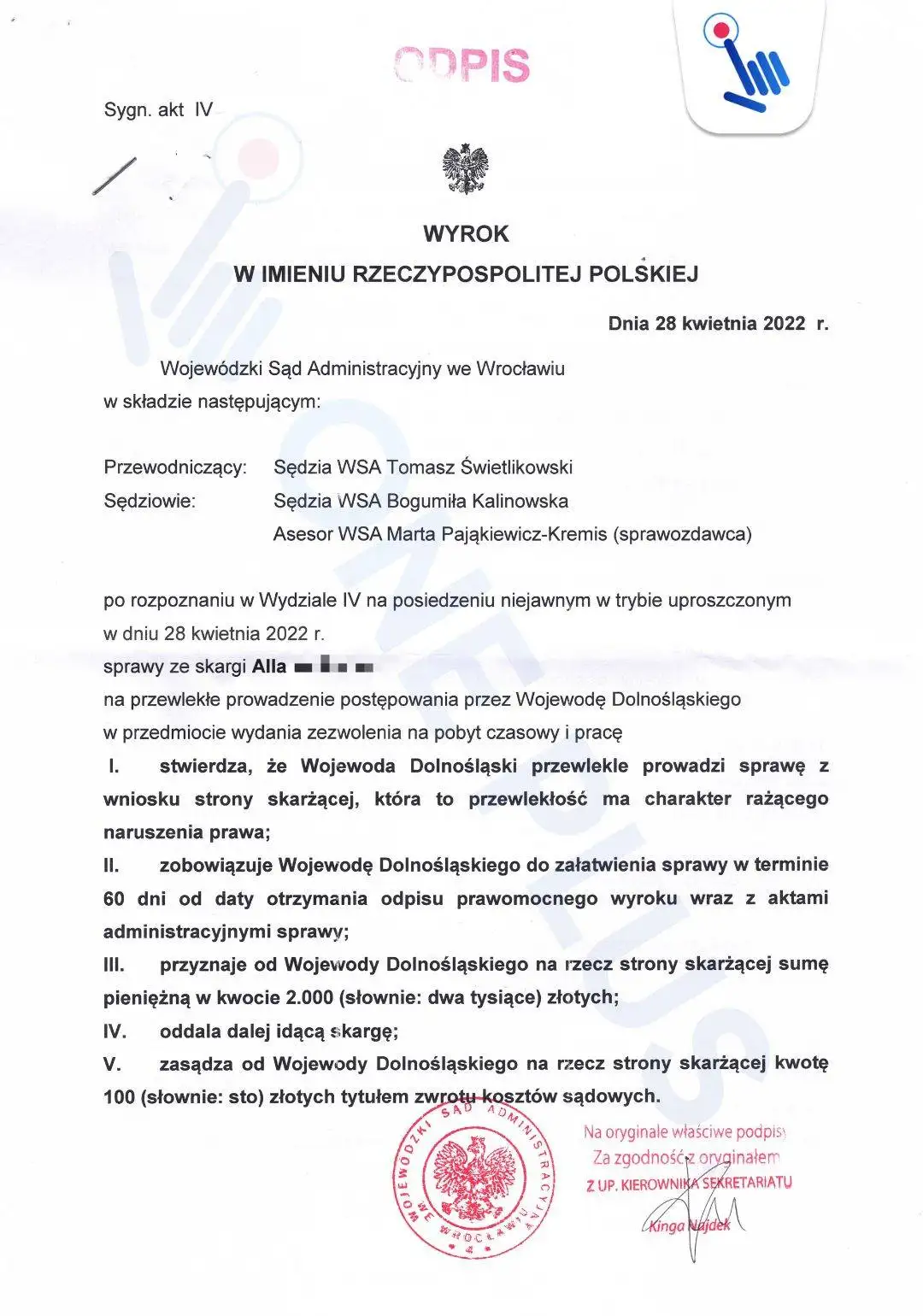
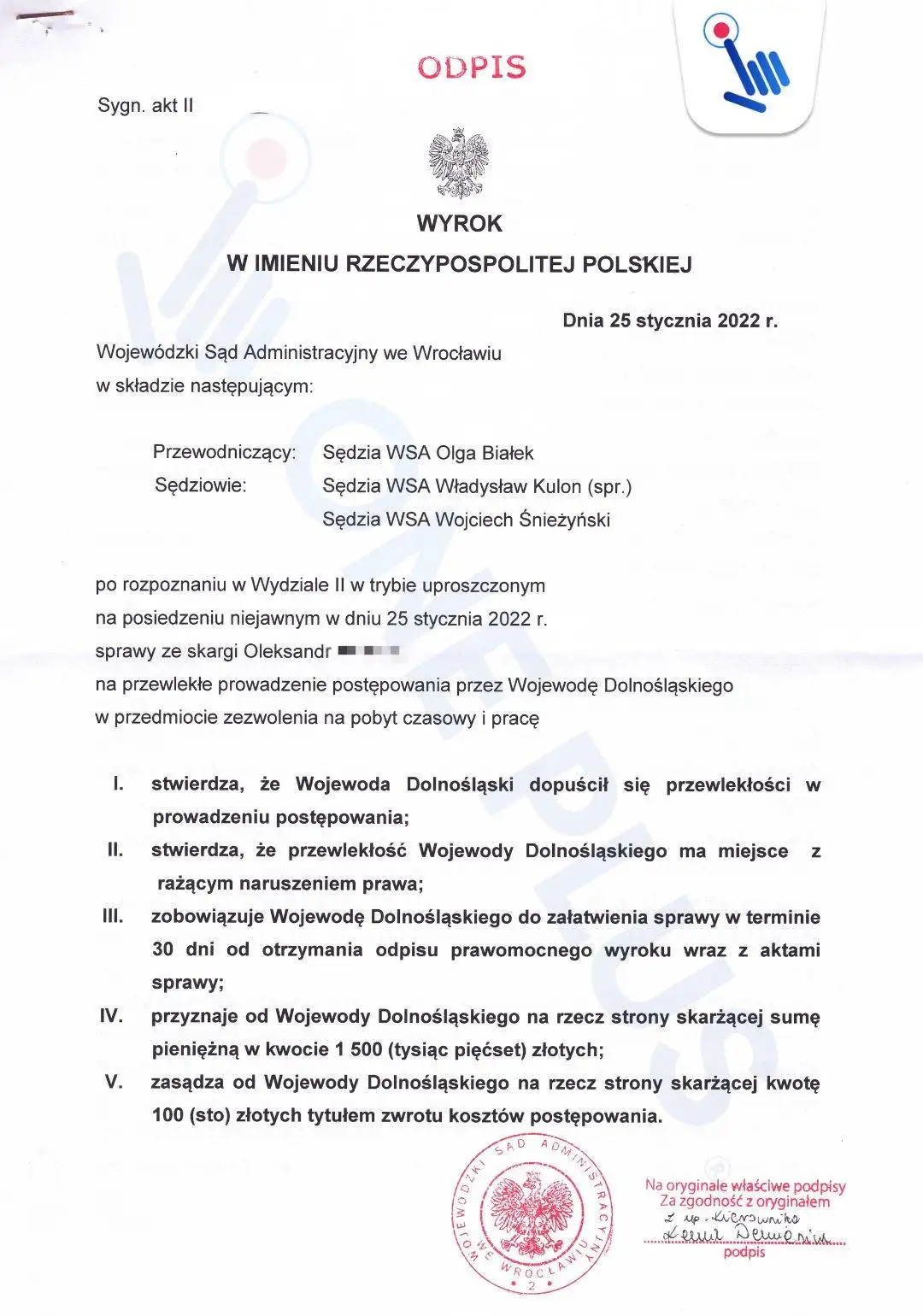
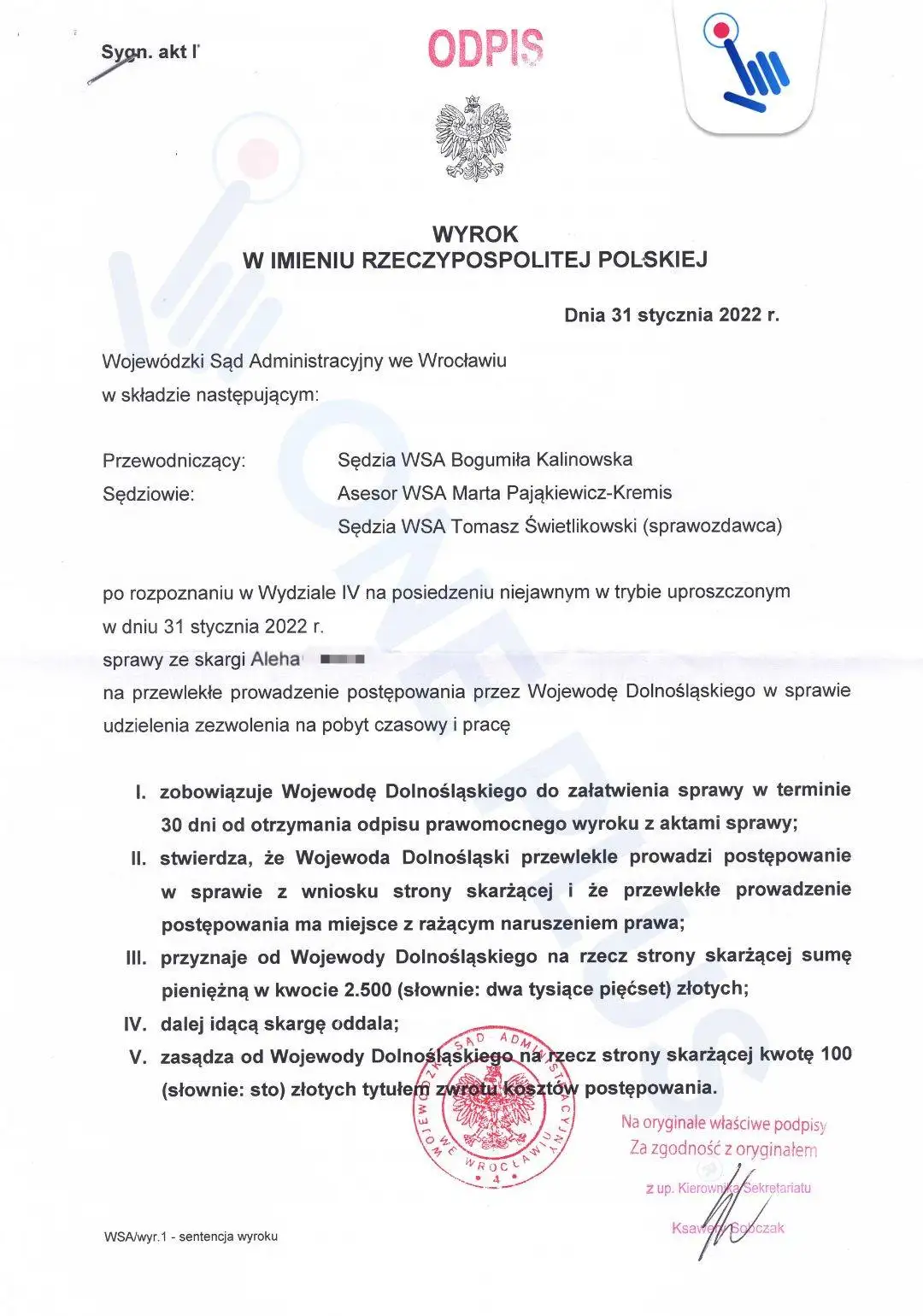
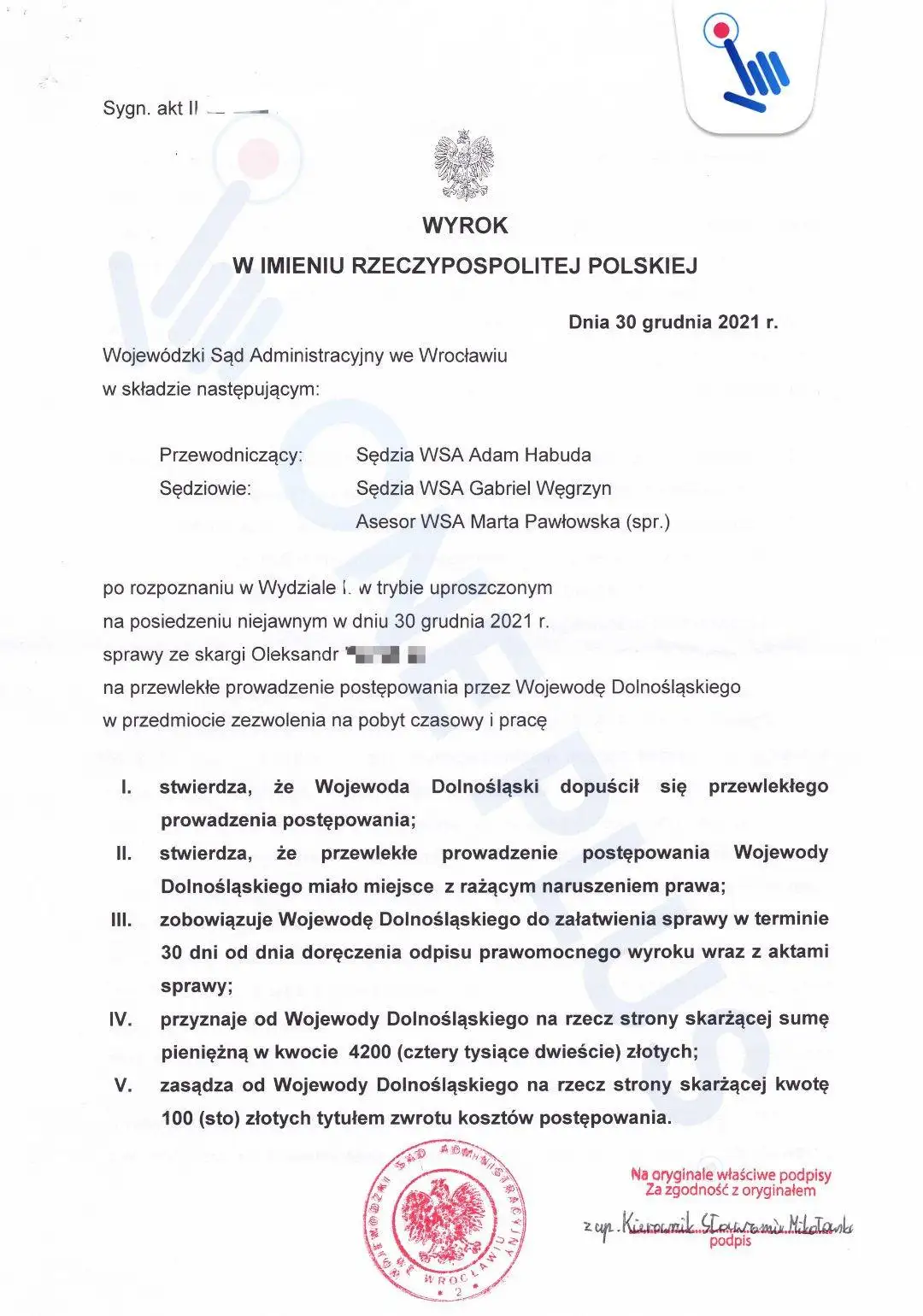
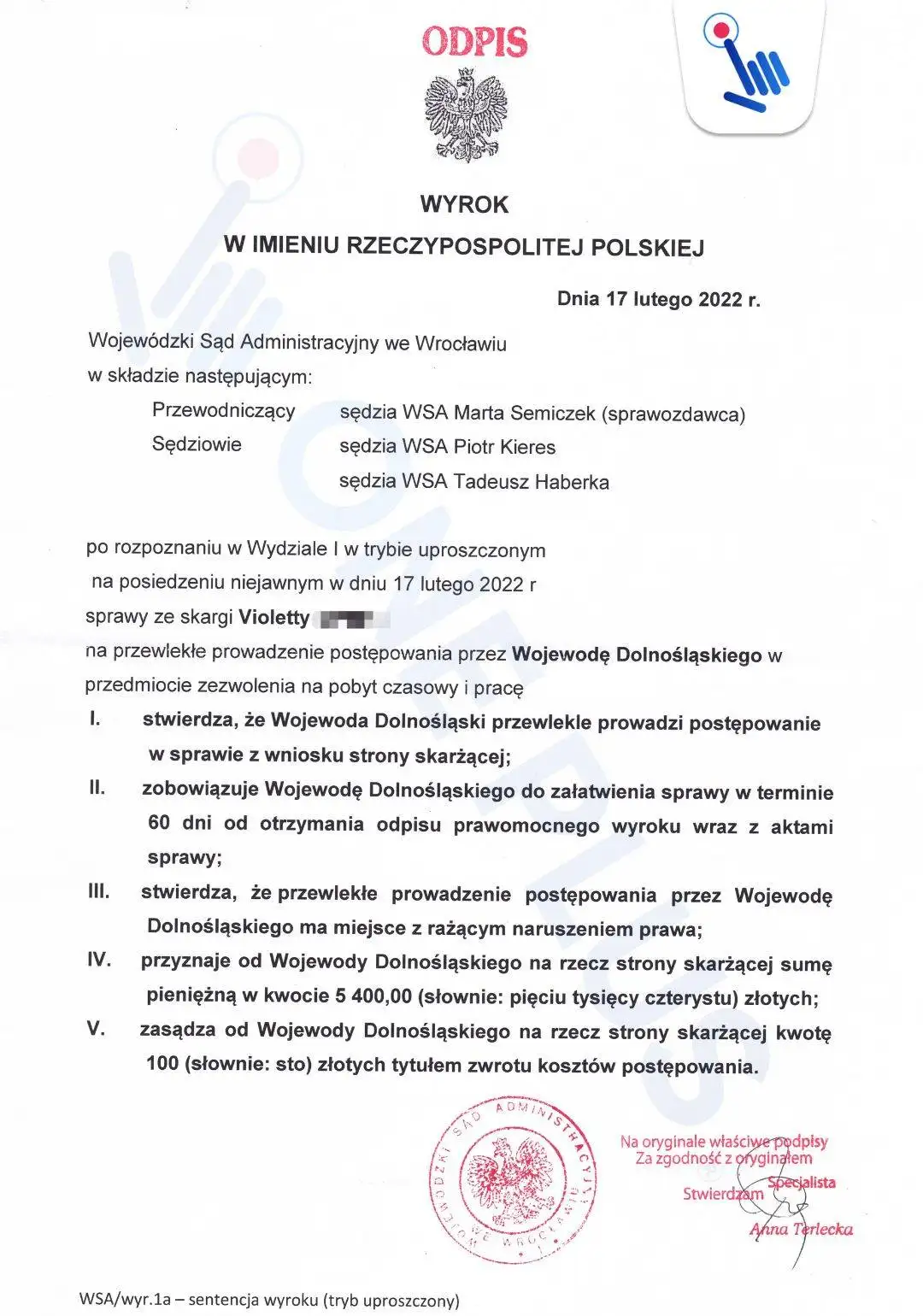
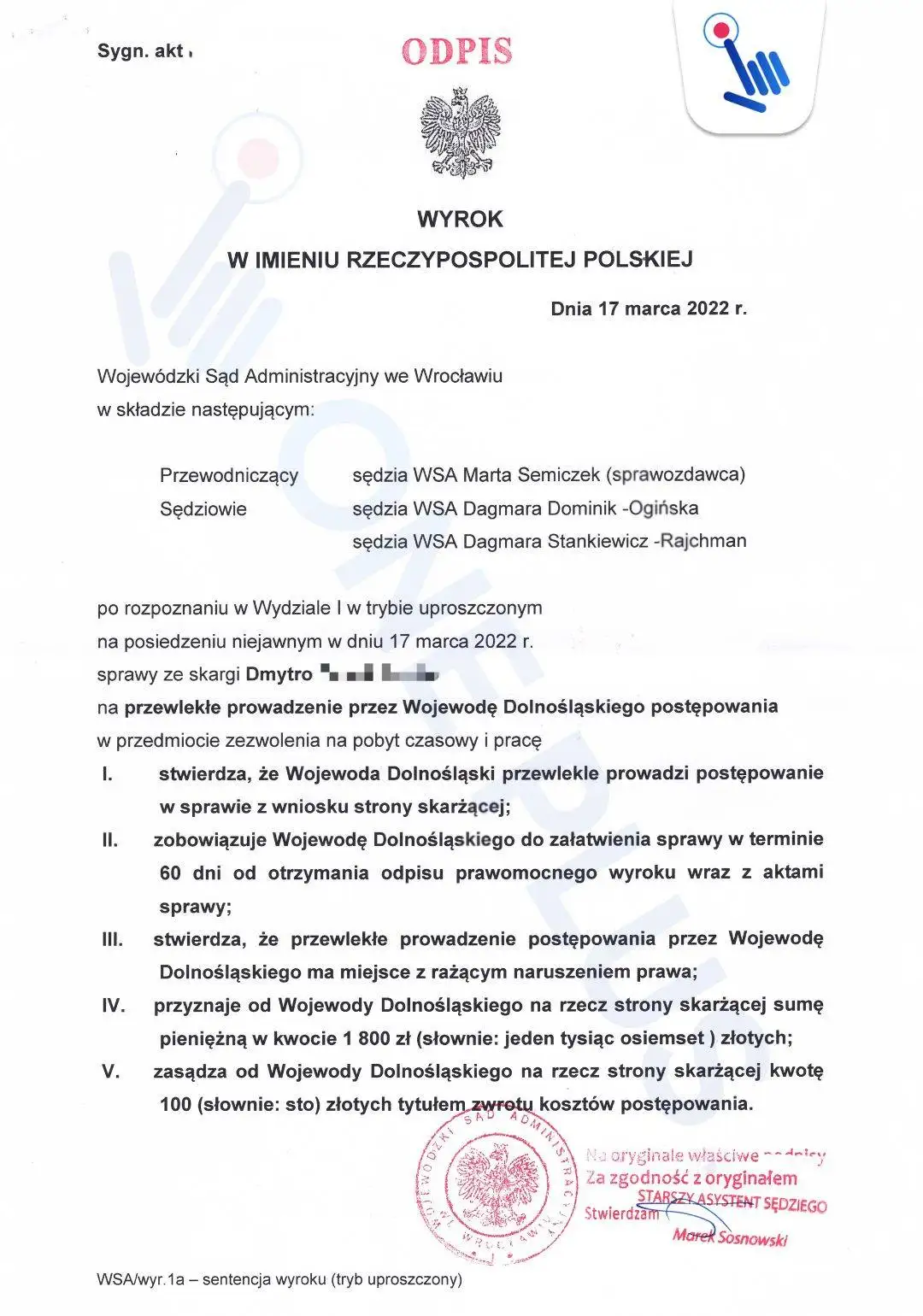
Our support continues after submission. We monitor official correspondence, prepare responses to requests from the Voivodeship Office, update documents when circumstances change and communicate with the case officer where the procedure allows. If a case remains inactive for an unreasonable period, we assess and use the available legal measures to move the proceedings forward.
ONE PLUS has officially operated under its own brand since 2018. Our work is based on Polish legal education and practical experience with residence and employment matters involving foreign nationals. We understand the practical requirements that are not always clear from publicly available checklists. Our aim is to prepare a consistent case from the start, prevent avoidable delays and help the applicant complete the residence permit process as efficiently as possible.
Legal Support for EU Blue Card Applications in Poland
The EU Blue Card, known in Polish as Niebieska Karta UE, is a temporary residence and work permit for non-EU nationals employed in Poland in a role requiring high professional qualifications.
It is a single permit: the Voivode authorises both the applicant’s stay in Poland and their highly qualified employment. After a positive decision, the applicant receives a physical residence card marked “Niebieska Karta UE”. The decision is the legal permit, while the plastic card is the document used to confirm that status.
A Blue Card application involves more than showing a well-paid employment contract. The Voivodeship Office examines the actual duties of the position, the required knowledge and level of responsibility, the applicant’s qualifications, the length and terms of the contract, the guaranteed remuneration, health insurance and the employer’s documentation.
These elements must form one coherent case. A high salary will not compensate for qualifications that cannot be documented. A university degree will not be enough if the proposed duties do not genuinely require specialist knowledge. Even a strong application can be delayed when the job title, contract, MOS form and employer’s annex describe the position differently.
ONE PLUS reviews these risks before the application is submitted. If the Blue Card is not the right route, we explain why and assess whether a standard work-based residence permit or another legal basis would be more appropriate.
Why Highly Qualified Professionals Choose ONE PLUS
ONE PLUS has assisted foreign nationals with Polish residence procedures since 2018. We handle EU Blue Card applications in Wroclaw, Warsaw, Katowice, Gdansk and other cities across Poland.
We do not work from one generic checklist. The evidence required from a software engineer applying with a university degree may be different from the documents needed by a technology manager relying on professional experience. A regulated medical profession raises different questions from a non-regulated role in finance, engineering or IT.
Before starting the procedure, we analyse the applicant’s current legal status, proposed position, contract, salary and qualifications. We then prepare a clear application strategy and a personalised document list. The applicant knows what must be obtained, what the employer needs to do and which issues should be corrected before submission.
We also work directly with employers and HR teams. We explain the electronic procedure, review the information entered in Załącznik nr 1 and compare it with the contract and the applicant’s documents. This is particularly important when a company is handling its first Blue Card case or when the person signing the annex is acting under a power of attorney.
Once the application has been filed, we continue to manage the case. We track correspondence, respond to official requests, contact the case officer where possible and make sure that updated documents are provided on time.
If the proceedings are unreasonably delayed, we consider an official enquiry, a formal reminder known as ponaglenie or another lawful procedural step appropriate to the case.
No representative can guarantee a positive decision or promise a date that depends on the Voivode. What we can do is prepare the case properly, remove preventable problems and respond quickly when the authority requires further information.
About Tatiana Vyborna
ONE PLUS was founded by Tatiana Vyborna, a specialist in administrative and civil law, the legalisation of residence and the employment of foreign nationals in Poland.
Tatiana has more than 11 years of practical experience. She understands both the legal rules and the way residence cases are handled in practice by different Voivodeship Offices.
Her experience includes straightforward applications as well as complex cases involving changes of employer, missing or difficult qualification evidence, inconsistent employment documents, prolonged proceedings, refusals and appeals.
This practical approach shapes the way ONE PLUS works. We look at the file from the case officer’s perspective, identify the questions the documents may raise and prepare the evidence so that the applicant’s professional situation is clear and credible.
Who Can Apply for an EU Blue Card in Poland?
The Blue Card is intended for a citizen of a country outside the European Union, the European Economic Area and Switzerland whose main purpose of staying in Poland is to perform highly qualified work for more than three months.
The procedure is often used by software developers, IT architects, technology managers, engineers, analysts, financial specialists, medical professionals, researchers and senior managers. However, it is not limited to the technology sector or to a fixed list of job titles.
The decisive question is whether the work genuinely requires advanced knowledge, skills and professional competence. The authority considers the actual responsibilities rather than relying on words such as “manager”, “engineer” or “specialist” in the job title.
The applicant must also be staying in Poland on a basis that permits the Blue Card procedure to be started. Certain types of stay may prevent the authority from opening the proceedings. We therefore check the applicant’s current visa, residence permit or other legal status before preparing the application.
EU Blue Card Requirements in 2026
All the main requirements must be met at the same time. The proposed job must require high qualifications, the applicant must prove those qualifications, the contract must meet the minimum duration requirement, the guaranteed remuneration must reach the applicable threshold and the applicant must have appropriate health insurance.
Salary Threshold for the EU Blue Card in 2026
The annual gross remuneration stated in the contract must be at least 150% of the average remuneration in the Polish national economy for the relevant preceding year.
For the 2026 threshold based on the official average salary for 2025, the required remuneration is at least PLN 13,355.34 gross per month, or PLN 160,264.08 gross per year.
The amount should be clearly guaranteed in the contract. Performance bonuses, discretionary awards, commissions and other variable payments cannot automatically be treated as part of the required minimum. If the remuneration contains several components, the calculation should be reviewed before the contract and employer’s annex are finalised.
The salary requirement applies to the remuneration for the highly qualified role described in the application. It is not enough for the applicant to receive additional income from another job, business activity or private source.
What Type of Contract Is Accepted?
The contract must be concluded for at least six months. The former minimum period of one year no longer applies to applications submitted under the current rules.
An employment contract is not the only possible form. A suitable civil-law contract may also be accepted when it clearly establishes the work or services to be performed and meets the remaining Blue Card requirements.
The contract should state the parties, position, responsibilities, place of work, working time, duration and remuneration. The name of the contract matters less than whether its content proves stable, genuine and highly qualified employment.
Proving High Professional Qualifications
Qualifications may be proved through higher education or, in eligible cases, through professional experience.
The education route normally requires a diploma, certificate or another document confirming completion of a higher education programme lasting at least three years. A diploma supplement is often useful because it shows the subjects, study programme and qualification awarded.
Documents issued outside Poland generally require a Polish translation prepared by a sworn translator. Formal recognition or nostrification is not automatically required for every non-regulated profession, but the authority must be able to understand the level and relevance of the qualification.
For a regulated profession, the applicant must also meet the Polish rules governing access to that profession. Depending on the role, this may require recognition of qualifications, registration with a professional body, a licence or another formal authorisation.
Can You Obtain a Blue Card Without a Degree?
Yes. A university degree is not the only way to prove high professional qualifications.
Under the general experience route, the applicant normally needs at least five years of professional experience comparable to the knowledge and competence gained through higher education.
For occupations included in the special statutory list, three years of relevant experience acquired during the seven years before the application may be sufficient.
A CV or LinkedIn profile is not evidence on its own. The case should include documents showing when and where the applicant worked and what responsibilities they actually performed.
Depending on the applicant’s professional history, this may include employment certificates, contracts, employer letters, references, business records, service agreements or documents relating to completed projects.
The strongest evidence does more than confirm a job title. It shows a clear link between the applicant’s previous work and the highly qualified position offered in Poland. ONE PLUS helps organise this evidence and prepare an explanation that is easy for the case officer to follow.
Health Insurance
The applicant must have health insurance covering necessary medical treatment in Poland. This may be public insurance through ZUS or NFZ, or a private policy that satisfies the requirements of the procedure.
The validity period and scope of a private policy should be checked carefully. A short travel policy does not always provide sufficient coverage for a residence permit case.
What the Employer Must Do
The employer is not a party to the administrative proceedings, but the Blue Card application cannot be completed without the employer’s active participation.
In MOS 2.0, the applicant provides the employer’s email address. The employer receives access to the electronic Załącznik nr 1, enters the company and employment details and signs the annex through login.gov.pl.
The annex may be signed with a trusted signature through Profil Zaufany, a personal signature or a qualified electronic signature.
When the employer is a company, the annex must be signed by a person authorised to represent it. If another person signs on the company’s behalf, evidence of that authority may need to be attached.
The annex includes information about the employer, position, occupation code, contract, working time, place of work, duration and remuneration. These details must match the contract and remain current when the decision is made.
ONE PLUS gives the employer or HR team clear instructions, checks the annex before final submission and compares it with the rest of the application. This reduces the risk of an additional request caused by conflicting information.
Applying Through MOS 2.0
Since 27 April 2026, Blue Card applications in Poland have been submitted electronically through the government’s MOS system.
The applicant creates an account, completes the electronic form, uploads a digital photograph and supporting documents, and signs the application through login.gov.pl using an accepted electronic signature.
The questions previously contained in Załącznik nr 2 are now incorporated into the electronic Blue Card form. The employer separately completes and signs Załącznik nr 1.
After the application is sent, the system generates an official electronic confirmation of receipt, known as UPO. The Voivodeship Office may later require the applicant to present the original passport, provide fingerprints and submit a specimen signature.
Electronic submission does not mean that MOS decides whether the application is legally correct. The platform verifies technical elements, while the case officer assesses the residence basis, position, salary, qualifications, insurance and supporting evidence.
Unreadable files, incorrect document formats and inconsistencies between the electronic form, contract and employer’s annex can still cause delays. We therefore review both the technical submission and the legal logic of the complete case.
How ONE PLUS Manages the Blue Card Process
We begin with a detailed eligibility review. We check the applicant’s legal stay, passport, position, duties, contract period, remuneration, insurance and employer details.
We then decide whether qualifications should be shown through education, professional experience or a combination of both.
Next, we prepare a personalised document plan. It separates the documents required from the applicant, the employer and third parties, and identifies which foreign documents require sworn translation.
We coordinate the employer’s part of the procedure and review Załącznik nr 1 before it is signed. We also prepare the MOS 2.0 application and supporting documents so that the same employment conditions and personal details appear throughout the file.
After submission, we manage official correspondence and prepare responses to requests from the Voivodeship Office. If the contract, salary, position, employer, address or insurance changes while the application is pending, we assess the legal effect and update the case in the correct form.
When the authority has all the documents but the case remains inactive, we determine which lawful measure is appropriate. Depending on the stage of the proceedings, this may involve contacting the case officer, submitting a formal request for information, filing a ponaglenie or taking another administrative step.
After a positive decision, we check the validity period and explain the remaining formalities for the physical residence card. If the decision is negative, we analyse the reasons and assess the available appeal strategy.
EU Blue Card or a Standard Work-Based Residence Permit?
Both permits can legalise residence and employment in Poland, but they serve different types of applicant.
| Issue | EU Blue Card | Standard work-based residence permit |
|---|---|---|
| Type of work | A role requiring high professional qualifications | A wider range of jobs |
| Degree or experience | High qualifications must be documented | A higher education degree is usually not required |
| Salary | The special Blue Card threshold applies | The Blue Card threshold does not apply |
| Minimum contract period | At least six months | Depends on the individual basis and circumstances |
| Changing employer | More flexible under the current rules, subject to notification | A change of permit may be required |
| EU mobility | Special short- and long-term mobility routes are available | No equivalent Blue Card mobility route |
| Family | A favourable family reunification route is available | General family rules apply |
| Business activity | A Blue Card holder may register a sole proprietorship | A standard work permit does not always provide this right |
The Blue Card may be the stronger long-term option for an applicant who clearly meets the salary and qualification requirements and plans to develop a professional career in the European Union.
Where the salary is below the required threshold or the qualifications cannot be documented convincingly, a standard work-based residence permit may be a safer and more suitable route.
Benefits of an EU Blue Card
The Blue Card allows its holder to live in Poland and perform highly qualified work without obtaining a separate work permit for the employment covered by the residence basis.
Under permits issued according to the current rules, the holder has more flexibility when changing employer, provided that the new work continues to require high qualifications and the salary remains above the applicable threshold.
The Blue Card also provides specific mobility rights within participating EU Member States. Certain periods of residence under Blue Cards issued by different Member States may count towards eligibility for EU long-term resident status, provided that all legal requirements are met.
The holder’s spouse and minor children may apply for separate residence permits through family reunification. Once the spouse receives the appropriate family permit, they may access the Polish labour market without a separate work permit.
Family Members of a Blue Card Holder
A spouse and minor children do not receive residence rights automatically through the main applicant’s card. A separate application must be prepared for each family member.
Family applications may be planned alongside the main Blue Card case. Coordinating the dates, address, insurance and family documents helps avoid contradictions between connected proceedings.
After receiving the appropriate family reunification permit, the spouse of a Blue Card holder may work in Poland without a separate work permit.
Can a Blue Card Holder Register a Sole Proprietorship?
Yes. Under the rules in force since 1 June 2025, an EU Blue Card holder may register a sole proprietorship in CEIDG and conduct business on the same terms as a Polish citizen.
The business may operate alongside the highly qualified employment. For example, a professional may remain employed under the contract supporting the Blue Card while developing a separate product or providing additional services through a sole proprietorship.
However, registering a business does not change the legal basis of the Blue Card. The permit remains based on highly qualified employment.
If the holder ends that employment and intends to rely only on business activity, a separate residence strategy must be considered. Registering a sole proprietorship by itself does not preserve the Blue Card after the qualifying employment ends.
Changing Employer With an EU Blue Card
For permits issued under the rules in force since 1 June 2025, changing employer generally does not require a completely new Blue Card application.
The new role must still require high professional qualifications, and the remuneration must remain at or above the applicable threshold. The holder must notify the Voivode who issued the permit in writing within 15 working days of the change.
Permits issued under decisions made before 1 June 2025 may remain subject to transitional rules and may be linked to a particular employer or position.
Before leaving a job or starting work for a new company, the holder should check the date and wording of the decision.
What Happens if a Blue Card Holder Loses Their Job?
The Blue Card is not automatically withdrawn on the day the employment ends. The holder has a limited period to find a new qualifying job and must comply with the notification requirements.
Where the person has held the Blue Card for less than two years, the permitted period without qualifying employment may be up to three months. After at least two years under the Blue Card, that period may extend to six months.
The new employment must continue to satisfy the rules concerning qualifications, the nature of the position and the salary threshold.
If no suitable position is found, another legal basis of residence should be considered before the available period expires.
Mobility Within the European Union
A Polish EU Blue Card does not allow the holder to move permanently to any EU country and begin work there without further formalities. It creates specific routes for short- and long-term professional mobility.
Short-term mobility allows qualifying professional activities in another participating Member State for up to 90 days in any 180-day period. These activities may include business meetings, negotiations, conferences, training, sales or marketing work and market research connected with the holder’s employment.
After 12 months of legal residence under a Blue Card, the holder may move with their family to another participating Member State under the long-term mobility rules and apply for the local Blue Card or equivalent authorisation there.
The Polish Voivode must be notified in writing within 15 working days after long-term mobility begins, with the destination country identified.
The EU Blue Card mobility framework does not apply in Denmark or Ireland.
EU Blue Card and Long-Term EU Resident Status
Certain periods spent under an EU Blue Card in different participating Member States may be combined when applying for EU long-term resident status.
Meeting the residence-period requirement is only one part of the procedure. The authority also examines continuity of residence, income, health insurance, Polish-language evidence and the period spent in Poland immediately before the application.
The calculation should be reviewed individually, particularly where the applicant has changed countries, used long-term mobility or had extended absences from the European Union.
How Long Is an EU Blue Card Valid?
Where the employment period is shorter than three years, the permit is generally granted for the contract period plus an additional three months. The total validity period cannot exceed three years.
If the contract covers three years or longer, the Blue Card may be granted for up to three years. The final period is determined by the Voivode after reviewing the complete case.
A Blue Card is not renewed automatically. Before the current permit expires, the holder must submit a new application on an appropriate residence basis and provide current supporting documents.
Legal Stay While the Application Is Pending
If the application is submitted correctly during legal stay and any formal deficiencies are corrected within the required period, the applicant’s stay in Poland may remain legal until the residence proceedings are finally concluded.
The UPO confirms that the electronic application was delivered. It is not a visa, a residence card or a travel document, and it does not by itself guarantee re-entry to Poland after travel abroad.
The right to work must also be checked separately. Legal stay while waiting for a decision does not automatically authorise every applicant to start work for a new employer or continue employment under changed conditions.
How Long Does the Blue Card Procedure Take?
The statutory period for examining a complete Blue Card application is 60 days. This period is connected with a complete application and the performance of the required procedural steps, not simply the date on which an online form is sent.
In practice, the case may take longer if the office requests additional evidence, verifies qualifications, checks the employer or waits for information from other public authorities.
ONE PLUS cannot control the authority’s workload or guarantee a decision by a particular date. We can, however, minimise avoidable delays, monitor the proceedings and use lawful procedural measures when the case remains inactive without proper justification.
Documents Required for an EU Blue Card in 2026
The final document list depends on the position, contract, employer, method used to prove qualifications and the applicant’s current residence status.
A typical Blue Card application includes:
- the electronic application completed through MOS 2.0, including the questions incorporated from Załącznik nr 2;
- a compliant digital photograph;
- scans or photographs of every page of a valid passport;
- the electronic Załącznik nr 1 completed and signed by the employer;
- a contract concluded for at least six months;
- documents confirming the position, duties, working time, employment period and remuneration;
- a degree and diploma supplement, or documents proving the required professional experience;
- authorisation to practise where the proposed role is a regulated profession;
- Polish sworn translations of documents issued in another language;
- evidence of health insurance;
- proof that the stamp duty has been paid;
- company documents, such as KRS or CEIDG information, NIP and REGON, where required;
- evidence of the applicant’s current legal status and address, where relevant;
- a power of attorney and proof of the applicable fee when a representative acts in the case;
- any additional documents required by the applicant’s individual circumstances.
Old online checklists should not be used without verification. The launch of MOS 2.0 changed the application forms, the employer’s electronic participation and the method used to submit and supplement documents.
Government Fees
The stamp duty for an EU Blue Card application is PLN 440. After a positive decision, the standard fee for issuing the physical residence card is PLN 100.
Where a representative is formally appointed, a power-of-attorney fee of PLN 17 normally applies. Sworn translations, insurance, professional recognition and other external services are paid separately.
Common Reasons for Blue Card Delays or Refusals
A high salary and employment with a recognised company do not guarantee approval.
Problems often arise when the role does not genuinely require high qualifications, the degree is not relevant to the work or professional experience is supported only by a CV. A refusal or request for further evidence may also result from discrepancies between the contract, MOS form and employer’s annex.
Other common issues include an incorrectly calculated salary, a contract that is too short, unclear variable remuneration, missing sworn translations, insufficient evidence for a regulated profession, outdated insurance or changes that were not reported while the case was pending.
The authority may also examine whether the employer is operating genuinely and whether the declared working conditions reflect the actual employment.
We review these risks before submission and prepare the documents so that the case officer receives a clear and consistent account of the professional relationship.
Cost of ONE PLUS Legal Support
The cost of our service is determined after we review the position, contract, salary, qualifications, employer and current stage of the proceedings.
Before work begins, the client receives a clear scope of support and an agreed price without hidden service charges.
We assist with first applications, subsequent permits, employer changes, experience-based qualification cases, official requests, prolonged proceedings, refusals and appeals.
Apply for an EU Blue Card With ONE PLUS
If you have been offered highly qualified work in Wroclaw or elsewhere in Poland, begin with a professional review of your case. A check completed before submission can identify problems with the position, contract, salary or qualification evidence while there is still time to correct them.
ONE PLUS has supported foreign nationals in Poland since 2018. We will assess whether the EU Blue Card is the right solution, prepare a clear application strategy, coordinate the documents with your employer and manage the proceedings through to the decision.
Leave an enquiry on our website and tell us about your profession, employer and current status in Poland. We will review your situation and explain the next steps.






 4,7
4,7