

Since 2018
For over 8 years, we've helped clients navigate Polish law, combining our solid legal knowledge with practical immigration experience.

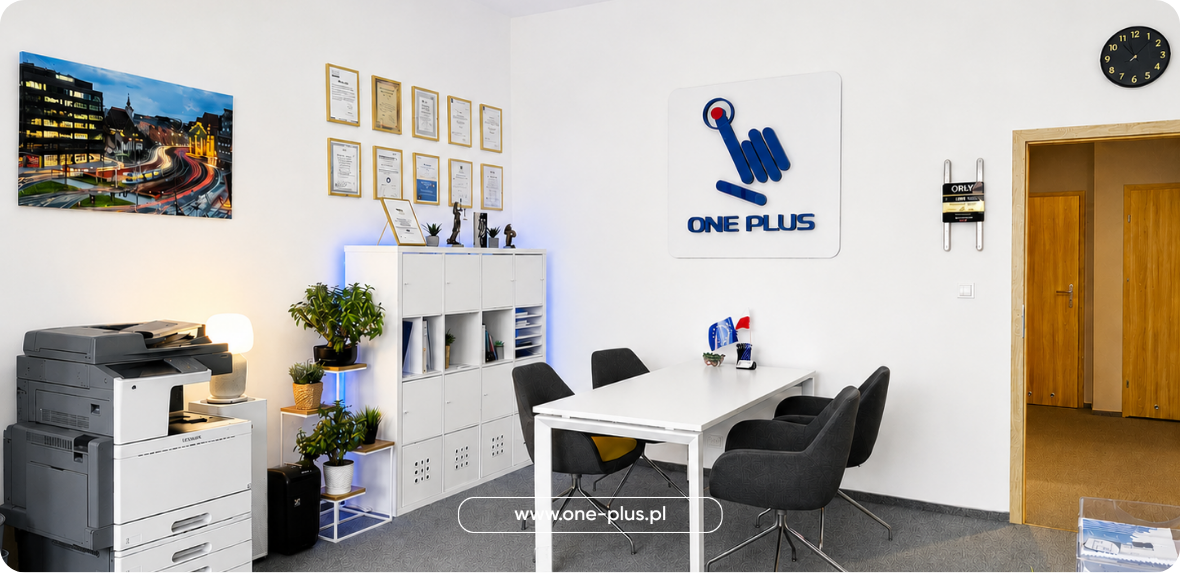
ONE PLUS helps clients prepare a bank power of attorney in Wrocław for the specific bank, account and transactions involved. We clarify what the agent needs to do, prepare the wording, check the relevant personal and banking details and arrange signing before a Polish notary at our Wrocław office.
A bank POA may be used for collecting statements and certificates, submitting applications, receiving funds, dealing with an account, handling a deposit, obtaining bank documents, closing a product or carrying out other actions that the bank permits through an authorised representative.
Where the bank’s requirements and intended transactions are clear in advance, we can prepare the document before you arrive. In straightforward cases, the actual signing of the completed document before the notary often takes around 15 minutes.
Banks do not all follow one universal POA standard. A bank may use its own form, require a notarised signature, request a different notarial form or insist that particular powers are stated expressly. ONE PLUS prepares and coordinates the document, while the bank retains the final decision on registering the agent and allowing particular transactions.
For broader authority, see our General Power of Attorney. For other documents, see Power of Attorney in Wrocław and Notary Services in Wrocław.
A bank power of attorney becomes relevant when an account holder cannot attend personally or wants another person to deal with a defined banking matter.
The agent may be a family member, spouse, employee, accountant, business partner or another trusted person. The bank, however, looks at the authority actually granted in the document and at its own internal rules.
One client may only need someone to collect a statement. Another may need an agent to submit an application or receive a specific payment. A business owner may need an employee or accountant to handle documents relating to a company account.
This is why we start with the banking task rather than with a standard template.
Banks apply their own identification, security and risk procedures. A notarised document does not automatically oblige a bank to permit every transaction listed by the client.
One bank may accept a written POA with a notarised signature. Another may require its own internal mandate. Certain transactions may require the account number, product type, transaction limit or an express authority to withdraw funds, receive information or close the account.
Broad wording such as “all banking matters” may therefore be insufficient. If the bank provides a template, email or written instruction, send it to ONE PLUS before the appointment.
The scope should follow the real purpose of the document. Depending on the bank, the agent may be authorised to obtain account information, collect statements and certificates, submit applications, deposit money, receive cash, deal with funds within stated limits, receive documents, service a deposit or close a specified banking product.
The document does not have to give the agent the widest possible powers. In many cases a narrower mandate is clearer for both the client and the bank.
Certain operations may still be restricted by the bank or subject to additional identification.
The phrase “power of attorney for a bank account” can cover very different levels of access. Some clients only want an agent to obtain information. Others need regular interaction with the branch, submission of documents or permitted account transactions.
Before drafting, we establish the type of account, the bank, the country and the precise actions required.
Where the bank registers agents in its own system, a notarised POA may be only one stage. The agent may still need to complete identification or sign bank forms.
If the purpose is limited to receiving a specific amount, a very broad mandate may not be necessary. The amount, currency, account, bank and authority to sign documents connected with the payment may all be relevant.
For larger cash withdrawals, the bank may require advance cash ordering, additional identification or other security procedures. A POA does not override those rules.
A narrower POA may be sufficient where the agent only needs to collect a certificate, statement or confirmation.
The bank may nevertheless treat some information as protected banking information and require express authority for its disclosure. It is often better to identify the type of information or document involved rather than rely on vague wording.
Card collection, replacement, blocking and limit changes are governed by the bank’s internal rules. Not every bank allows a payment card to be collected by an agent.
If the bank confirms that the action can be completed through an agent, we can prepare the wording around the stated requirement.
Authority over a current account does not automatically include authority to enter into a loan agreement. Credit transactions involve affordability and risk assessments, identification and sometimes mandatory personal participation by the borrower.
Deposits, investment products, safe-deposit boxes and other services may also have separate procedures. Tell us at the beginning if the document relates to one of these products.
Where the document will be used in Poland, the relevant Polish bank’s rules should be checked first.
The term pełnomocnictwo bankowe is widely used in practice, but it does not refer to one universal document accepted by every Polish bank.
Some banks allow an account holder to appoint an agent directly through their own process. Others may accept an external written or notarised POA, particularly where the principal cannot attend the branch.
ONE PLUS prepares bank powers of attorney in Wrocław, but we recommend confirming the required form before signing.
Many ONE PLUS clients live in Poland while maintaining accounts or other banking matters in Ukraine.
A Polish notarised power of attorney can be prepared in Wrocław, but the wording should reflect the Ukrainian bank’s requirements. We recommend contacting the bank first and obtaining a template or written list of required powers.
If the signed document requires additional formalities for use abroad, ONE PLUS can assist with apostille services and certified or sworn translation, depending on the receiving institution’s requirements.
A bank in the United Kingdom, Germany, the United States, Canada, Kazakhstan, Georgia, Moldova or another jurisdiction may apply very different rules.
The receiving bank may request its own template, apostille, consular legalisation, certified translation or additional identity checks.
Where you already have written instructions from the foreign bank, send them before drafting begins.
A broad POA may contain banking powers, but that does not mean a particular bank must accept it for every transaction. Where the task relates only to banking, a specific bank POA is often easier to understand and administer.
Where the agent also needs authority for offices, property, vehicles, inheritance or other matters, a broader General Power of Attorney may be considered, sometimes together with a separate bank mandate.
“Notarised power of attorney” can refer to different forms of notarial involvement. In one case the notary certifies the principal’s signature on a prepared document. In another, a different notarial form may be required.
The distinction matters because the legal form of the POA must match the requirements of the transaction and the receiving bank.
ONE PLUS coordinates document preparation and the appointment. The notary performs the notarial act, while the bank separately decides whether the mandate is sufficient.
A generic template does not know which bank will receive the document. It may omit authority to obtain protected information, withdraw funds, sign a particular application or close a product.
The problem is often discovered only after the document has been signed and the agent attends the bank.
Our approach is therefore to collect the practical requirements first and draft second. This cannot guarantee bank acceptance, but it helps remove avoidable drafting and data errors before the notary appointment.
You tell us the bank, country, account or product and what the agent needs to do. If you have a bank template or written instruction, you send it with the relevant details.
We review the information and prepare the draft. Once the text is agreed, we arrange signing before a Polish notary in Wrocław. The notary attends at our office, so you do not need to coordinate a separate notary location.
Where the document is intended for use abroad, apostille, translation or other required formalities can be organised after signing.
Normally we need the principal’s identity document, the agent’s details and a clear description of the banking matter.
Depending on the case, we may also need the bank name, account or agreement number, product type, currency, deposit details, list of intended transactions and the bank’s own template.
For international use, the destination country and receiving institution are also important.
An apostille is not automatically required for every bank POA. The requirement depends on the destination country, the form of the document and the receiving bank’s rules. The same applies to translation.
Where an apostille is required, ONE PLUS can coordinate Apostille Services in Poland. Where an official translation is required, we can assist with Certified Document Translation.
The sequence matters. In some cases the apostille is obtained first and the complete document is translated afterwards.
Where the bank, transaction and wording are clear, the draft can be prepared before the appointment and the notarial signing itself often takes around 15 minutes in straightforward cases.
If the bank must first confirm wording, or if the document needs apostille, translation or additional review, the overall process will take longer.
We do not control how long the bank takes to register the agent or approve a transaction after receiving the POA.
The price depends on the complexity of the document, the required notarial form, the number of principals and agents, the number of banking powers and any additional services.
A simple authority to collect one document and a multi-account international POA are different assignments. Notarial fees, apostille and translation may be calculated separately.
Private clients most often need a bank POA because they cannot attend the branch personally. They may be living abroad, working in another city or dealing with a deadline.
Business banking adds another layer because the authority granted in the POA must be consistent with the company’s representation rules. The bank may check KRS or CEIDG information and the status of the person granting the mandate.
A bank POA does not replace the legal rules governing representation of the company.
Ask whether the bank accepts an external notarised POA or only its own mandate. Confirm whether the original is required, whether the agent must attend for identification, whether the account number must be stated and whether the intended transaction can be performed through an agent.
For a foreign bank, also ask about document language, apostille, legalisation and translation requirements. Keep written instructions and send them to ONE PLUS.
A POA may be drafted for a fixed period, until a specified date or for one transaction. The bank may nevertheless have its own rules on how long it treats an external document as current.
If the principal wants to end the agent’s authority, revocation should be followed by notification to the bank under the bank’s procedure. It is sensible to obtain confirmation that the bank has updated its internal records.
Names, passport numbers, dates of birth, PESEL numbers and addresses should be consistent with the documents used for identification.
Foreign clients sometimes face transliteration issues where the same surname appears differently across passports and older records. Tell us about changes before drafting.
Ask the bank for the exact reason. The issue may be missing authority, the wrong form, incomplete account details, translation, apostille, agent identification or a mandatory bank template.
If you already have a POA that the bank will not accept, send ONE PLUS a scan together with the bank’s explanation. We can review the practical issue and identify the next step.
The practical advantage is that document preparation and notarial coordination are handled through one team. You do not have to find a template, a separate document specialist, a notary and then another provider for apostille or translation.
A Polish notary attends at our Wrocław office. International clients can discuss the matter in English, Polish, Ukrainian or Russian.
ONE PLUS has operated in Poland since 2018 and regularly assists foreign nationals with powers of attorney, official documents, translations and cross-border document formalities.
If you need a bank power of attorney in Wrocław, start with the actual transaction rather than with a generic template.
Tell ONE PLUS which bank will receive the document, the country, the account or product involved and what the agent needs to do. If the bank has provided a template or written requirements, send them with your request.
We will review the information, prepare the wording, confirm what documents are needed and arrange signing before a Polish notary at Piłsudskiego 43, 50-032 Wrocław.
Where required, we can also coordinate apostille and certified translation.
This material provides general information only. Bank POA requirements depend on the bank, transaction, destination country and individual circumstances. The receiving bank makes the final decision on registering an agent and permitting particular operations.
Yes. ONE PLUS can prepare the document and arrange signing before a Polish notary at our Wrocław office. We first establish which bank will receive the POA, what account or product is involved and what the agent needs to be authorised to do.
It can grant specific authority relating to an account, but the practical scope depends on the receiving bank’s rules. Banks may restrict particular transactions or require the agent to complete additional identification. The bank ultimately decides which operations it will allow.
Potentially, yes, where the bank permits withdrawals through an agent and the POA contains the required authority. The bank may also require details such as the account, amount or currency. Large cash withdrawals can be subject to advance ordering and additional security procedures.
Not necessarily. A General Power of Attorney may contain banking powers, but a particular bank may still request a separate mandate, its own form or more precise wording. A specific bank POA is often more suitable where the authority is needed only for banking.
Not every bank has a mandatory template. However, if the bank provides one, its requirements should normally be checked before the notarial appointment. Where no template is available, ask the bank what form and wording it accepts for the intended transaction.
Yes, a document can be prepared and notarised in Poland for use abroad, but acceptance depends on the receiving bank. A foreign bank may require its own wording, apostille or legalisation, translation or additional identity checks. Its requirements should be confirmed before signing.
Not automatically. The requirement depends on the destination country, document form and receiving institution. If an apostille is required, ONE PLUS can coordinate Apostille Services in Poland.
A foreign bank may require a translation into a particular language and may specify the type of translation it accepts. ONE PLUS can assist with certified or sworn document translation. It is best to confirm the bank’s requirements before ordering the translation.
Normally we need the principal’s identity details, the agent’s details, the bank name and a clear description of the intended actions. Depending on the matter, an account or agreement number, product information and the bank’s own template may also be required.
Where all information and bank requirements are available in advance, the draft can be prepared before the appointment. In straightforward cases, signing the completed document before the notary often takes around 15 minutes. Apostille, translation or additional bank requirements take extra time.
No. The notary performs the relevant notarial act, while the bank applies its own rules when deciding whether to register the agent and permit the requested transactions. Checking the bank’s requirements before signing reduces the risk of avoidable problems.
Ask the bank to identify the exact issue. It may require different wording, an express power, a bank form, account details, translation, apostille or additional identification. Send ONE PLUS the POA and the bank’s explanation so the practical next step can be assessed.
You always know what stage your power of attorney is at. We support you in your language.
Leave a request — we propose a solution, price and timeline.
We prepare the document according to the requirements of the target authority.
We confirm the visit at the agreed time — same day or a chosen date.
Signing takes place at our office at Piłsudskiego 43 with a Polish notary.

Certified Specialist in the Legalization of Stay and Employment of Foreigners in Poland. Tatiana is a graduate of Uniwersytet Ekonomiczny we Wrocławiu and Uniwersytet Wrocławski, where she completed studies in Legal and Business Consulting, followed by the postgraduate program Legalizacja zatrudnienia cudzoziemców at Uniwersytet Wrocławski.
With more than 12 years of professional experience and daily cooperation with Polish government institutions, Tatiana has developed an effective approach to resolving even the most complex immigration matters. She provides clear legal guidance, assists with document preparation, and supports clients throughout every stage of the legalization process.
Her individual approach, in-depth knowledge of Polish immigration law, and practical experience make the legalization process straightforward, secure, and as smooth as possible for every client.
I am very satisfied with the help with residence card registration and speeding it up. They also quickly helped with a notarial power of attorney in Wroclaw. I recommend!
They helped me with a notarial power of attorney in Wroclaw. All the necessary formalities were explained to me beforehand.
Very good help with residence card registration. Everything was clearly explained, they helped with the documents and suggested further steps.
I asked for a consultation about a residence permit and they answered all my questions. We will continue working together.
Great company. Thank you, I got cards for the whole family with them. I liked that you can always call them and ask questions...
We asked for advice about the residence card because we had questions about how long the documents take to be processed. They helped us understand the situation, explained what the options are for speeding up the process and what we can do next. I liked that they explained everything specifically and clearly, without unnecessary promises and complicated wording.
I am very satisfied with the help. I needed advice about legalization and registering a residence card in Poland. They helped me organize the documents, checked everything and explained what to do and how. Thanks to them the whole process went much more smoothly. I recommend!
I used their services when sorting out my residence permit. At first I had lots of questions, but during the consultation they explained everything. They checked the documents and explained where and what needed to be corrected.
If paperwork doesn't appeal to you, then I recommend their services. I submitted an application for a permanent residence card and in total 2 years and 9 months passed from receiving the card (you could say that's long, but considering all the events and the fact that it's permanent residence, you can understand that the waiting is fully justified). I have no complaints about the professionalism or the service. The documents are fine, nothing was lost. Thank you for the help!
Thanks to One Plus my husband received his card quickly and without any problems. Before that we waited two years. Thank you Tatiana for her work.
I would like to express my gratitude, huge thanks to Tatiana for her help and support in obtaining the decision, and soon also the plastic card.
Of all similar companies, ONE PLUS inspired the most trust. They solved my Permit A problem quite quickly, without unnecessary problems.…
Thank you to the company ONE PLUS for the professional help in processing and managing my residence permit application. This is my first card. The documents were submitted in July 2021, and we updated the application in January because I had already submitted the documents. I received the decision at the end of May, and the card itself was ready at the beginning of September 2022.
I worked at the agency for a year, now I am moving to direct work) The pay is always on time, they always consulted on all matters) They helped me get the Residence Card) Thanks to the coordinator Oleksandr, always in contact 24/7 and always helped with all questions) Thank you very much, I recommend)
The best company, it helped me get a residence permit within 4 months.
I had a difficult situation with my residence card. But thanks to the professionalism and experience of Tatiana Vybornaya I finally got it. I highly recommend! D. Kostenko
I received my residence permit in a year and a half. Wroclaw.
Excellent service! They worked with me throughout the entire process, providing updates and assisting with other logistics of the application. Even though it took two years (through no fault of theirs), they supported me every step of the way. I would highly recommend them!
Working with this company was a real pleasure, because their services are of the highest standard! I received a positive decision on my residence permit and now I can breathe a sigh of relief ☺️ Thank you very much. I definitely recommend them!
Hello. I thank the ONE PLUS agency with all my heart. They quickly helped me get a decision (I had been waiting since May 2019) and a residence permit. I have already recommended you to friends who have been waiting a long time for their documents! By the way, I also found out about ONE PLUS from a friend. I wish your company success and grateful clients!
How to order
Ordering a power of attorney with ONE PLUS is simple: choose the type, contact us, pay, and receive your document.
Call Mon-Fri 09:00-17:00
 +48 71 880 85 08
Contact us online


We’ll call you back during business hours.
 We will tell you more about servicesInitial client consultationExpress situation audit
During business hours
Your data stays secure
Support with your case

 4,7
4,7