Residence Permit for Clergy in Poland
ONE PLUS helps churches, parishes, dioceses, religious orders and faith communities secure Polish residence permits for clergy and religious workers arriving from abroad. We handle individual applications as well as coordinated cases involving groups of missionaries, members of religious orders and representatives of international religious organisations.
Our support covers the documents required from both the applicant and the host organisation. We assess the appropriate immigration route, prepare the application, arrange sworn translations where necessary and manage the proceedings before the relevant Voivodeship Office.
Our office is based in Wrocław, but we assist religious organisations and applicants throughout Poland. Much of the preparation can be completed remotely and may begin before the applicant travels to Poland.
What Is a Clergy Residence Permit?
“Residence permit for clergy” is a practical name rather than a separate legal category of Polish residence permit.
Under Polish immigration law, a member of the clergy, a member of a religious order or another person performing a recognised religious function may apply for a temporary residence permit under the category of other circumstances.
This route is intended for people whose genuine purpose in Poland is to perform, or prepare to perform, a religious function within a church or religious association that operates legally in Poland. The planned stay must be longer than three months.
An invitation from a parish or religious community is not enough on its own. The Voivodeship Office will review the legal status of the host organisation, the applicant’s actual role, the proposed duties and the supporting evidence provided by both the Polish and foreign organisations.
Who Can Apply?
This residence route may be suitable for priests, pastors, preachers, missionaries, monks, nuns, members of religious orders and other people entrusted with religious or pastoral duties in Poland.
It may also be available to someone who is coming to Poland to prepare for a future religious role. The applicant does not necessarily need to have started their duties at the time the documents are prepared, but the purpose of the stay and the proposed role must be clearly documented.
We work with Catholic and non-Catholic organisations, including parishes, dioceses, archdioceses, churches, monasteries, seminaries, religious orders, registered religious associations and other legally recognised faith communities.
We can also assist when the applicant has been assigned to Poland by a foreign diocese, church, religious order or international religious organisation.
The Correct Immigration Route
Not everyone working for a church or religious organisation qualifies for a clergy residence permit.
The deciding factor is the actual nature of the person’s role. If the applicant will mainly perform religious or pastoral duties, this route may be appropriate. If the proposed work is primarily administrative, technical, domestic, commercial or care-related, an employment-based residence permit may be required instead.
Before opening the case, we review the applicant’s current immigration status, their intended duties, the length and location of the assignment, the host organisation’s legal position and the documents issued by the foreign sending body.
We also check how accommodation, health insurance and living costs will be arranged. This allows us to identify the correct residence basis before the application is submitted and reduces the risk of delays or a refusal.
The Host Organisation
The applicant must perform their religious role within a church or religious association whose legal status is recognised under Polish law.
The organisation may operate under an international agreement, specific Polish legislation or an entry in the official register of churches and other religious associations.
In practice, the host may be a parish, diocese, religious order, monastery, seminary or another authorised unit within a recognised religious structure. Before preparing the application, we confirm whether the organisation can formally host the applicant and identify the person authorised to sign documents on its behalf.
This is particularly important for international religious organisations. A community may operate in several countries, but its Polish branch may not have separate legal personality or authority to issue formal statements independently.
The host organisation’s documents must make its role clear and explain where, why and in what capacity the applicant will serve in Poland.
Documents from the Host
The Polish host organisation must provide a clear account of the proposed assignment.
Its supporting letter should identify the applicant, describe the religious role and explain where the duties will be performed. It should also state the intended start date, expected length of stay and the applicant’s relationship with both the Polish host and any foreign sending organisation.
The letter should explain the accommodation and health insurance arrangements and provide contact details for the person responsible for the case.
Depending on the organisation’s structure, additional evidence may be required to confirm its legal status and the authority of the person signing the documents.
Where a foreign diocese, church or religious order is sending the applicant to Poland, the documents from the sending and receiving organisations must complement each other. We help both organisations prepare consistent letters that accurately reflect the applicant’s assignment and are clear to the Polish authorities.
Documents from the Applicant
The applicant will need a valid passport, current photographs, a properly completed temporary residence application and confirmation that the relevant government fee has been paid.
They must also provide reliable evidence of their status and role. Depending on the religious tradition and the individual circumstances, this may be an ordination certificate, an appointment, an ecclesiastical decree, confirmation of membership in a religious order or a formal letter assigning the person to Poland.
Someone preparing to take up a religious function should provide documents explaining the nature of that preparation and the role they are expected to assume.
The application must also include appropriate evidence of accommodation and health insurance in Poland.
There is no single document checklist that works for every church or denomination. Religious structures and titles differ widely between countries, which is why we prepare a tailored list for each applicant and host organisation.
Foreign Documents
Clergy residence cases often rely heavily on documents issued outside Poland. Appointments, decrees, ordination records and letters from foreign religious authorities must be prepared correctly before they are submitted to the Voivodeship Office.
Documents written in another language must be accompanied by a Polish translation completed by a sworn translator.
Some foreign documents may also require an apostille or consular legalisation. This depends on the country of issue, the type of document and the international agreements that apply. It is not necessary to obtain an apostille for every document automatically.
We first identify which documents will form part of the application and then determine the correct method of authentication.
Religious titles can also present difficulties. A direct translation may not accurately explain the applicant’s status or authority within a particular denomination. Where necessary, we provide a separate explanation of the organisation’s structure, the applicant’s title and their position within the community.
Consistent Evidence
A well-prepared application should tell one clear and consistent story.
If one document describes the applicant as a member of the clergy, another calls them a volunteer and a third refers to them as an employee, the immigration officer may question the genuine purpose of the stay.
The same issue arises when the foreign appointment describes a different role from the one stated by the Polish host. Conflicting dates, locations or descriptions of duties can lead to requests for further evidence and significantly prolong the proceedings.
Before submission, we compare the application, supporting letters and foreign documents. If different terminology reflects the internal practice of a particular church or denomination, we explain that distinction clearly.
MOS 2.0
In 2026, residence applications are handled under Poland’s current electronic immigration procedures, including the MOS 2.0 system.
Completing and submitting the form is only one part of the process. The application must identify the correct legal basis, explain the purpose of the stay and include suitable evidence from the host organisation.
After submission, the applicant may be asked to attend the Voivodeship Office to present their passport, provide fingerprints and show the original documents.
The applicant remains the formal party to the proceedings but may appoint a representative to manage the case and receive official correspondence. A representative cannot replace the applicant during formalities that require personal attendance.
We prepare the MOS 2.0 application, organise the supporting documents and manage further communication with the Voivodeship Office.
Before Coming to Poland
Much of the preparation can begin while the applicant is still abroad.
We can review foreign religious documents, identify the correct immigration route, prepare the host organisation’s letters and arrange translations before the planned arrival.
The temporary residence application itself must be made by a foreign national who is legally present in Poland. Preparing the case abroad does not allow the applicant to obtain a Polish residence card without travelling to Poland.
Starting early is nevertheless valuable. It prevents situations in which an essential document is missing after arrival or the foreign authority responsible for issuing it is unavailable.
Early preparation is particularly important when documents need an apostille, legalisation or a sworn translation.
Group Cases
We also coordinate residence applications for larger groups of clergy, missionaries and members of religious communities coming to Poland as part of the same assignment.
Each person has an individual immigration case. However, the documents concerning the host organisation, the purpose of the visit, accommodation and planned activities should follow a consistent approach.
We review each participant separately while coordinating the shared documentation with the Polish host and the foreign sending organisation. This makes it easier to manage passports, legal stay periods, translations, application deadlines and communication with the relevant offices.
The organisation receives one point of contact who oversees the whole project and provides updates on each applicant’s case.
How We Work
We begin by reviewing the proposed religious activity and confirming whether the clergy route is appropriate. We examine the applicant’s status, the host organisation’s legal position and the documents issued by the foreign sending body.
Once the legal basis has been confirmed, we prepare the letters and supporting evidence required from the parish, diocese, religious order, church or faith community. We then collect the applicant’s documents, arrange any necessary translations and check whether foreign documents require authentication.
The application is prepared for the Voivode responsible for the applicant’s place of residence. We make sure the information in the MOS 2.0 form matches the supporting documents.
After submission, we monitor the proceedings, manage official correspondence and prepare responses to requests from the immigration officer. Our involvement does not end when the form is filed.
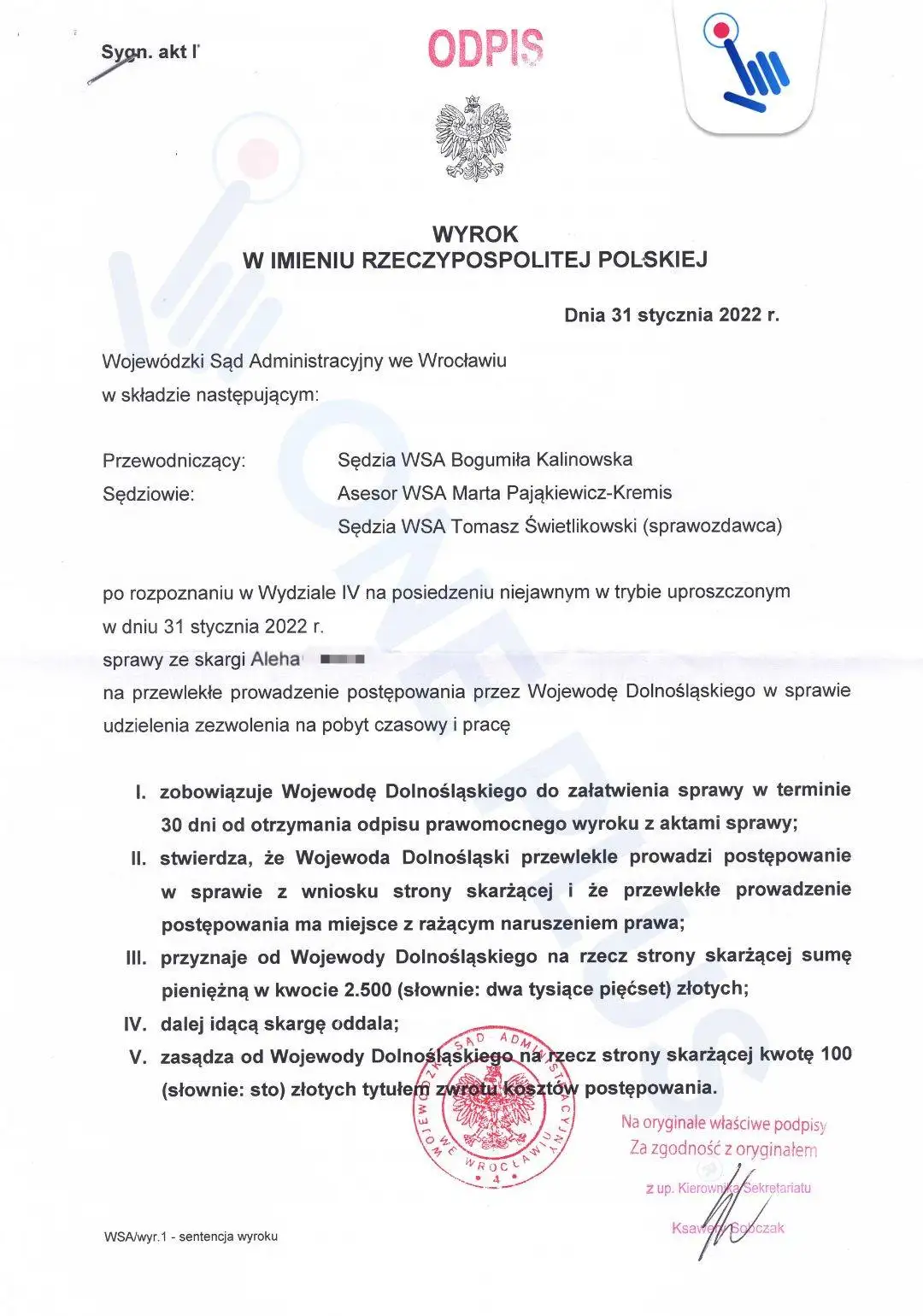
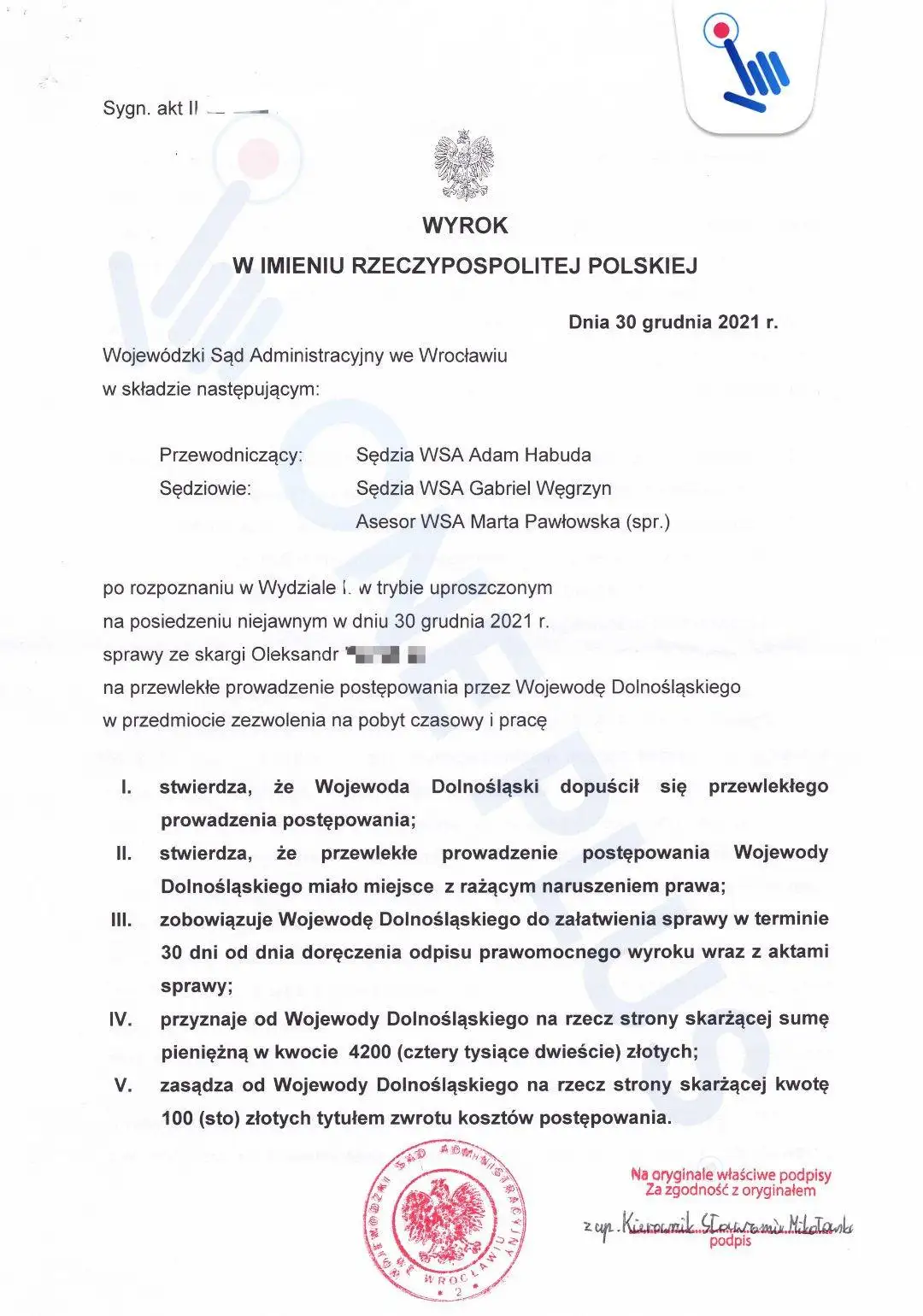
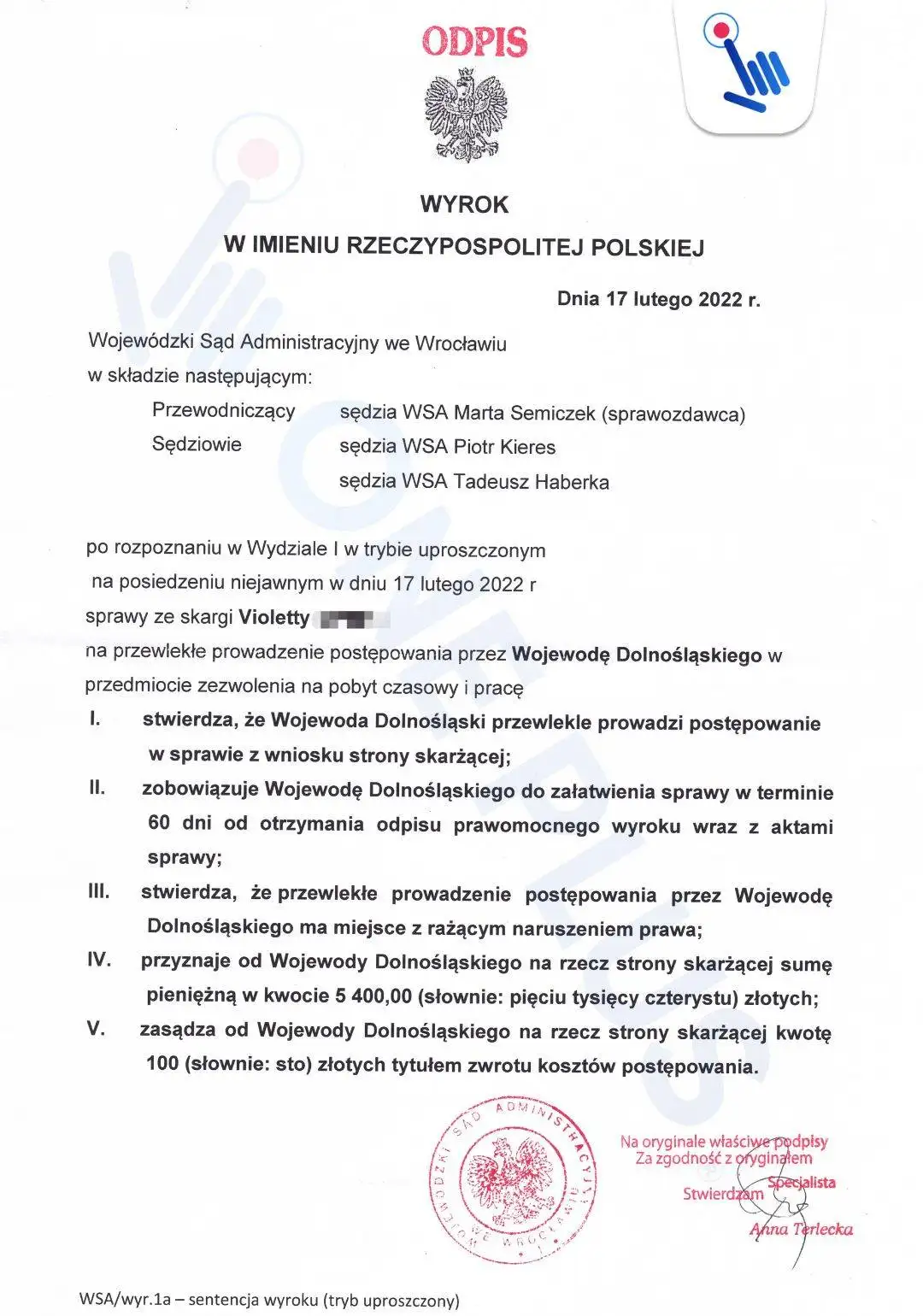
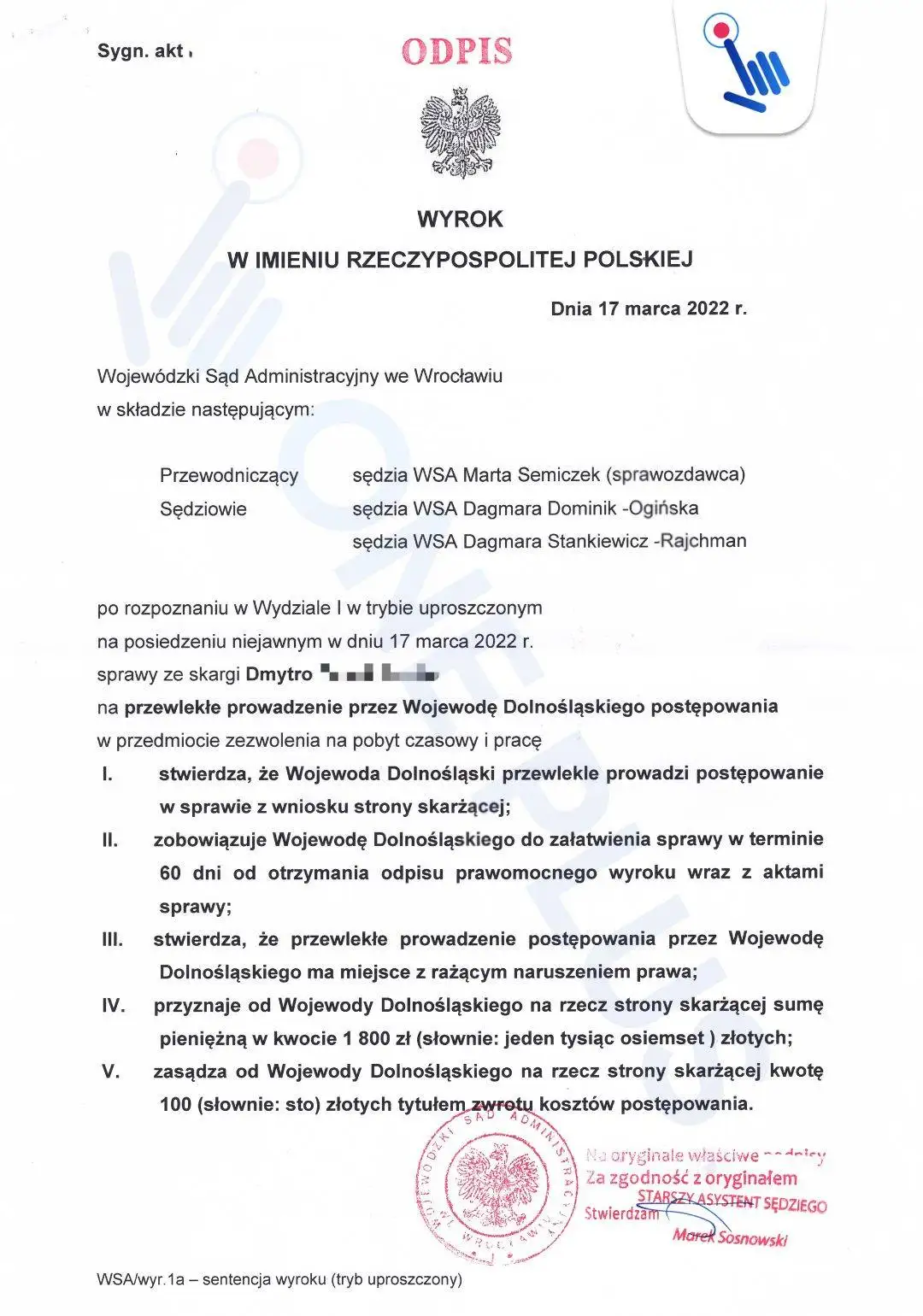
If the proceedings become unreasonably delayed, we consider the procedural measures available under Polish administrative law. Once the application has been approved, we continue to assist with the steps required to obtain the physical residence card.
Common Problems
Many religious organisations assume that a short invitation letter will be sufficient. In practice, the authorities often expect a much clearer explanation of the applicant’s status, role and relationship with the host organisation.
Problems commonly arise when the applicant’s religious status is not properly documented, the proposed duties are described too vaguely or there is no clear connection between the foreign sending body and the Polish host.
Applications may also be delayed because documents were signed by someone without the necessary authority, religious titles were translated incorrectly or the information in the application does not match the supporting letters.
Missing health insurance, unclear accommodation arrangements, unanswered correspondence and late responses to official requests can create further difficulties.
Most of these issues can be identified before the application is submitted. For this reason, we begin with a review of the complete case rather than simply filling in the online form.
Our Service
ONE PLUS provides end-to-end immigration support for foreign clergy and religious workers coming to Poland.
We identify the correct residence basis, review the host organisation’s status and prepare a document list tailored to the applicant. We also draft the organisation’s letters, examine foreign documents and arrange sworn translations, apostilles and notarial documents where necessary.
Our team prepares the MOS 2.0 application and manages correspondence with the Voivodeship Office. We respond to official requests, monitor the proceedings and assist with future extensions.
If the application is refused, we review the decision and can prepare an appeal where there are legal grounds to challenge it.
Our support can be adapted to the organisation’s needs. We can handle a single application or provide ongoing assistance to a church, diocese, religious order or faith community that regularly receives clergy from abroad.
Why Work with Us?
ONE PLUS has practical experience working with churches, parishes, religious communities and international organisations that send clergy and religious workers to Poland.
We understand that these applications differ from standard employment cases. Religious documents often come from complex international structures, use denomination-specific terminology and require careful explanation before they are submitted to a Polish authority.
ONE PLUS has operated officially since 2018. Our team has many years of experience in Polish immigration matters, and our work is reflected in more than 395 client reviews on Google Maps.
Our office is in Wrocław, but we handle cases throughout Poland. Communication with the host organisation and most of the document preparation can be managed remotely.
Get Legal Support
If your parish, diocese, religious order, church or faith community is planning to receive a clergy member from abroad, it is best to begin preparing before the person arrives in Poland.
We will determine whether the religious-function residence route is appropriate, prepare the documents required from the applicant and host organisation, and manage the proceedings through to the final decision.
We can assist with one application or coordinate the arrival of a larger group of clergy, missionaries or members of a faith community.
Contact ONE PLUS to discuss the planned assignment, confirm the requirements and begin preparing the residence application.






 4,7
4,7