Residence Permit (TRC) Based on Work in Poland
ONE PLUS provides full legal support for foreign nationals applying for a residence permit based on work in Wroclaw and across Poland. We check your current immigration status and right to work, prepare the application in MOS 2.0, coordinate the documents with your employer and manage the case until a decision is issued.
We do more than submit the application. We communicate with the case officer, respond to requests from the Voivodeship Office, keep the documents up to date and use legally available measures to prevent unnecessary delays and help move the case towards a decision.
We support foreign employees, Polish and international employers, HR departments and accounting firms working with international teams.
What is a residence permit based on work?
A residence permit based on work allows a non-EU national to live in Poland and work under the conditions stated in the decision issued by the voivode.
The official procedure combines temporary residence and employment authorisation in one case. It is commonly referred to as:
- a residence permit based on employment;
- a work-based residence permit;
- a work-based TRC;
- Karta Pobytu based on work;
- a Polish residence card for an employee;
- a temporary residence and work permit.
The residence permit is the legal authorisation granted in the voivode’s decision. Karta Pobytu is the physical residence card issued after a positive decision. The card confirms the holder’s identity and immigration status, but the exact employment rights come from the decision and its legal basis.
A residence permit based on work may be granted for more than 3 months and for no longer than 3 years. Its duration depends on the employment contract, the planned period of work and the documents submitted by the employee and employer.
Who can apply based on employment?
This procedure is mainly intended for non-EU nationals who are legally staying in Poland, have a job with a Polish employer and plan to remain in the country for more than 3 months.
Employment may be based on an employment contract or a civil-law service contract. The type of contract is important, but the Voivodeship Office also examines whether the employment is genuine and whether the working conditions meet the legal requirements.
The case officer may check:
- the employee’s current immigration status;
- the right to work in Poland;
- the employer and its business activity;
- the employee’s position and duties;
- salary and working hours;
- the type and duration of the contract;
- health insurance;
- consistency between all submitted documents.
A residence permit based on employment may be used by IT specialists, office employees, drivers, engineers, healthcare professionals and people working in logistics, manufacturing, construction, hospitality, finance and other sectors.
Highly qualified professionals may qualify for an EU Blue Card. Before applying, it is worth comparing both procedures, especially the requirements concerning salary, qualifications, professional experience and contract duration.
EU citizens use a different procedure
Citizens of the European Union do not normally apply for a residence permit based on work in Poland. Different rules also apply to citizens of Norway, Iceland, Liechtenstein and Switzerland.
An EU, EEA or Swiss citizen who intends to stay in Poland for more than 3 months will generally need to register their residence. After registration, the person receives a certificate confirming their right to stay in Poland.
Employment may be used as the basis for registering an EU citizen’s residence, but the applicant does not receive a standard work-based TRC. The required documents and application procedure are different.
A non-EU spouse or another eligible family member of an EU citizen may need to apply for a residence card for a family member of an EU citizen. This is a separate procedure with its own conditions.
ONE PLUS assists EU citizens with residence registration and helps their non-EU family members obtain the correct documents. We first check the applicant’s nationality, employment and family situation to make sure the correct procedure is used.
What does a residence permit based on work provide?
The permit allows the holder to live legally in Poland and work under the conditions stated in the decision.
The decision may specify the employer, position, minimum salary, working hours and type of contract. If any of these details change, the employee may need to notify the office, update the pending case or apply to amend the permit.
Together with a valid passport, Karta Pobytu allows the holder to cross the Polish border multiple times and travel within the Schengen Area for up to 90 days in every 180-day period.
A Polish residence card does not automatically give the right to work in Germany, Czechia, the Netherlands or another EU country. Employment authorisation connected with a Polish residence permit applies primarily in Poland.
Legal residence may also count towards a future application for an EU long-term resident permit or another long-term status in Poland.
A spouse or child is not automatically included in the employee’s application. Family members normally submit separate applications based on family reunification or another available basis.
Applying through MOS 2.0
Since 27 April 2026, applications for temporary residence, permanent residence and EU long-term resident permits have generally been submitted electronically through the government MOS 2.0 portal.
The applicant must create an account, complete the form in Polish, upload the required files and sign the application using an accepted electronic method.
A paper form does not replace a correctly submitted electronic application. It is therefore important to begin preparing the case before the applicant’s visa, visa-free stay or current residence card is close to expiring.
For a residence permit based on work, the employer also completes part of the procedure electronically. The employer confirms the proposed working conditions in an employer attachment and signs it online.
ONE PLUS prepares the employee’s application and advises the employer on its part of the process. We check whether the position, salary, working hours and contract details are consistent throughout the documents. The employer remains responsible for completing and signing its own attachment.
After submission, the office may still request original documents, updated evidence or further explanations. The applicant may also be required to confirm their identity, provide fingerprints or attend another mandatory appointment.
The employer’s role in the application
The employer plays an important role in every application for a residence permit based on employment. A signed contract alone may not be enough to prove the basis of the case.
The company must confirm:
- who it intends to employ;
- the position offered;
- the employee’s duties;
- salary and working hours;
- the type of contract;
- the expected duration of employment;
- the place where the work will be performed.
The information must reflect the real job. If the employment contract shows one position and the employer attachment shows another, the office may request an explanation.
Differences in salary, working hours, contract type or company details can also delay the decision. The same applies when the duties performed in practice do not match the documents.
ONE PLUS advises employers on the information required for the residence procedure. We can work with a company owner, authorised representative, HR department or accounting office.
We do not sign the employer’s documents on the company’s behalf. We explain the requirements and check whether the information is consistent with the employee’s application and contract.
Documents required for a work-based residence permit
There is no single document checklist suitable for every foreign employee. The final package depends on nationality, current immigration status, employment conditions, the employer and the applicant’s previous stay in Poland.
A standard application will usually require:
- an electronic application submitted through MOS 2.0;
- a scan of all pages of a valid passport;
- a digital photograph;
- an electronic employer attachment;
- an employment contract or confirmation of planned employment;
- proof of the right to work, where required;
- proof of health insurance;
- confirmation of the required government payments;
- sworn translations of documents not issued in Polish.
The Voivodeship Office may request additional evidence from the employer, HR department or accounting office. This may include salary records, ZUS documents, tax information, company documents or an updated contract.
Not every applicant needs PIT returns covering several years, a tax-clearance certificate or the same set of ZUS documents. The document list should reflect the actual case instead of being copied from a general checklist found online.
What does the Voivodeship Office check?
The office does not review only the applicant’s passport and contract. It examines the entire employment arrangement.
The case officer may check whether the employer genuinely operates, whether the position exists and whether the company is able to employ the foreign worker under the declared conditions.
The application, contract and employer documents must be consistent. The position, salary, working hours, contract type and workplace should match the real employment.
The office may also check whether the employer pays the declared salary and meets its obligations towards ZUS and the tax authorities.
A well-prepared application cannot guarantee a decision by a specific date. It can, however, reduce the risk of additional requests, formal corrections and avoidable delays.
Residence permit based on work vs work permit
A residence permit based on work and a separate work permit are not the same document.
A temporary residence and work permit combines the right to reside in Poland with the right to work under the conditions stated in the decision. The foreign employee submits this application.
A separate work permit concerns employment only. It is normally obtained by the employer and does not legalise the employee’s stay in Poland by itself.
For employment to be legal, two points must always be checked:
- The foreign national must have a legal basis to stay in Poland.
- The foreign national must have the right to work for the specific employer.
Depending on the situation, the right to work may come from a work permit, an employer declaration, an employment notification, free access to the labour market or another legal basis.
A residence permit based on employment may remove the need for a separate work permit, but only within the conditions stated in the decision. It is not an unrestricted right to work for any employer.
Can you work while waiting for the decision?
Submitting a residence permit application on time may legalise the applicant’s stay until the case is finally decided, provided that the formal requirements have been met.
However, legal stay and the right to work are separate matters. A pending TRC application does not automatically allow the applicant to work for any company.
Continuing employment may be possible if the person was already entitled to work before filing the application and continues working for the same employer under the same conditions.
If the employer, position, salary, working hours or contract type changes, the right to work must be checked again. The employee may need a work permit, employer declaration, employment notification or another legal basis before starting the new job.
Employers should not rely only on confirmation that a residence permit application has been filed. The employee’s previous status and current employment authorisation must also be verified.
Changing employer before receiving the decision
A foreign national may change employer while an application for a residence permit based on work is still pending. The Voivodeship Office must then receive the updated information and documents.
The pending case will normally need to be supplemented with:
- the new employment contract;
- information about the new employer;
- updated working conditions;
- a new employer attachment.
Because no decision has been issued yet, the applicant does not apply to amend an existing permit. Instead, the documents in the pending case are updated so that the office can assess the current employment.
Updating the residence case does not always mean that the employee may immediately begin working for the new company. A separate legal basis for the new employment may still be required.
If the change is not reported, the office may continue reviewing the application based on the previous job. This can result in additional requests, longer processing or a decision that no longer reflects the employee’s situation.
Changing employer after receiving Karta Pobytu
If the decision identifies a specific employer, changing company may require an application to amend the temporary residence and work permit.
The foreign national must generally notify the relevant voivode about the end of employment within 15 working days. Depending on the circumstances, an application to amend the permit may be submitted within the same period.
The government fee for amending the permit is PLN 220. The application will require documents from the new employer and confirmation of the new working conditions.
Submitting an amendment application does not always provide immediate permission to start the new job. The legal basis for the new employment should be checked before the employee begins working.
Different rules may apply to people who hold permanent residence, EU long-term resident status or another status providing free access to the Polish labour market.
Applying for another residence permit based on work
A residence permit based on employment is not automatically renewed. Before the current permit expires, the foreign national must submit a new application and show that the employment basis still exists.
The office may review the current employer, contract, position, salary, working hours and right to work. It may also request evidence showing that the applicant genuinely worked during the validity of the previous permit.
If the employee changed company or working conditions, it is important to check whether the office was properly notified and whether all previous obligations were completed.
Preparing the next application early gives the employee and employer enough time to review the documents, correct inconsistencies and complete the electronic procedure before the current legal stay ends.
Residence permit based on work for Ukrainian citizens
Ukrainian citizens may have different residence and employment options depending on whether they hold PESEL UKR, temporary protection, a CUKR card, a standard residence card or another status.
PESEL UKR is not the same as a standard residence permit or Karta Pobytu. It is a separate status that may provide legal stay and access to employment under specific rules.
Before applying for a residence permit based on work, it is worth comparing the available options. Moving from temporary protection to another residence status may affect employment, travel and other pending applications.
ONE PLUS checks the applicant’s current status and employment documents before recommending a work-based residence permit, CUKR or another available route.
Support for employees from outside the EU
We assist employees from the United States, the United Kingdom, India, Canada, Brazil, Georgia, Kazakhstan, Belarus, Moldova, Armenia, Uzbekistan and other non-EU countries.
The correct procedure is not determined by nationality alone. It also depends on the person’s current stay, right to work, employer and previous immigration history.
For example, a US, British or Canadian national may enter Poland without a visa in certain circumstances but still require a separate legal basis to work.
A person who already holds a Polish residence card may need to update or amend the permit after accepting a new job. Another employee may already have free access to the Polish labour market and may not need a residence permit based on employment.
We analyse each case individually and explain what the employee and employer must do before the employment begins or the residence application is submitted.
Government fees
The stamp duty for a standard temporary residence and work permit is PLN 440. A separate fee of PLN 100 is charged for issuing the physical residence card.
If a representative is appointed, an additional PLN 17 power-of-attorney fee may apply. Sworn translations, additional certificates and legal support are charged separately.
The permit fee and residence-card fee are separate payments. Correct payment confirmations should be attached to the electronic application.
How long does the residence permit process take?
Processing times differ between Voivodeship Offices. They also depend on the quality of the documents, the employer’s cooperation, the complexity of the case and how quickly the applicant responds to official requests.
A case may take longer when:
- the information in the documents is inconsistent;
- the employer has not completed its part;
- the applicant changes employment during the procedure;
- the office needs additional explanations;
- official correspondence is not answered on time.
No company can guarantee a decision by a specific date. A properly prepared application and active case management can nevertheless reduce avoidable delays.
ONE PLUS monitors correspondence, contacts the case officer, submits updated documents and requests information about the progress of the case.
Can the residence permit decision be accelerated?
Accelerating a residence permit case does not mean bypassing the procedure or guaranteeing a decision on a chosen date. It means using the legal and administrative tools available when the office takes too long to act.
The first step is to check whether the application is complete, whether a case officer has been assigned and whether all official requests have been answered.
We may then contact the officer, submit updated documents or send a formal request for information about the progress of the case.
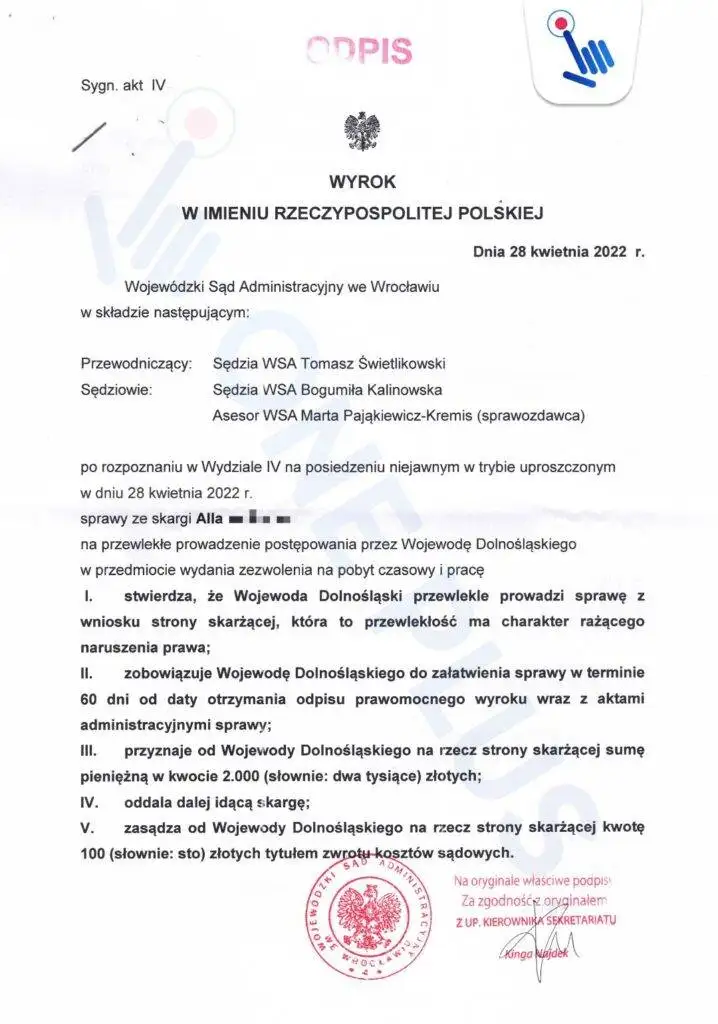
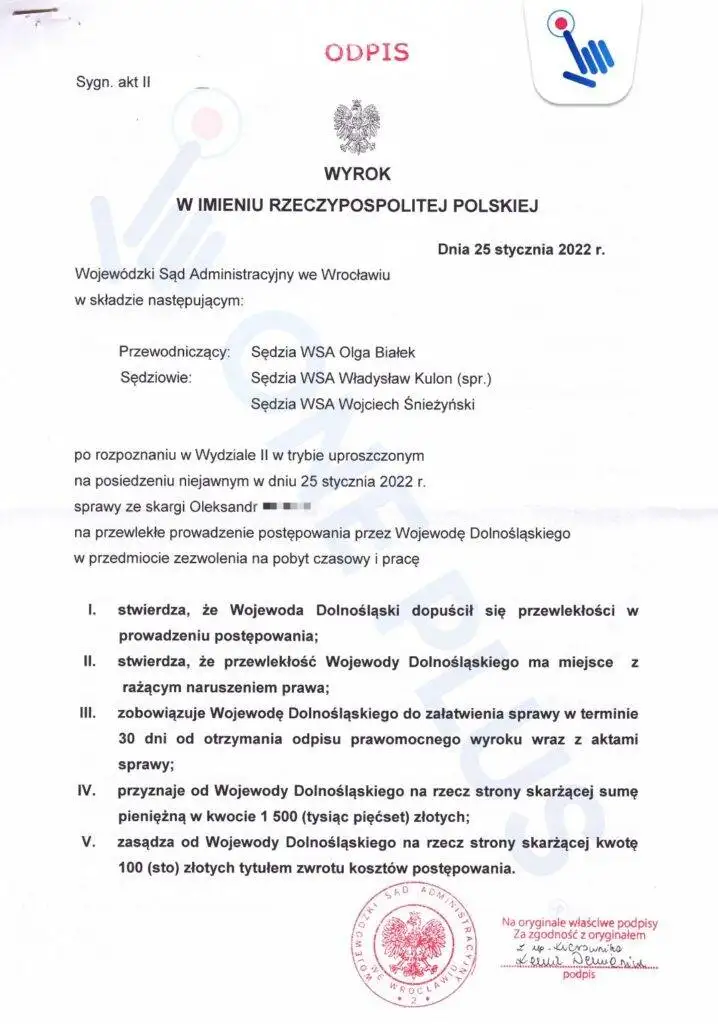
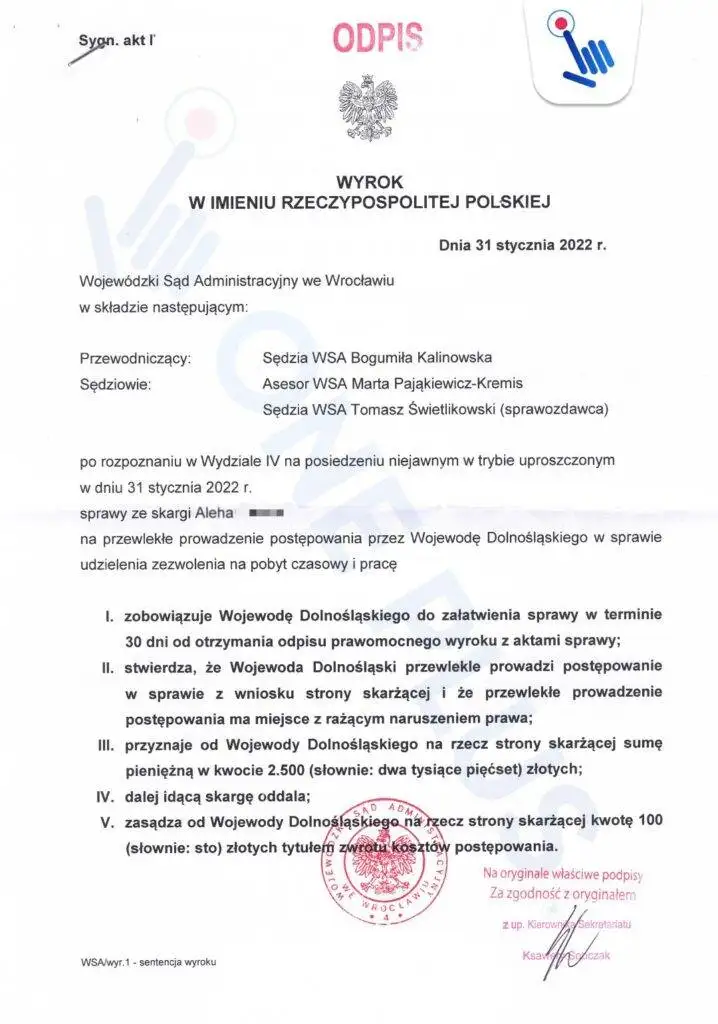
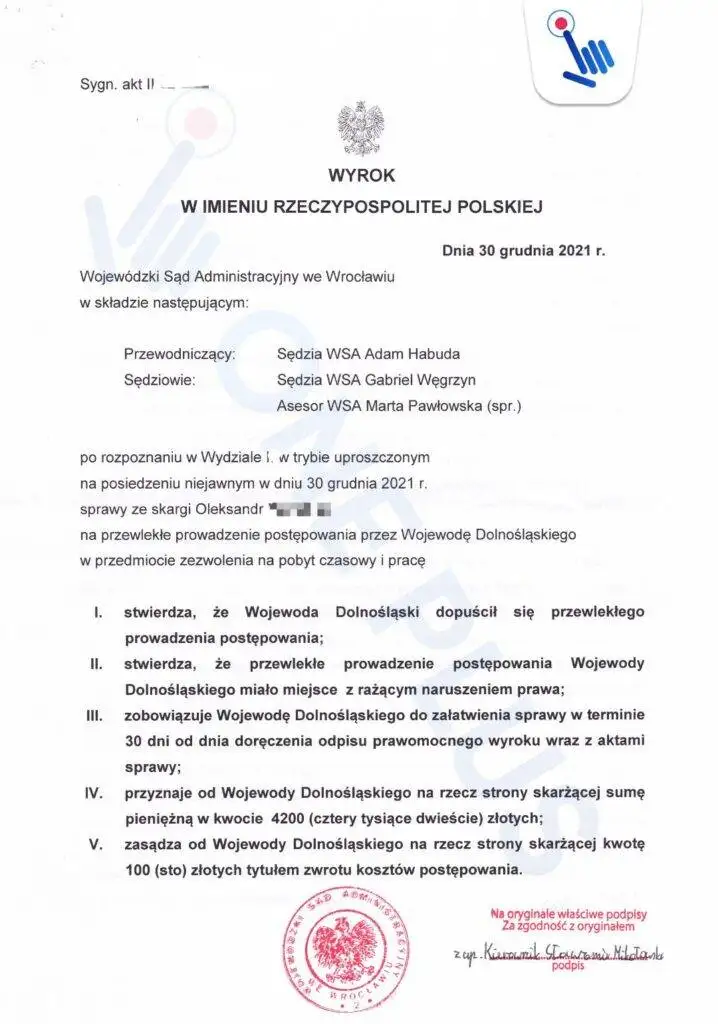
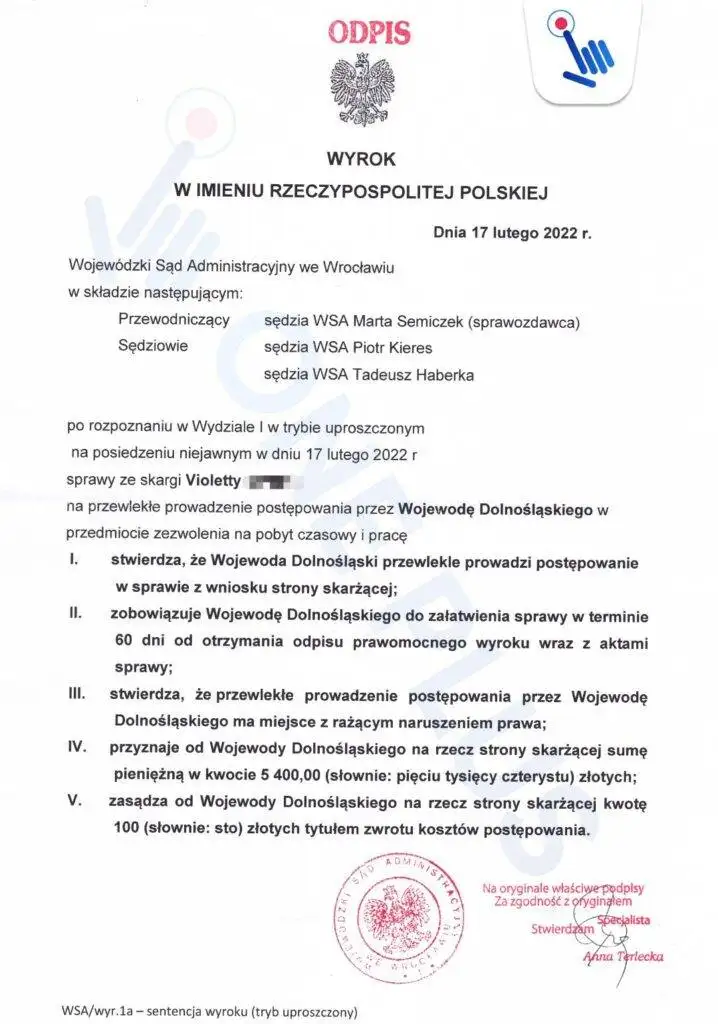
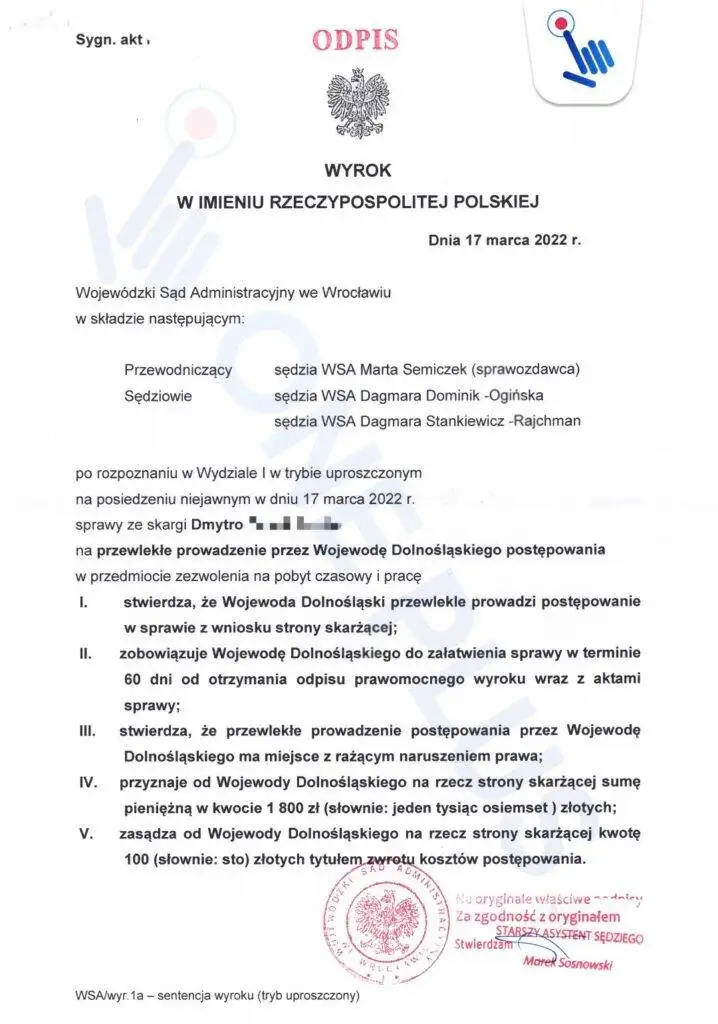
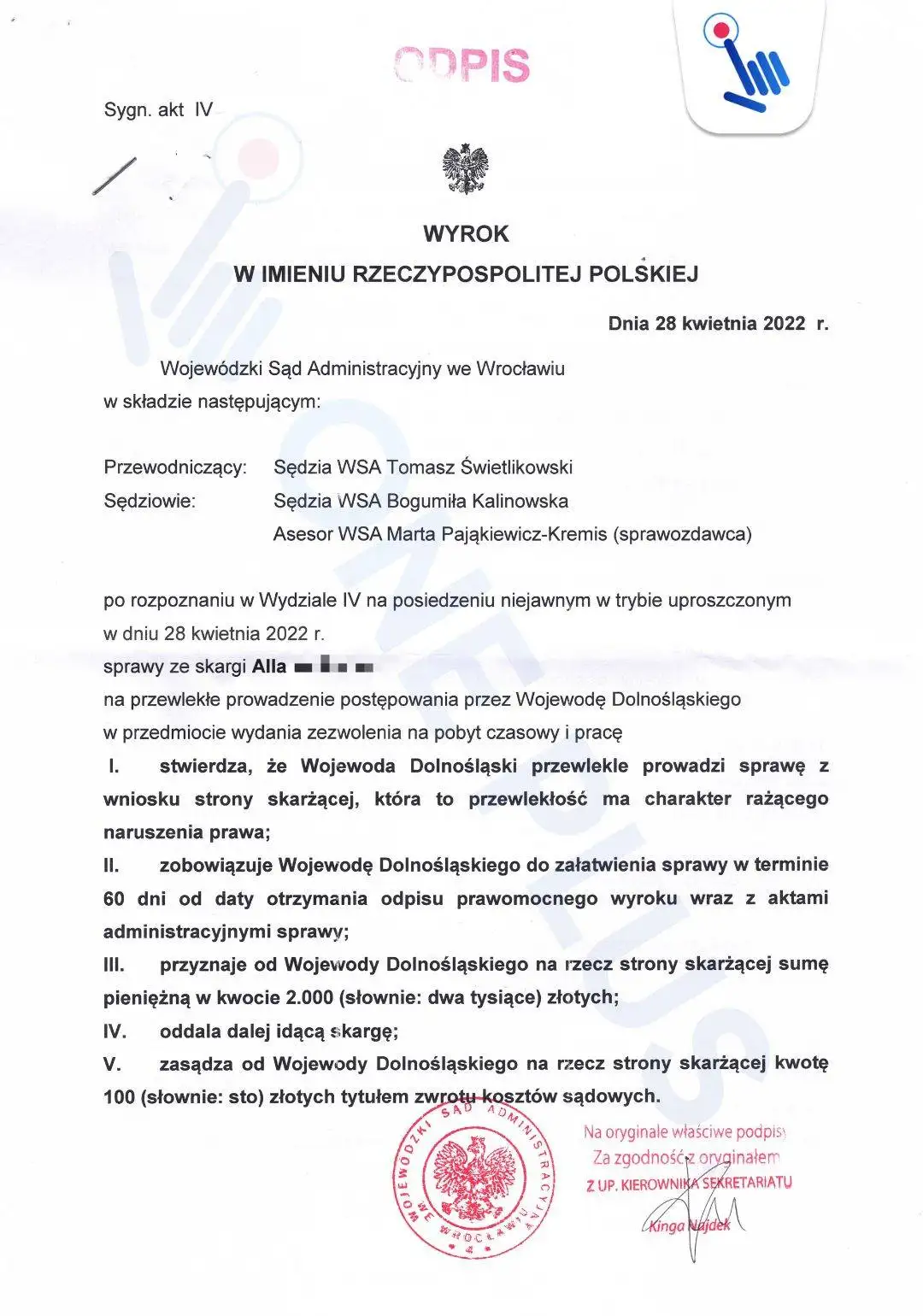
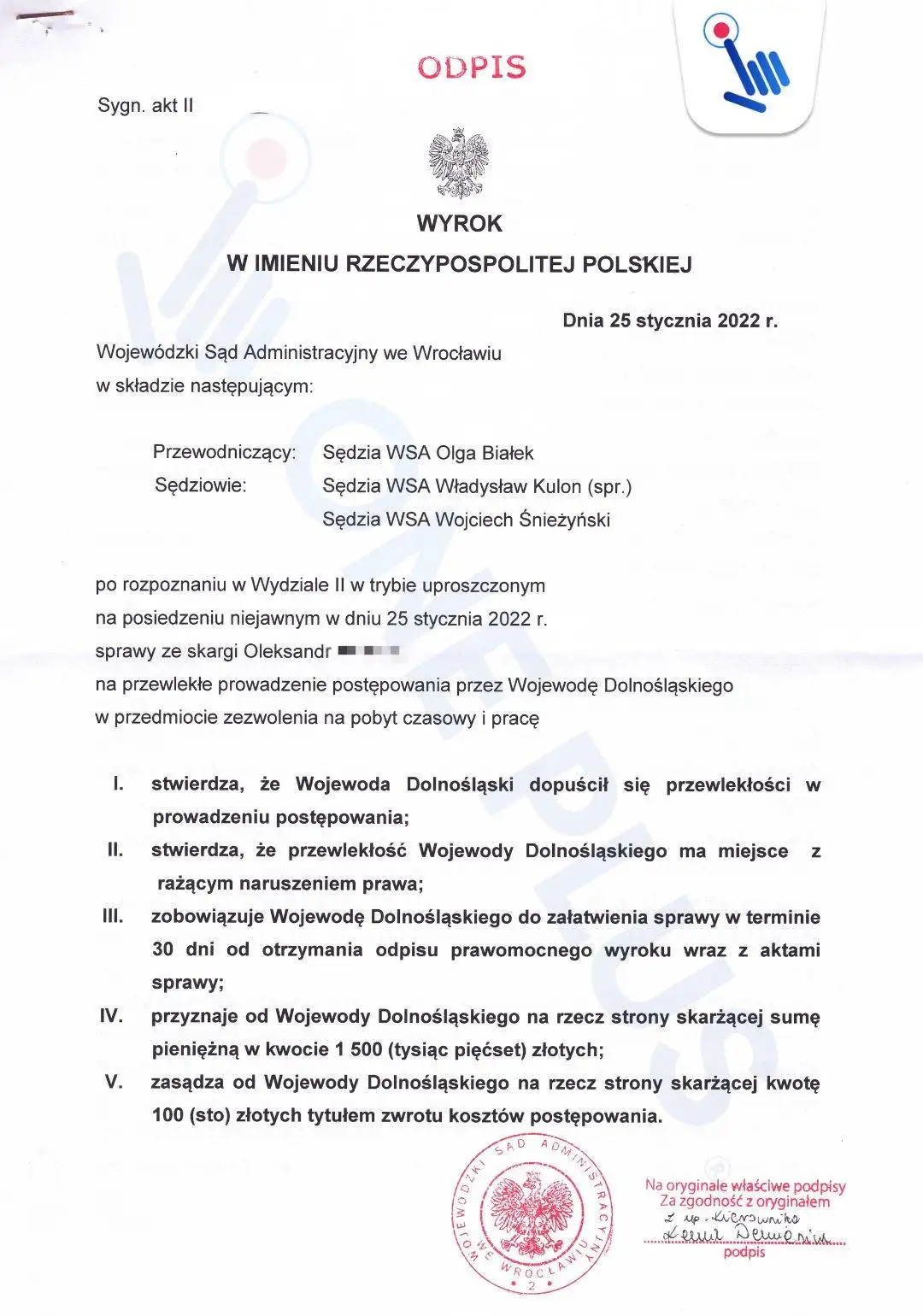
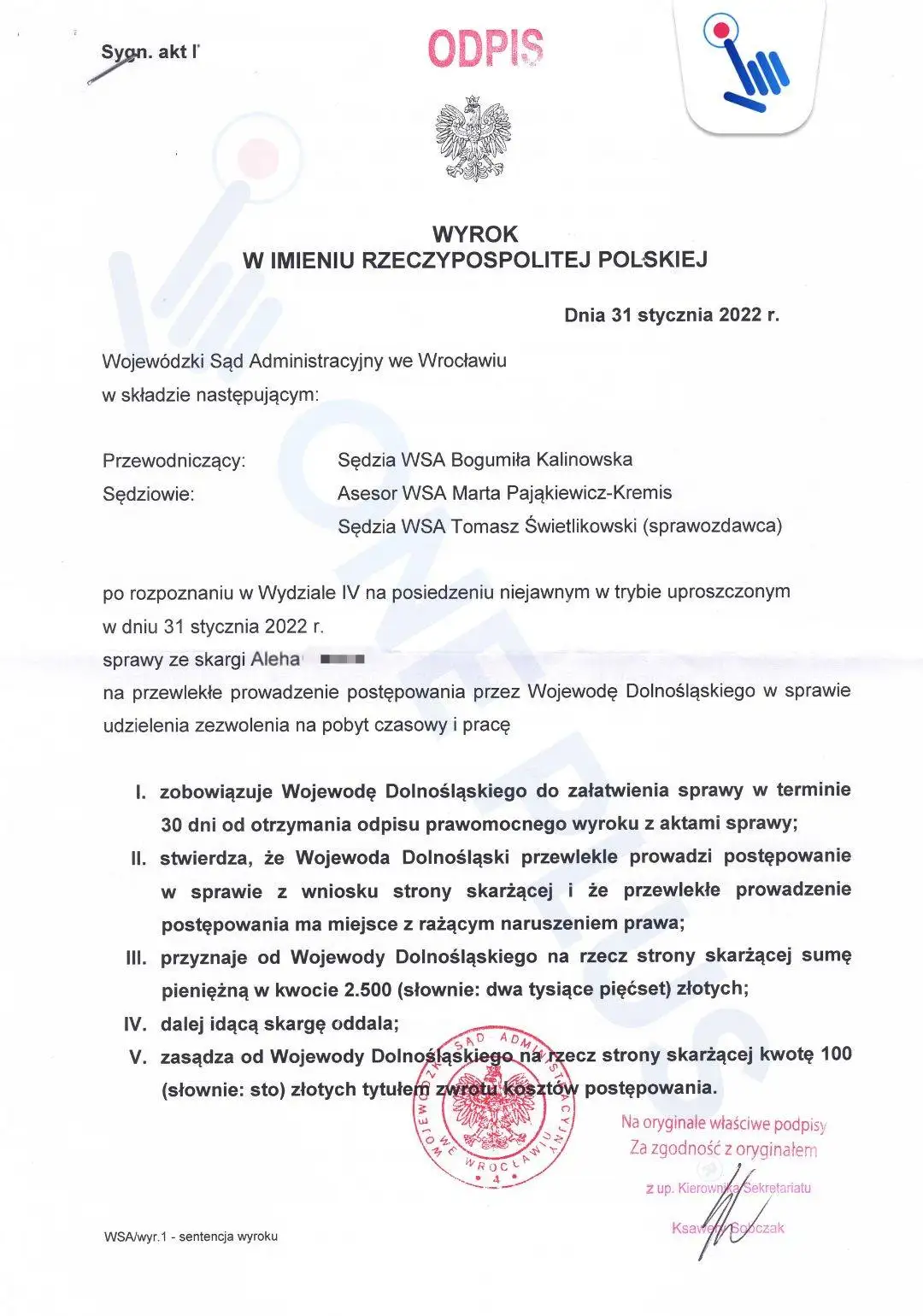
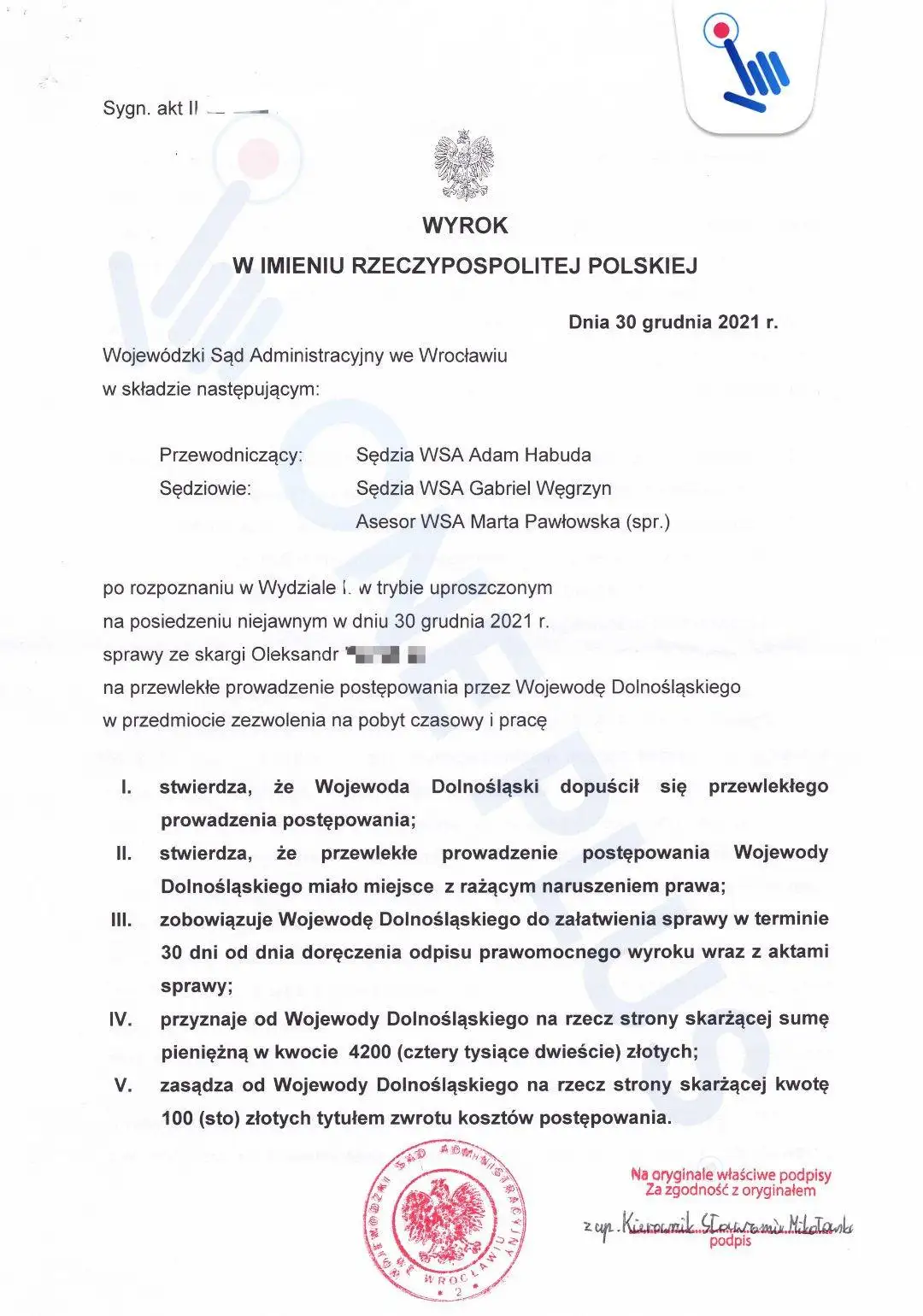
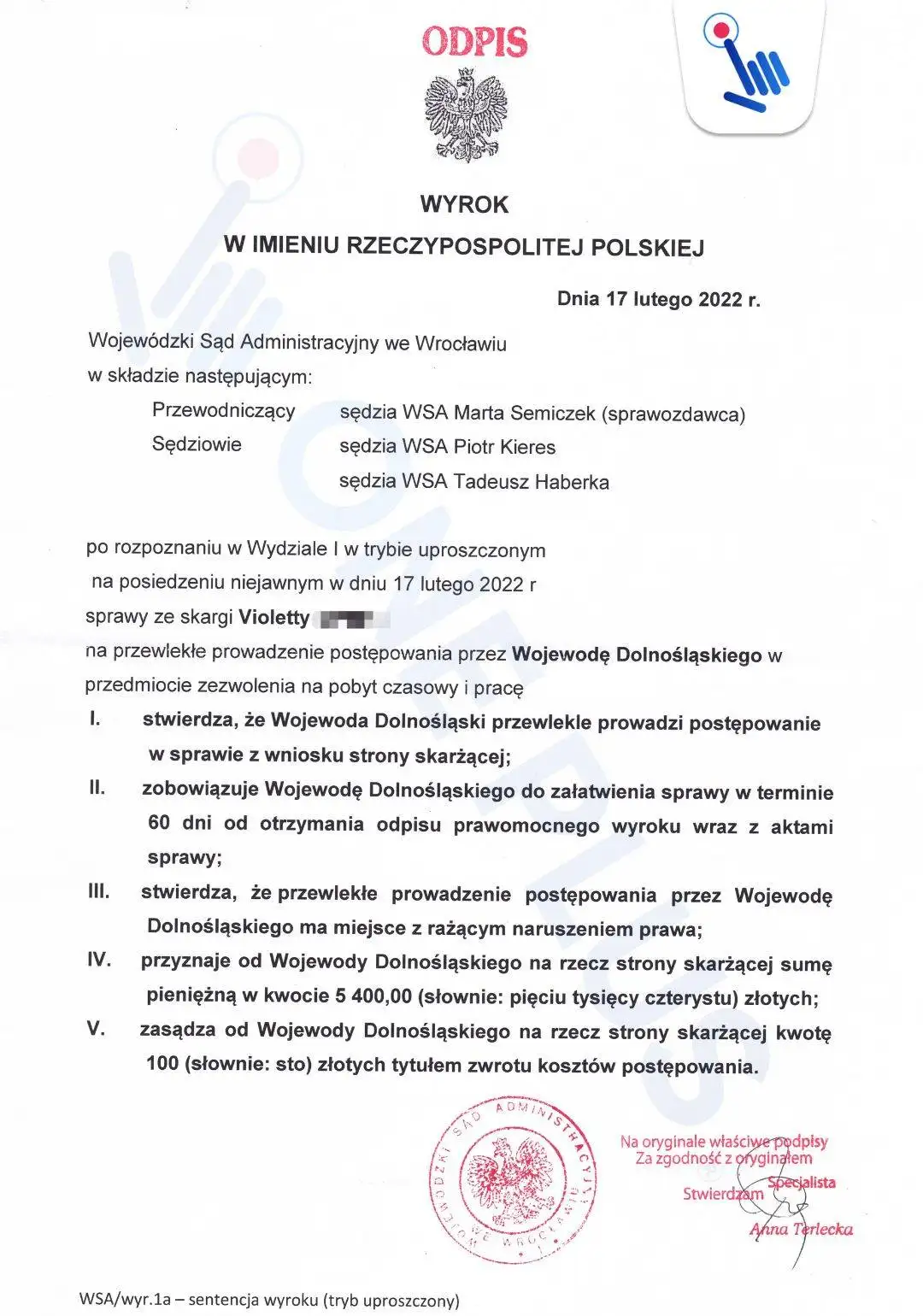
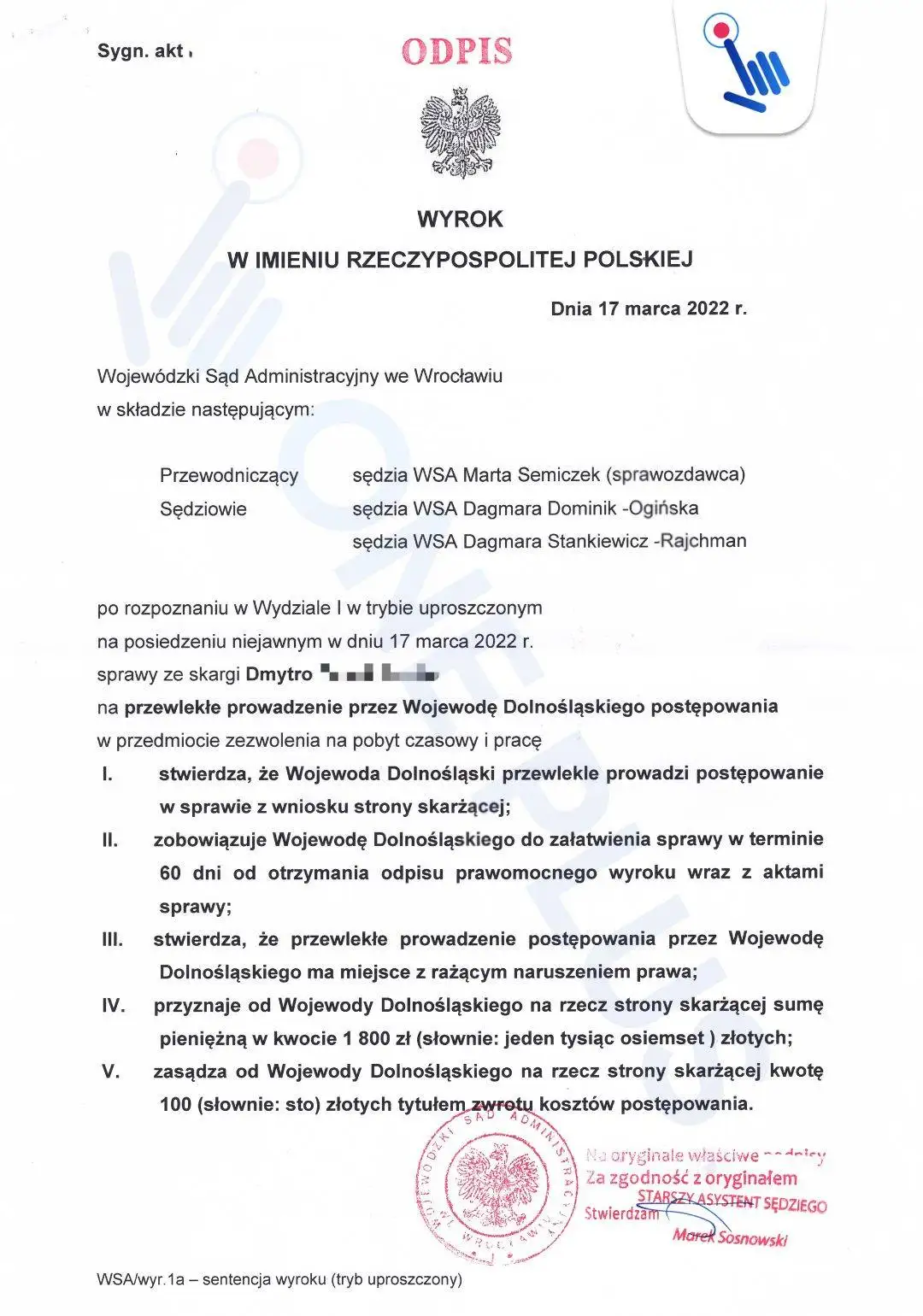
If the delay is unjustified, it may be possible to file a formal reminder, known in Polish as ponaglenie. If the office remains inactive or the proceedings take an excessive amount of time, a complaint to the Voivodeship Administrative Court may also be considered.
Any acceleration measure should be selected after reviewing the case. Both the applicant and the employer must first complete their own obligations.
Common reasons for delays or refusals
Problems often result from inconsistencies between the residence application, employment contract and employer documents.
A case may be delayed or refused because of:
- an incorrect residence or employment basis;
- incomplete employer information;
- differences in the position, salary or working hours;
- an unsigned employer attachment;
- failure to report a change of employer;
- late responses to official requests;
- employment that does not match the submitted documents;
- outdated or inaccurate information.
Many of these issues can be identified before the application is filed. This is why we review the applicant’s immigration status, right to work, contract and employer documents as one complete case.
Support for employers and HR departments
ONE PLUS assists employers before and after hiring a foreign employee.
We check whether a candidate may legally begin work, identify the documents the company must obtain and explain the employer’s role in the residence permit procedure.
For companies employing larger international teams, we can review residence and employment documents, monitor expiry dates and identify employees who need urgent action.
We also cooperate with HR departments and accounting firms. They continue handling payroll, employment and accounting matters, while ONE PLUS manages the residence and employment legalisation process.
This gives the employer a clear division of responsibilities and reduces the risk of missed deadlines, inconsistent documents and illegal employment.
How ONE PLUS manages your case
We begin by reviewing the applicant’s current stay, right to work, employment contract and immigration history. We then identify the correct legal basis and prepare an individual document plan.
We prepare the MOS 2.0 application and advise the employer on the information it must provide. Before filing, we check whether the documents are consistent.
After submission, we monitor correspondence, communicate with the case officer, prepare responses and submit updated evidence when needed.
If the employee changes employer, we explain how to update the pending case or amend an existing permit. If the application is delayed, we assess the legally available measures for accelerating the decision.
After the decision, we explain the next steps and assist with obtaining Karta Pobytu. If the decision is negative, we analyse the reasons and prepare an appeal when there are grounds to challenge it.
Why choose ONE PLUS?
ONE PLUS has worked in the field of residence and employment legalisation since 2018. We are one of Poland’s leading specialist firms providing comprehensive support to foreign nationals and employers.
The company was founded by Tatiana Vyborna, a specialist in administrative and civil law, residence legalisation and the employment of foreign nationals. She has more than 11 years of practical experience in immigration and administrative cases.
Tatiana graduated from the Faculty of Law at the University of Wroclaw and completed postgraduate studies in the legalisation of residence and employment of foreign nationals at the Wroclaw University of Economics and Business.
She has represented the company and its clients during more than 20 inspections conducted by the Border Guard, National Labour Inspectorate, tax authorities and ZUS.
This experience allows ONE PLUS to assess not only the residence application itself, but also the legality of employment, the employer’s documentation and the possible risks of an official inspection.
Apply for a residence permit based on work with ONE PLUS
If you work in Poland, have received a new job offer or plan to change employer, begin by checking your current immigration and employment status.
ONE PLUS helps foreign nationals obtain a residence permit based on work in Wroclaw, Warsaw, Katowice, Gdansk and other cities throughout Poland.
We prepare the application in MOS 2.0, coordinate documents with the employer, communicate with the Voivodeship Office and manage the case until a decision is issued.
If you are an EU, EEA or Swiss citizen, we will identify the correct residence-registration procedure instead of submitting an unnecessary TRC application.
Contact ONE PLUS and tell us about your nationality, job, employer and current status in Poland. We will explain your options in clear English and prepare a practical plan for legal residence and employment.






 4,7
4,7