Student Residence Permit in Poland
We help international students obtain a student residence permit in Wroclaw and across Poland. We review the study basis, university documents, tuition payments, health insurance and financial evidence, prepare the MOS 2.0 application and manage the case until a decision is issued.
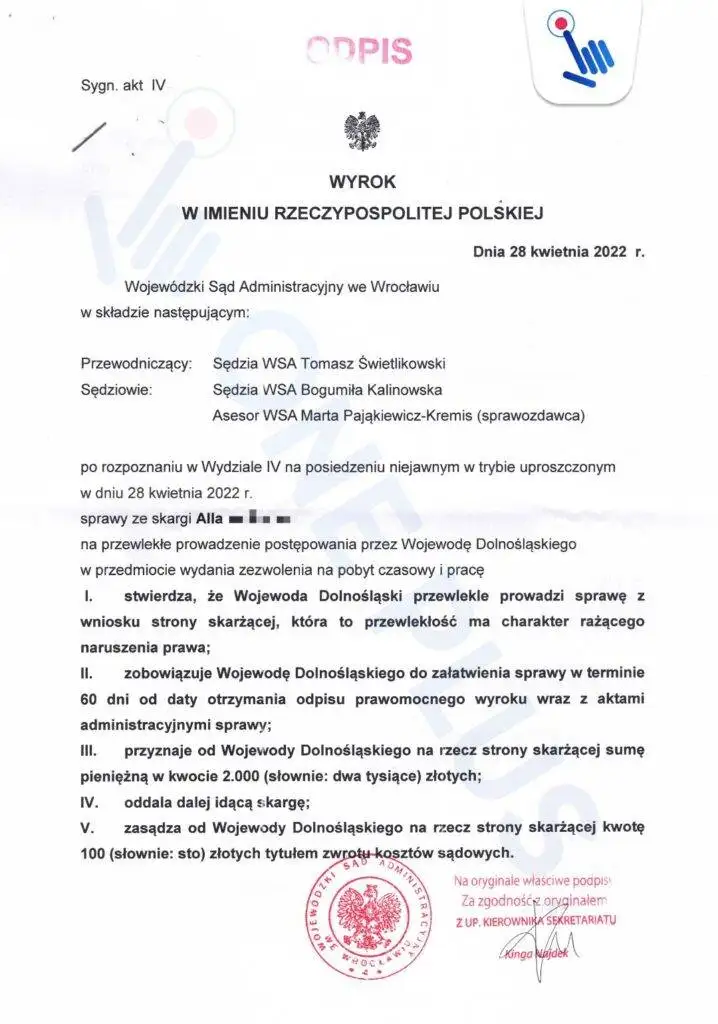
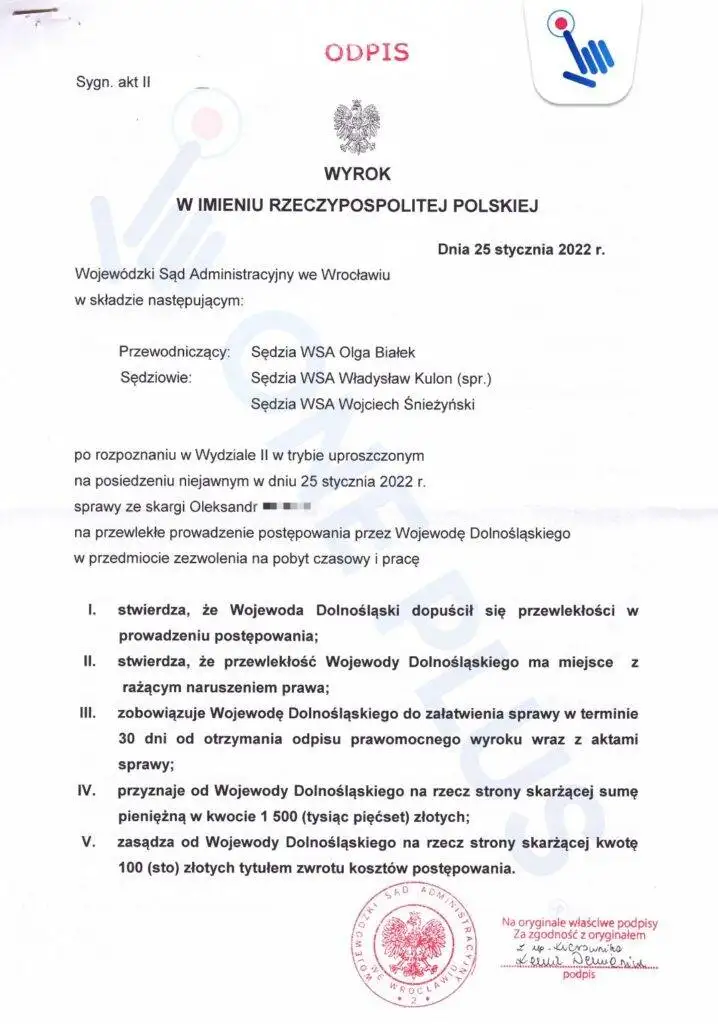
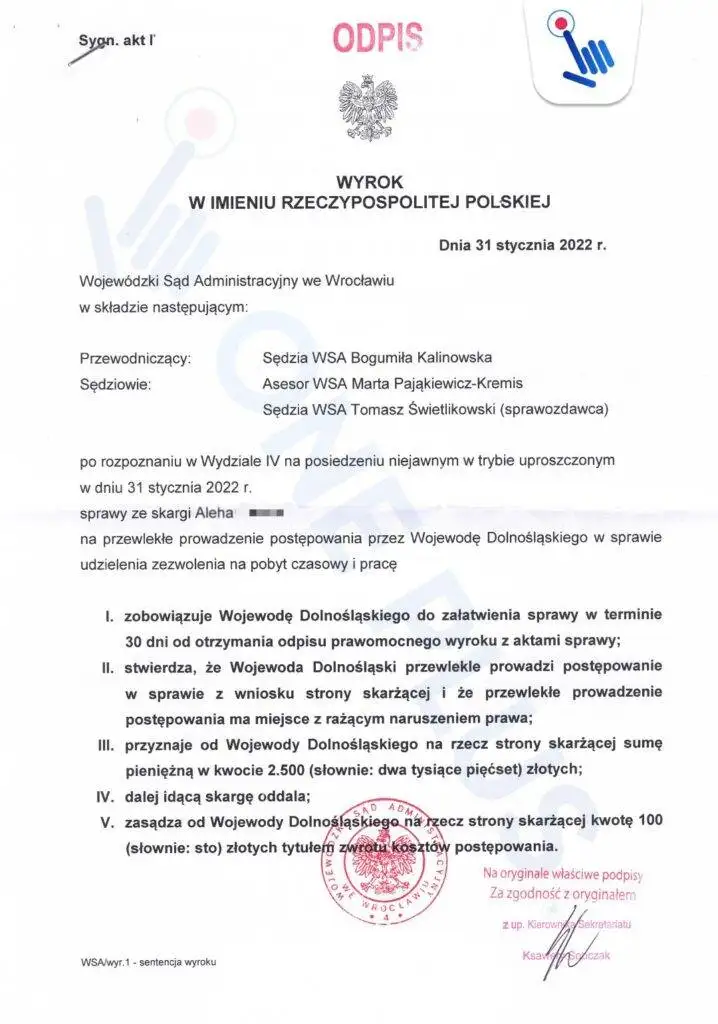
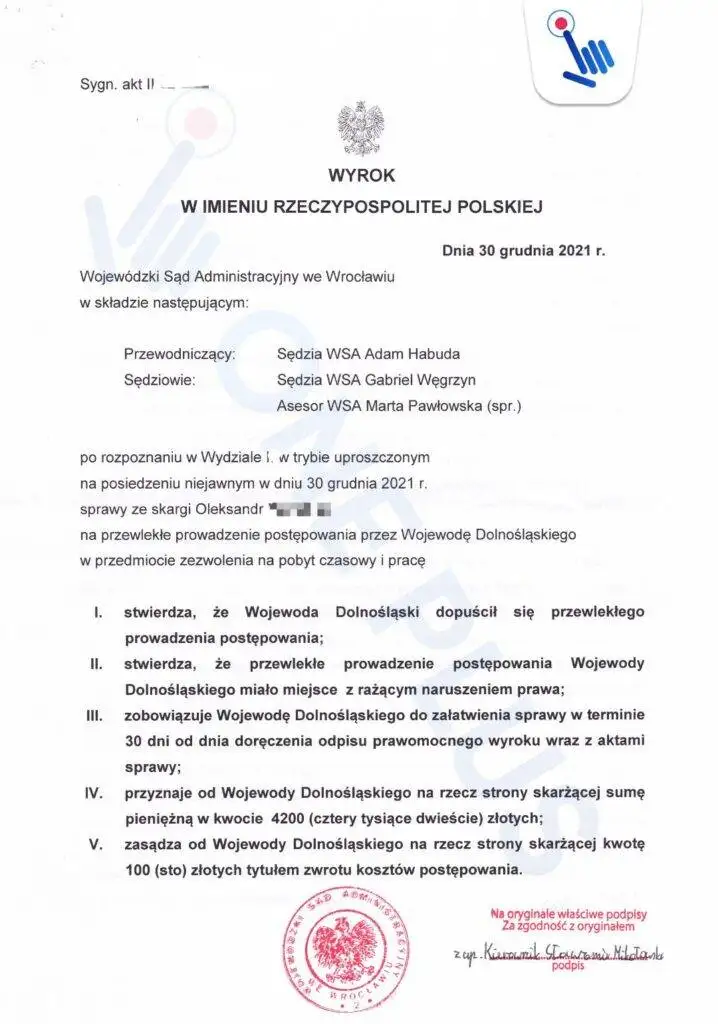
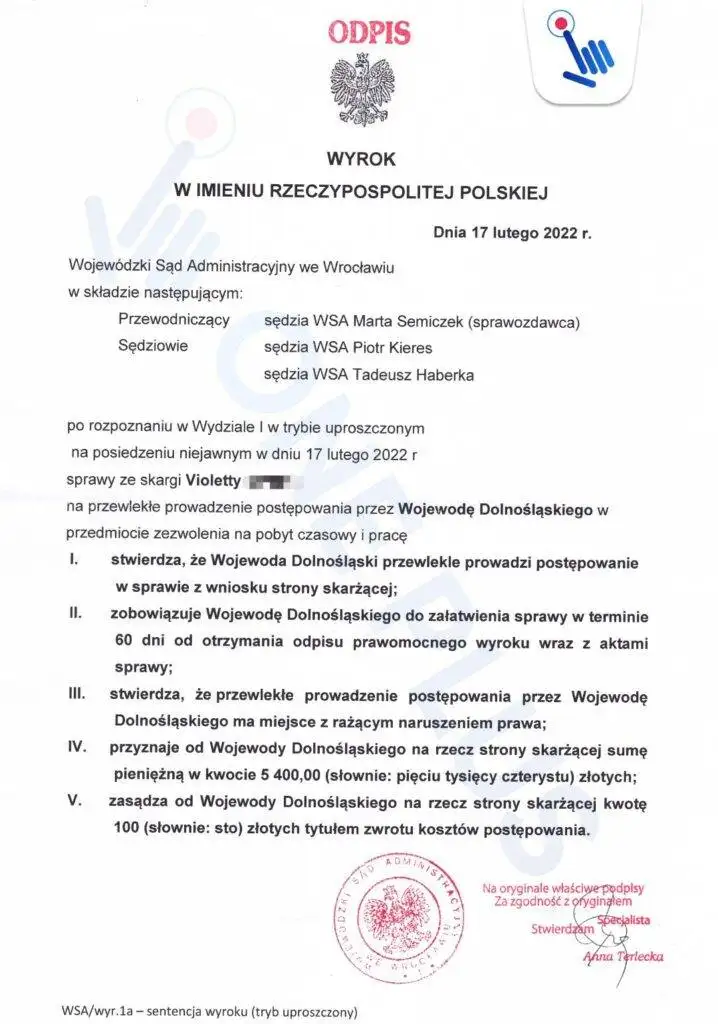
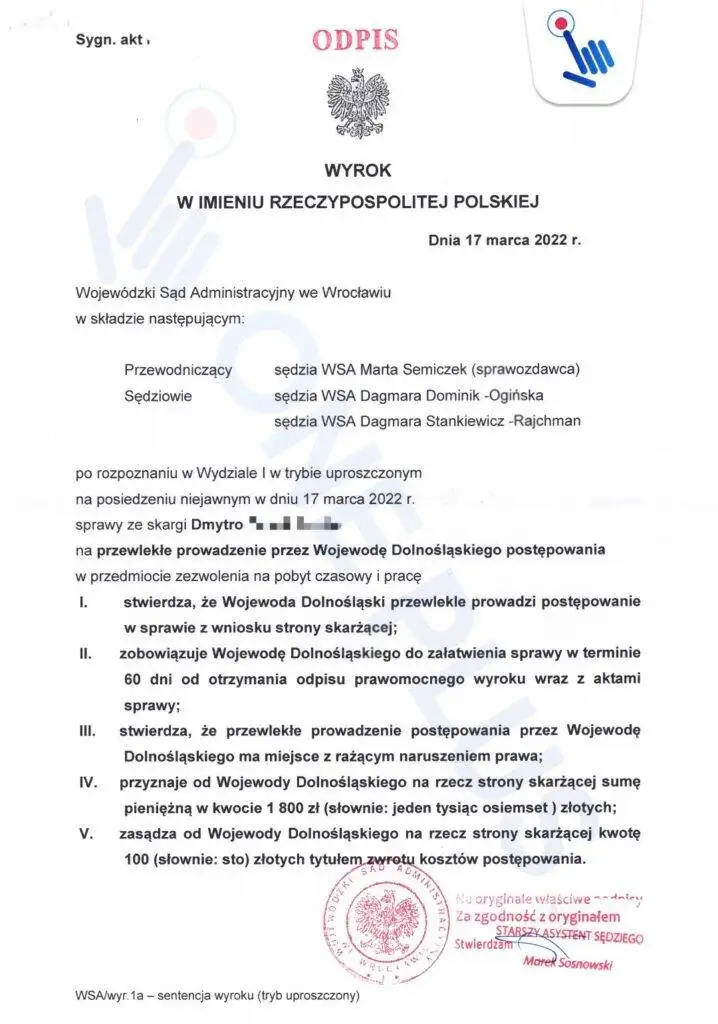
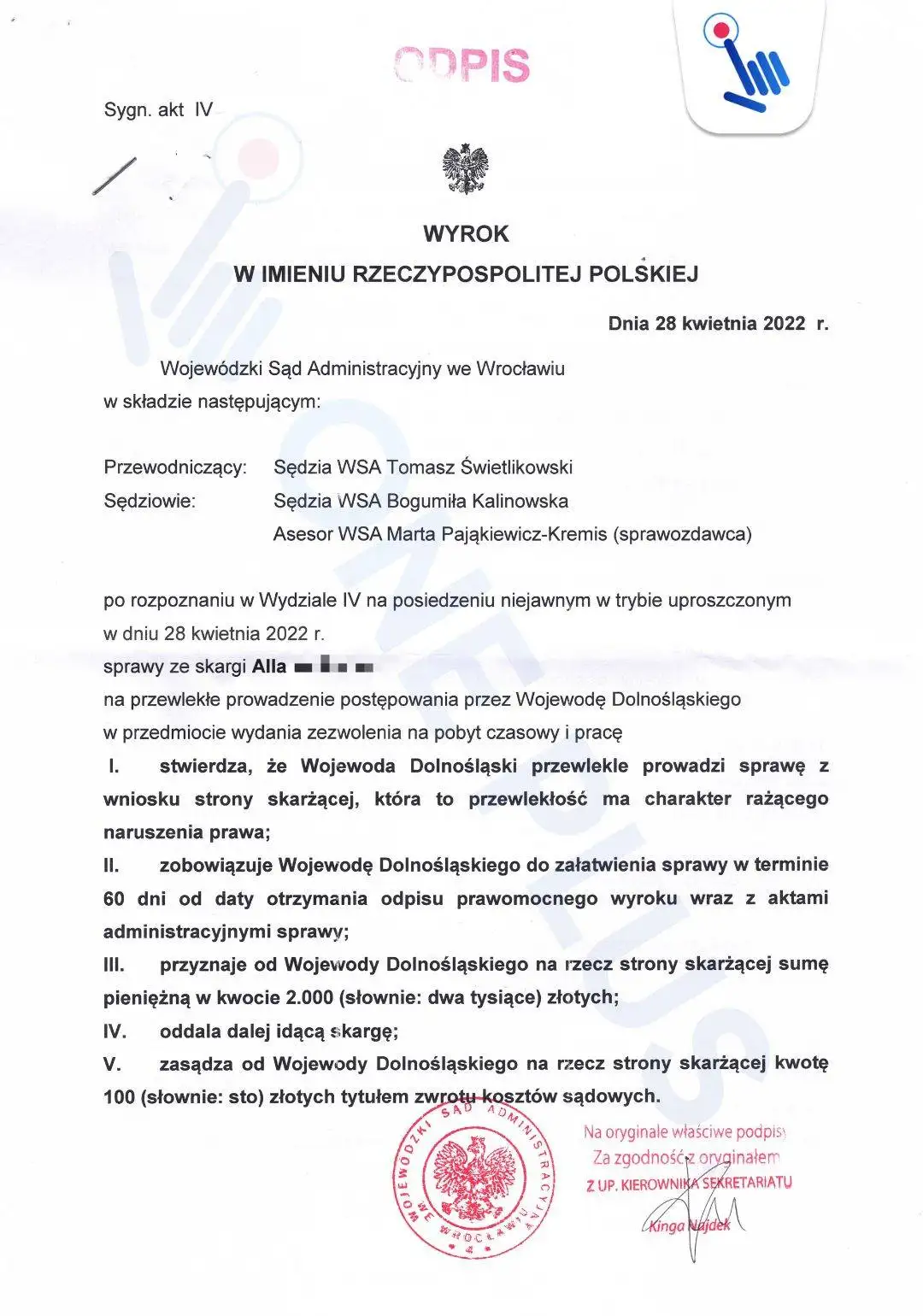
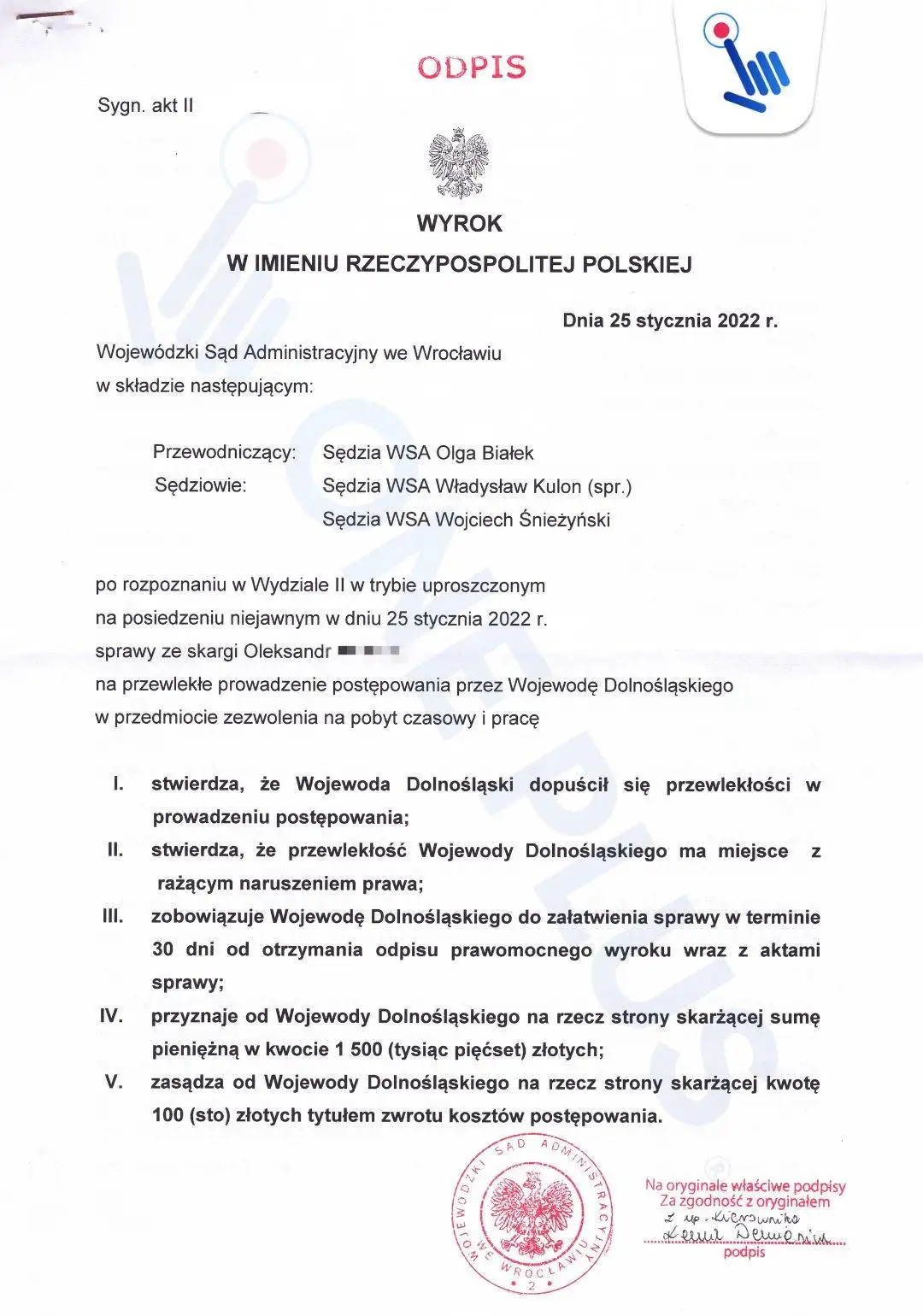
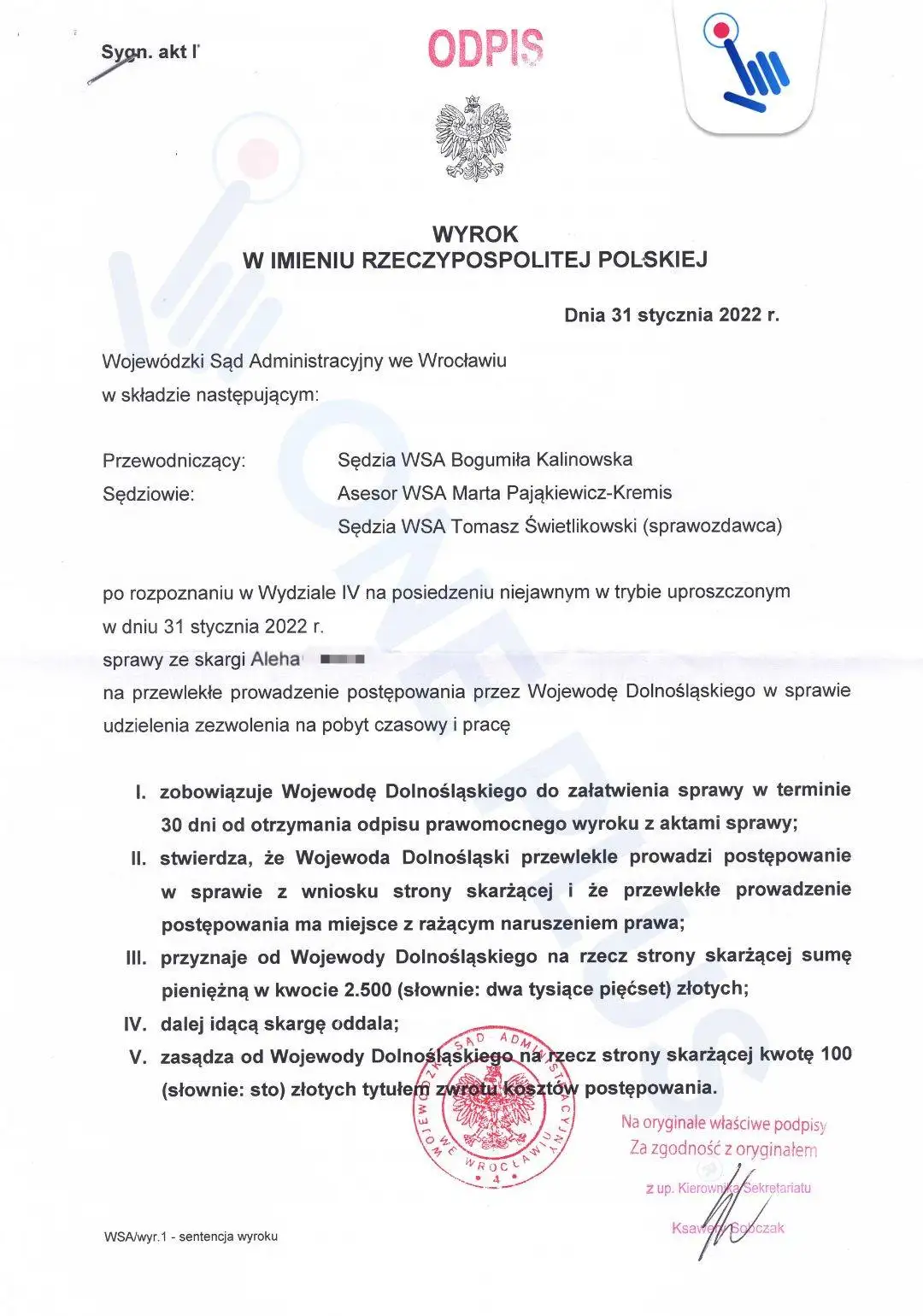
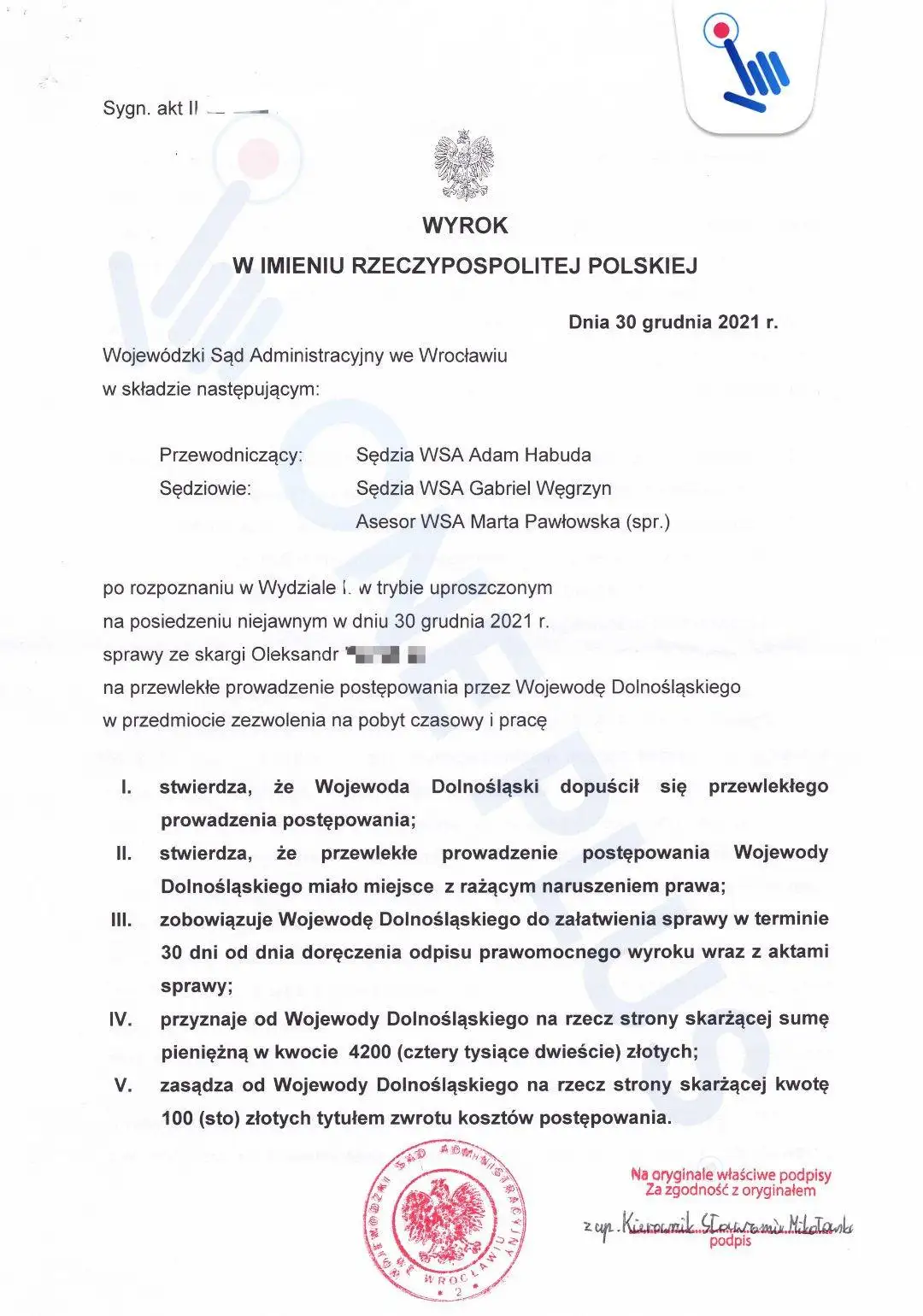
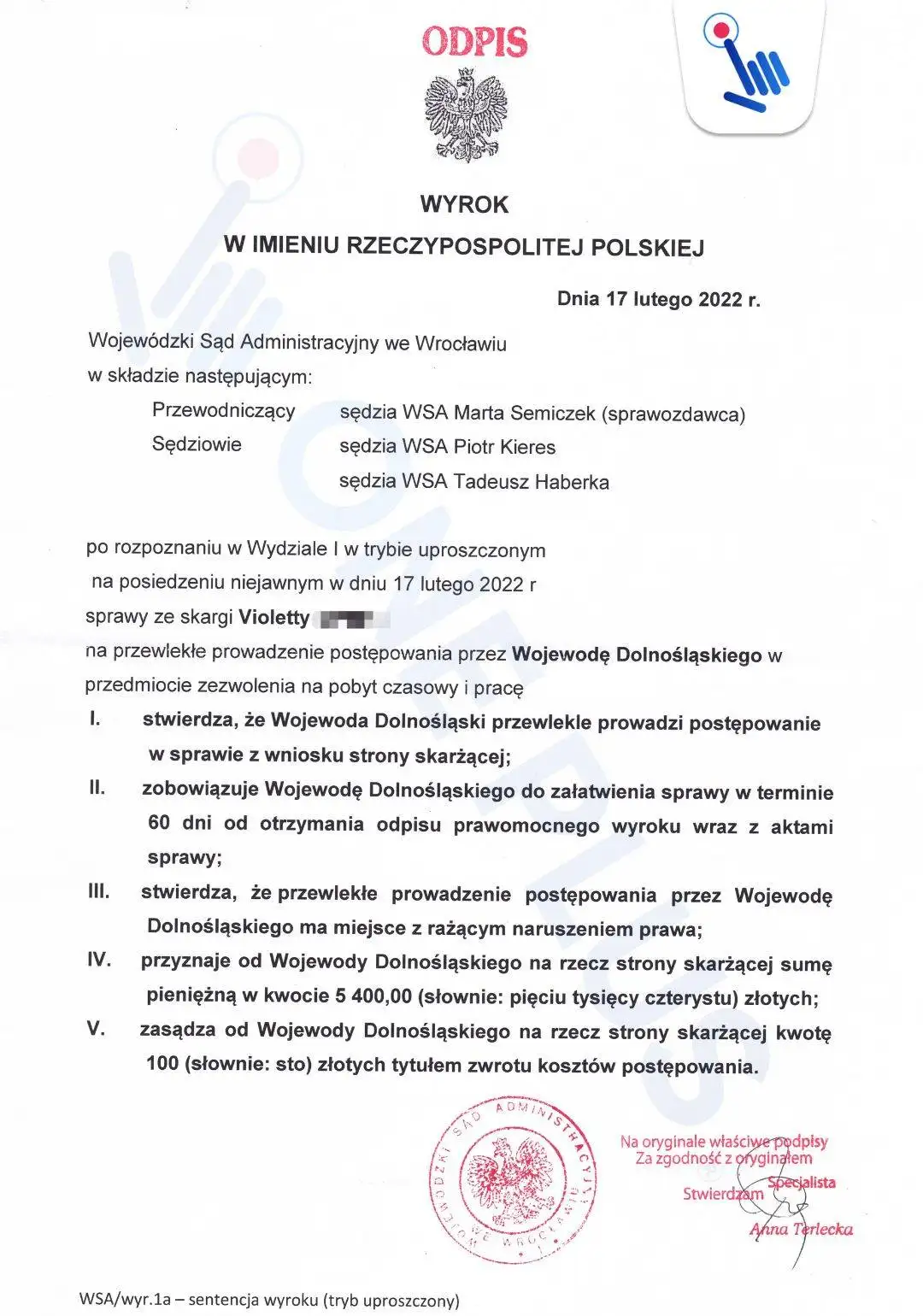
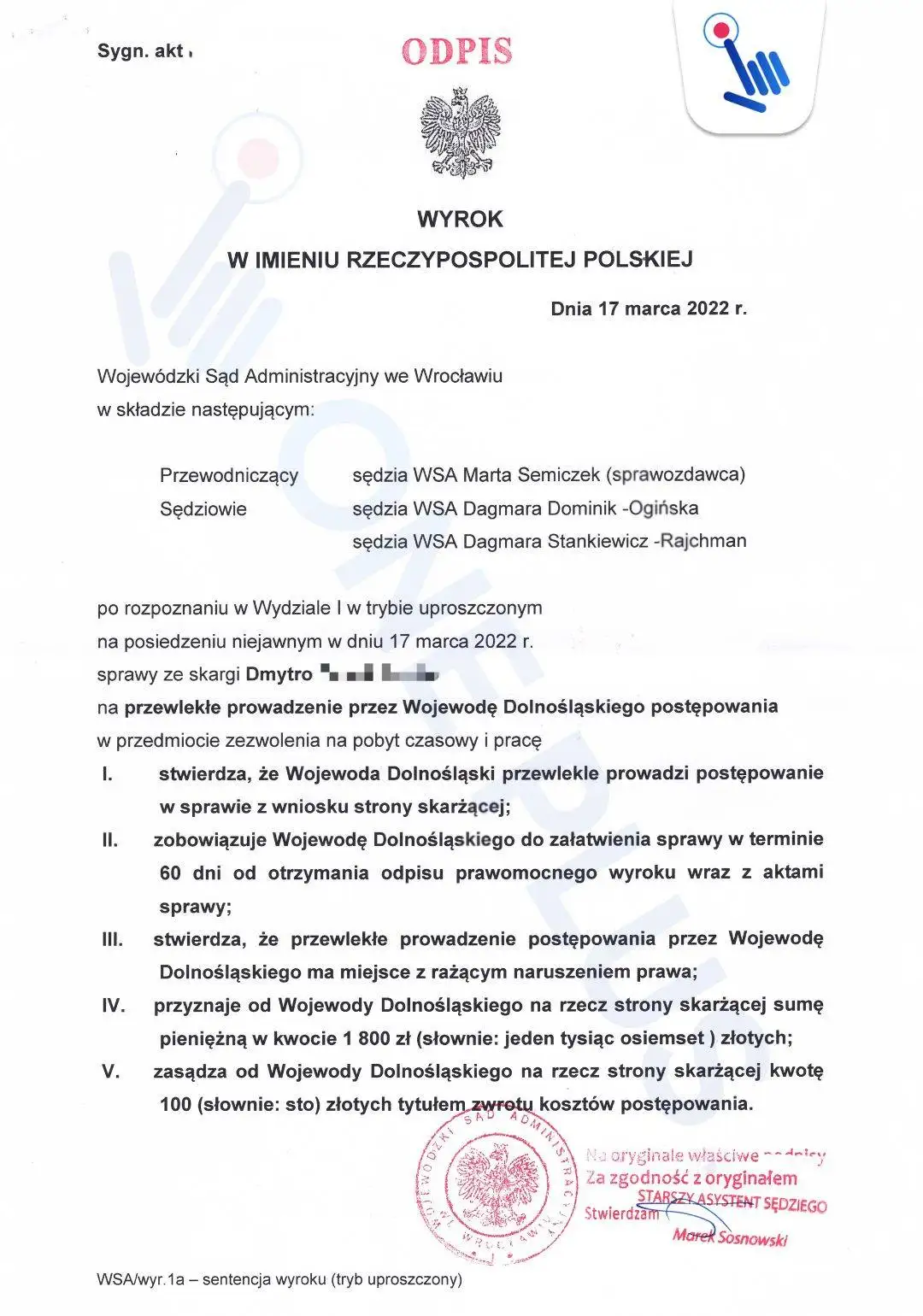
After submission, we monitor official correspondence, respond to requests from the Voivodeship Office, communicate with the case officer and take legally available action if the proceedings are unreasonably delayed.
Legal Support for Student Residence Permits
A student residence permit allows an international student to remain legally in Poland while completing an eligible study programme. It is also commonly referred to as a student TRC, study-based residence permit or Karta Pobytu for students.
The residence permit is the legal authorisation granted by the Voivode. After a positive decision, the student receives a physical residence card, known in Polish as karta pobytu.
Obtaining this permit involves more than presenting an enrolment certificate. The immigration office also checks the form and duration of the programme, the status of the educational institution, tuition payments, health insurance, accommodation and sufficient financial resources.
Even a genuine student may receive requests for additional documents if the application contains inconsistencies. A university certificate may show the wrong form of study, financial evidence may not cover the required period or an insurance policy may not meet the conditions of the procedure.
ONE PLUS manages the legal and administrative side of the application. We review the case before submission, explain which documents must be obtained from the university or school, check the financial calculation and prepare the electronic application through MOS 2.0.
Why Students Choose ONE PLUS
ONE PLUS has supported foreigners with residence and immigration procedures in Poland since 2018. We handle student residence permit cases in Wroclaw, Warsaw, Katowice, Gdansk and other Polish cities.
The company was founded by Tatiana Vyborna, a specialist in administrative and civil law, residence legalisation and the employment of foreigners. She has more than 11 years of practical experience and understands how Voivodeship Offices assess both straightforward and complex student cases.
We do not use the same checklist for every applicant. A full-time university student, a doctoral candidate, a student at a post-secondary school and a person attending a part-time or preparatory programme may need different documents and legal grounds.
Before starting the application, we provide a clear plan. The student understands which procedure applies, what must be obtained from the educational institution, how much money needs to be shown, whether work is permitted and how long the residence permit may be granted for.
How ONE PLUS Manages Your Case
We begin by checking your current residence status, the expiry date of your visa or previous residence card, your form of study and the documents issued by your educational institution. This allows us to confirm whether your studies provide a suitable basis for a residence permit.
We then prepare a personalised document checklist. We review the enrolment or continuation certificate, the duration and cost of the programme, tuition payments, health insurance, accommodation and financial resources.
The next stage is the MOS 2.0 application. We compare your personal details, address and study information across all documents and prepare the electronic files required for submission.
Our work continues after the application has been filed. We monitor correspondence, review letters from the immigration office, prepare responses and provide updated documents when required. We also stay in contact with the case officer and monitor the progress of the proceedings.
If the case remains inactive for an unreasonable period, we assess whether an official enquiry, a complaint concerning delays or another legal measure can be used to move the proceedings forward.
After a positive decision, we explain the final payments and formalities required to obtain the physical residence card.
Who Can Apply as a Student
A student residence permit is intended for people whose studies are the genuine purpose of staying in Poland for longer than three months.
The standard study-based residence permit usually applies to full-time bachelor’s, master’s, long-cycle master’s and doctoral programmes at Polish higher education institutions.
Residence may also be possible for students attending preparatory courses, post-secondary schools, part-time programmes, postgraduate studies, language courses and other long-term educational programmes. However, these forms of education may fall under a different legal basis and provide different rights.
It is therefore important to check more than the name of the university or school. The form of study, number of classes, duration of the programme and status of the institution may all affect the application.
Full-Time University Studies
The standard temporary residence permit for study is mainly intended for international students attending full-time programmes at Polish universities and other recognised higher education institutions.
Studying must be the real and principal purpose of the student’s stay in Poland. The university confirms admission or continuation, the form and duration of the programme, tuition fees and the payment status.
This information must match the MOS 2.0 application. If the student has changed university, degree programme or form of study, the Voivodeship Office should receive updated information and supporting documents.
The case officer may also examine attendance, academic progress and whether the student is actively continuing the programme. Academic leave, repeated semesters, long breaks or several changes of university may require an additional explanation.
Post-Secondary Schools and Part-Time Programmes
Education at a post-secondary school, a language course, a vocational programme or a part-time university programme does not always follow the same procedure as full-time higher education.
In these cases, residence may be considered under a permit based on other circumstances connected with education. The office may examine the duration of the programme, the number of classes, attendance, tuition payments and why the applicant needs to live in Poland.
A lower number of classes may lead to additional questions about whether education genuinely justifies residence for longer than three months. The validity period of the permit and the right to work may also differ from those available to full-time university students.
ONE PLUS reviews the programme before submission. If the educational basis is insufficient or does not match the student’s actual situation, we explain which other lawful residence options may be considered.
The Role of the University or School
The Voivodeship Office assesses both the student and the educational institution. The university or school must be entitled to admit international students and must issue documents containing the information required for the procedure.
Problems may arise when a certificate does not specify the form of study, programme dates, tuition fees or payment status. A case may also be delayed if the educational institution fails to complete its part of the procedure or does not respond to an official request.
For a university application, the institution may be required to complete and digitally sign the relevant electronic attachment in MOS 2.0.
We review certificates before submission and explain what should be corrected or added. This reduces the risk of the student having to request new documents after the case has already been registered.
Applying Through MOS 2.0
Since 27 April 2026, applications for temporary residence permits in Poland have generally been submitted electronically through MOS 2.0.
The applicant completes the online form, uploads a digital photograph and supporting documents, and signs the application using one of the methods accepted by the system.
Electronic submission does not make the decision automatic. MOS 2.0 cannot determine whether the correct residence basis has been selected, whether the student has enough money or whether the insurance meets the legal requirements. These matters are still assessed by the Voivodeship Office.
Incorrect form entries, unreadable files and inconsistencies between the application and university documents may result in requests for clarification. We therefore review both the technical submission and the legal consistency of the entire case.
Official information about electronic applications is available from the Polish Office for Foreigners.
What the Immigration Office Checks
The case officer examines whether the applicant was staying legally in Poland when the application was submitted and whether their passport remains valid. The office also reviews the educational institution, the form and genuine course of study, tuition payments, insurance, accommodation and financial resources.
Previous residence applications, university changes, academic leave and progress through the programme may also be considered.
All documents should present one consistent and understandable situation. An enrolment certificate alone does not guarantee a positive decision. The student must prove the complete legal basis for the requested period of residence.
Financial Requirements for Students
A student must show sufficient funds for living expenses, accommodation, tuition fees and return travel.
In 2026, the basic monthly amount is PLN 1,010 for a person living in a single-person household. Where the student lives with or supports family members, the calculation may be based on PLN 823 per person per month.
The calculation also includes accommodation and utility costs, any unpaid tuition fees and the cost of returning to the country of origin or residence.
The amount normally used for return travel is PLN 200 for a person coming from a country bordering Poland, PLN 500 for a person coming from another EU country that does not share a border with Poland, and PLN 2,500 for a person coming from a non-EU country. A purchased return ticket may replace the need to show the relevant amount in some cases.
For example, the basic living allowance for a first permit covering 15 months is PLN 15,150. Accommodation, return travel and any outstanding tuition fees must then be added.
Financial resources may be documented with a recent bank certificate, account statements, a scholarship, income evidence or documents from a sponsor. The money must be genuinely available to the student and its source should be clear.
Health Insurance and Accommodation
The applicant must have health insurance covering necessary medical treatment in Poland. This may be public insurance through NFZ or ZUS, or a suitable private policy.
A short-term travel policy does not always meet the requirements of a residence permit application. Its validity period, territorial coverage and conditions should be checked before submission.
Accommodation may be confirmed with a tenancy agreement, a document from a student residence, a loan-for-use agreement or another document showing where the student lives.
If the student changes address while the case is pending, the new address should be reported. Otherwise, important correspondence may continue to be sent to the previous address.
How Long Is a Student Permit Valid?
The first temporary residence permit for a full-time student is generally granted for 15 months. If the academic year or programme ends sooner, the permit may be granted for the duration of the studies plus an additional three months.
A subsequent permit may cover the remaining period of study plus three months, but no longer than three years. Separate validity rules apply to doctoral candidates and students covered by certain EU or multilateral mobility programmes.
The final validity period is determined by the Voivode. We make sure that the documents concerning the programme, tuition, insurance and financial resources support the longest period available in the student’s circumstances.
Current validity rules are explained in the official MOS study guidance.
Working While Studying in Poland
A full-time student at a qualifying Polish university who holds the appropriate student visa or study-based residence permit may generally work without a separate work permit.
However, a student ID card alone is not sufficient. The form of study, the legal basis of residence and the status of the educational institution must also be considered.
Students attending post-secondary schools, language courses and part-time programmes do not always have the same exemption. Their right to work should be checked individually before employment begins.
Legal residence while waiting for a student permit decision does not automatically mean that every type of employment is permitted. The right to remain in Poland and the right to work are related but separate legal questions.
Switching From Studies to Employment
A student who receives a job offer should check their current visa or residence card before applying on a new basis.
Since 1 June 2025, a Voivodeship Office may refuse to initiate proceedings for a combined temporary residence and work permit if, on the application date, the applicant is staying in Poland under a visa issued for studies, vocational training or another form of education.
This does not mean that a student cannot work or remain in Poland after completing their programme. It means that the correct legal route must be identified before a work-based residence application is filed.
Choosing the wrong procedure may lead to lost time and government fees. ONE PLUS reviews the applicant’s current document, job offer and employment conditions before recommending the next step.
What Happens After Graduation?
A graduate of a full-time programme at a Polish university may apply for a temporary residence permit to look for work. This permit is granted once for a period of nine months.
If the graduate has already found employment, the next residence basis should be checked before submitting a new application. The current visa or residence card, graduation date, type of contract and employer documents all matter.
ONE PLUS helps graduates plan the next stage of their residence so that the transition from study to employment does not create problems with legal stay or the right to work.
Applying for Another Student Permit
A student residence permit is not automatically renewed. To remain in Poland, the student must submit a new application and again prove their studies, finances, health insurance and accommodation.
During a subsequent application, the case officer may review the previous period of study, including attendance, academic progress, repeated semesters, academic leave, programme changes and tuition payments.
The previous document package cannot simply be reused. University certificates, financial evidence, insurance and accommodation documents must be current when the new application is submitted.
Documents for a Student Residence Permit
The final document package depends on the form of study, the educational institution and the applicant’s individual circumstances.
A standard application usually includes the electronic MOS 2.0 form, a compliant digital photograph, scans of every page of a valid passport and confirmation that the applicable stamp duty has been paid.
The university or school should provide confirmation of admission or continuation of studies, the form and duration of the programme, the amount of tuition fees and the current payment status.
The student must also provide health insurance, evidence of sufficient financial resources and proof of accommodation in Poland. Documents issued in another language normally require a Polish translation prepared by a sworn translator.
Depending on the case, the office may also request attendance records, academic results, sponsor documents, updated tuition confirmations or additional information from the educational institution.
ONE PLUS prepares a personalised checklist after reviewing the case. This prevents the student from collecting irrelevant certificates while ensuring that important evidence is not overlooked.
Cost of Legal Support
Partial support costs PLN 700 and is designed for students with a clear study basis and most of the required documents already prepared. We review the application package, identify missing or inconsistent information and help prepare and submit the application through MOS 2.0. Further communication with the Voivodeship Office is not included in this package.
Comprehensive legal support costs PLN 1,700. We handle the case throughout the procedure, monitor official correspondence, respond to requests from the case officer, provide updated documents and take lawful action if the application is unreasonably delayed. Our support continues until a decision is issued, and we explain the final steps required to collect the residence card.
Government fees and external costs are paid separately. In 2026, the stamp duty for a study-based temporary residence permit is PLN 340. The standard residence card issuance fee is PLN 100, but students who provide proof of their student status qualify for the reduced fee of PLN 50. A power of attorney normally involves an additional PLN 17 fee. Sworn translations, insurance and other third-party services are also charged separately.
Apply for a Student Residence Permit With ONE PLUS
If you study in Wroclaw or another Polish city, begin by checking whether your programme provides the correct basis for a student residence permit. This helps calculate the required funds, prepare the right documents and avoid inconsistencies in the MOS 2.0 application.
ONE PLUS supports international students across Poland, from the first consultation and electronic submission to communication with the case officer, the final decision and collection of the residence card.
Contact us and tell us where and how you study. We will review your situation and provide a clear plan for legalising your stay in Poland.






 4,7
4,7