
ONE PLUS handles CUKR applications for Ukrainian citizens in Wrocław and across Poland, from checking your PESEL UKR status to collecting the finished card. First we check your UKR status history and your data in the registers (passport, fingerprints, signature specimen). Then we prepare the MOS 2.0 application. After you file, we read the letters from the voivodeship office (urząd wojewódzki) with you. If CUKR does not fit, or a work-based case is already open, we compare the routes and tell you which is safer. You sign and submit the application yourself, and we never ask for your passwords.
The main points:
- What it is: a 3-year residence permit for Ukrainian citizens with PESEL UKR status. No job, income or lease is checked.
- Fees: 340 zł stamp duty (opłata skarbowa) and 100 zł card fee, paid to two accounts. No 50 zł reduced fee, not even for children.
- Filing: online only, in MOS 2.0. You can file it yourself.
- Processing: 180 days from a compliant application (Article 42l).
- Main risk: filing closes any pending residence case, such as a work-based one (Article 42i).
- Deadline: 4 March 2027. Facts checked on 18 October 2026.
What is the CUKR card
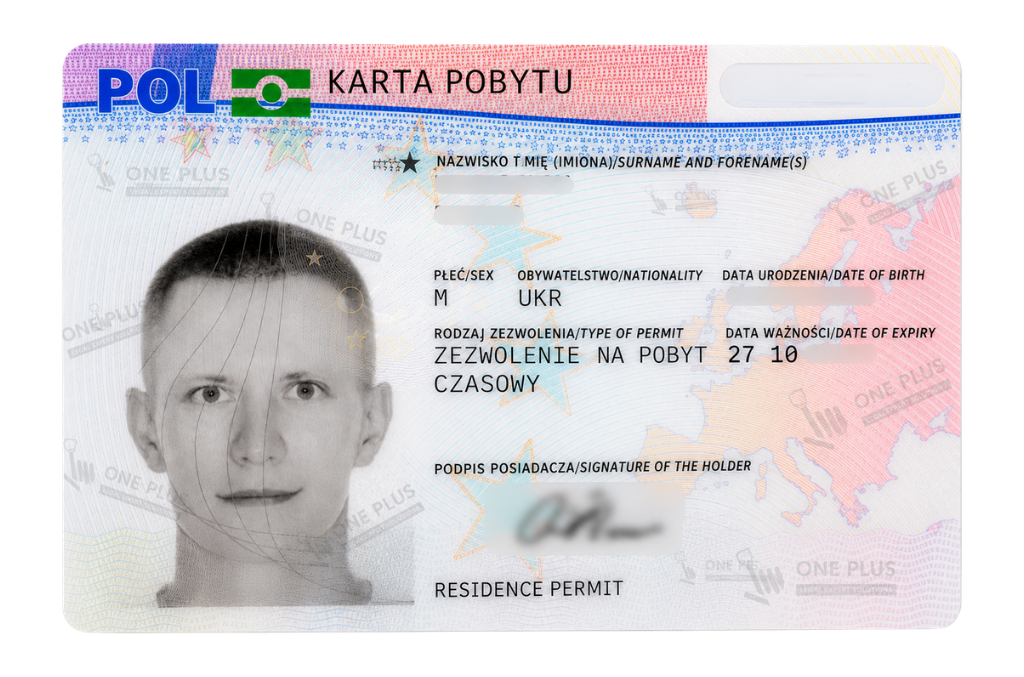
The CUKR card is a 3-year temporary residence permit for Ukrainian citizens with PESEL UKR status. It was created as a bridge from temporary protection to an ordinary residence card, so the office does not check a job, income or lease. What counts is your UKR status history and your registry data.
The card carries the note «Poprzednio posiadacz ochrony czasowej» (former holder of temporary protection). On the day you collect it, protection turns by law into a residence permit, and your status in PESEL changes from UKR to CUKR. With the card you can work without a permit and run a business like a Polish citizen. You can also travel in Schengen for up to 90 days in any 180. It is only for Ukrainian citizens with PESEL UKR. Other nationalities should see the residence permit based on work.
Who can get a CUKR card
You qualify if all four conditions are met at the same time:
- you had UKR status on 4 June 2025;
- you have it on the day you apply;
- you will still have it on the day the card is issued (as explained by the Office for Foreigners, UdSC);
- the status has lasted at least 365 days without a break.
Your registry data must be complete too. The PESEL register must show a valid passport. The temporary protection register must contain fingerprints (from age 6) and a signature specimen (from age 12). Otherwise MOS will not let you submit. Missing data is fixed in person at the municipal office (urząd gminy). We check this before you pay any fees.
When CUKR is refused
- Your PESEL UKR was assigned after 4 June 2025.
- Your status was interrupted, for example by more than 30 days outside Poland. The 365 days start again.
- You received a standard residence permit in 2025 or 2026, which ended UKR status.
Children and spouses
A child who came from Ukraine qualifies on the same terms. A child born in Poland needs UKR status on the filing date, and the mother must already hold a CUKR card. A spouse of another nationality cannot get CUKR, which is issued only to Ukrainian citizens (Article 42c). Look at a family reunification residence permit.
UKR status or CUKR card
PESEL UKR still lets you live and work in Poland, so nobody has to switch to a CUKR card. But it remains temporary protection: how long it lasts depends on EU decisions and Polish law. If your future is in Poland, it is safer to move early. The EU extended protection to 4 March 2028, but the Polish deadline for filing CUKR is different: 4 March 2027. An application filed by then keeps your stay legal until you collect the card or a refusal becomes final (Article 42x).
| Question | UKR status | CUKR card |
|---|---|---|
| Work | no permit; employer notifies the labour office | no permit, no notification |
| Time outside Poland | over 30 days ends protection | 6 months or more: permit withdrawn |
| EU long-term residence | does not count | counts from the day you collect the card |
| Change of address | PESEL rules | notify the voivode within 15 working days |
Our overview of temporary protection and UKR status tracks the changes.
CUKR card or work-based permit
If a work, study or family residence case is open, a CUKR application closes it by law the moment you send it (Article 42i). No separate decision is issued. If CUKR is then refused, you are left with UKR status only. Compare the routes before you file.
| Your situation | Usually better | Why |
|---|---|---|
| Work case stuck for months | apply for CUKR | deadlines in such cases are suspended until 4 March 2027 (Article 100d); CUKR has its own 180 days |
| Work decision is close | wait for it | CUKR would close that case, and the duty may not come back |
| Not sure your UKR status was never interrupted | check it first | a refusal leaves you with UKR status only |
Whether the stamp duty for the closed case comes back depends on its filing date. For applications filed from 5 March 2026 it is not refunded (Article 113c). For earlier ones a refund request under the old rules is possible.
Documents needed for CUKR
You upload three files in MOS: a digital biometric photo and two proofs of payment, 100 zł for the card and 340 zł stamp duty. Do not attach a passport scan, a job contract or a lease. What matters is a valid foreign passport in the register. The Diia app or an internal passport does not replace it.
| Item | Who prepares it | What we do |
|---|---|---|
| Digital photo (JPG) | you | check size, proportions and date |
| Proof of payment: 340 zł and 100 zł | you | check accounts and payment titles |
| PESEL UKR and passport in the register | must already be there | check status history and passport validity |
| Fingerprints (age 6+) and signature specimen (age 12+) | must already be there | find out before you pay whether they are there |
| Trusted Profile (Profil Zaufany) or qualified signature | you | explain how to sign, without taking your passwords |
Photo requirements
The photo is a colour JPG, at least 684 by 883 pixels, up to 2.5 MB, in 35 by 45 mm proportions, taken within 6 months of filing. Our DocPhoto tool for residence card photos prepares the file.
How to apply for CUKR
You apply online only, in MOS 2.0, and you can do it yourself. You log in through login.gov.pl, then sign and send the application with a Trusted Profile (it needs a PESEL) or a qualified electronic signature. There is no appointment to hand in papers. If your passport, fingerprints and signature specimen are already in the registers, you usually do not give them again. You come in once, to collect the card. MOS does not approve the application for you. It does not correct mistakes, and it will not let you send the application if something is missing.
A CUKR application is filed only through MOS. A paper application is left unexamined and the 340 zł duty is not returned.
- Check your status and registry data: passport, fingerprints and signature.
- Set up a Trusted Profile or qualified signature and an e-Doręczenia mailbox. Our guide to e-Doręczenia and MOS 2.0 shows how.
- Pay both fees and save the confirmations as PDF.
- Complete the form for Ukrainian citizens under temporary protection and attach the three files. Our walkthrough on filling in the MOS 2.0 application explains the fields.
- Sign, submit and save the UPO (proof of submission).
- Watch for letters in MOS and e-Doręczenia, and collect the card in person within 60 days of the notice.
The UPO only confirms that the application arrived. It is not a decision and gives no new right to work or travel. Until you collect the card, UKR rules apply, including the 30-day limit outside Poland. We prepare and check the application, and you press send.
How much does CUKR cost
You pay 340 zł stamp duty and 100 zł card fee by two transfers to different accounts before filing. There is no 50 zł reduced fee, even for children (Article 42k), and each family member pays separately. Do not mix up the amounts: a work-based permit and a Blue Card carry 440 zł stamp duty, CUKR carries 340 zł.
| Payment | Amount | If the case fails |
|---|---|---|
| Stamp duty for the permit | 340 zł | not refunded if the case ends without a card: refusal, application left unexamined, discontinuation (Article 42s(3)) |
| Card fee | 100 zł | a separate payment to the voivode; no automatic refund rule after a refusal |
| Card not collected within 60 days | 340 + 100 zł | the card is cancelled and neither payment is refunded (Article 42r(2)) |
The 340 zł goes to the treasury of the city where the voivode sits (Wrocław for Lower Silesia), the 100 zł to the voivodeship office. Take account numbers only from the office's official website. Use the title «udzielenie zezwolenia CUKR» or «wydanie karty CUKR» with the name of the person you pay for.
How long does CUKR take
By law the voivode decides within 180 days from the day a compliant application is filed (Article 42l; filing requirements in Article 42g). The first issue of CUKR has its own period under Article 42l, and the general 60 days under Article 112a are not carried over to it. This is a processing period, not a promise that the card is ready on day 180: after the decision it is still printed and issued.
| Stage | What happens | Time |
|---|---|---|
| Security check | Border Guard, Police and Internal Security Agency (age 13+) | 30 days, up to 60 |
| Outcome | card produced or refusal | 180 days from filing |
| Collection | in person at the office | within 60 days of the notice |
You can track the case in MOS, and letters arrive there or in e-Doręczenia. See how to check your residence permit status. If the office sends a letter asking for documents (wezwanie), take the deadline from the letter itself.
When the decision comes, you have 60 days to collect the card in person. Before that, the clock that matters is the office's. CUKR has its own 180 days from a correct application.
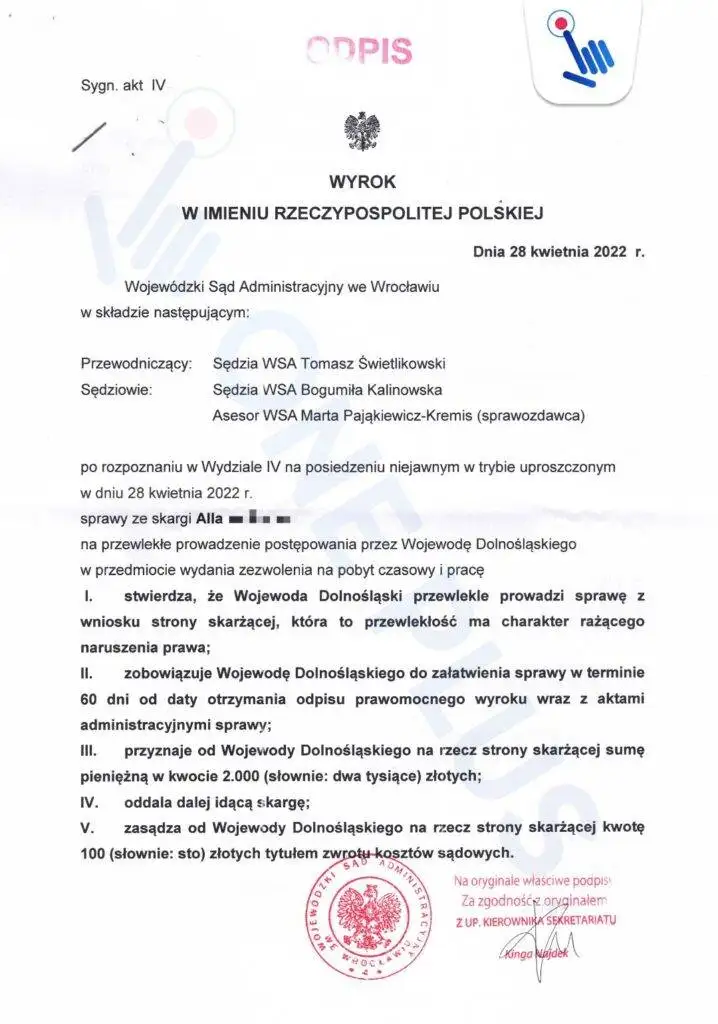
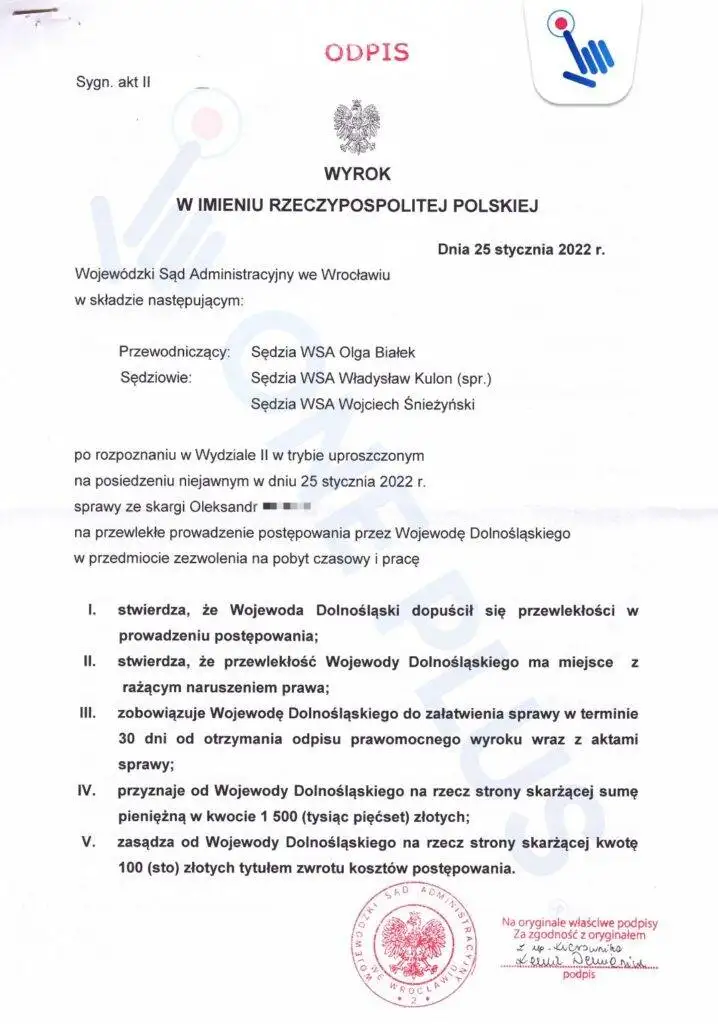
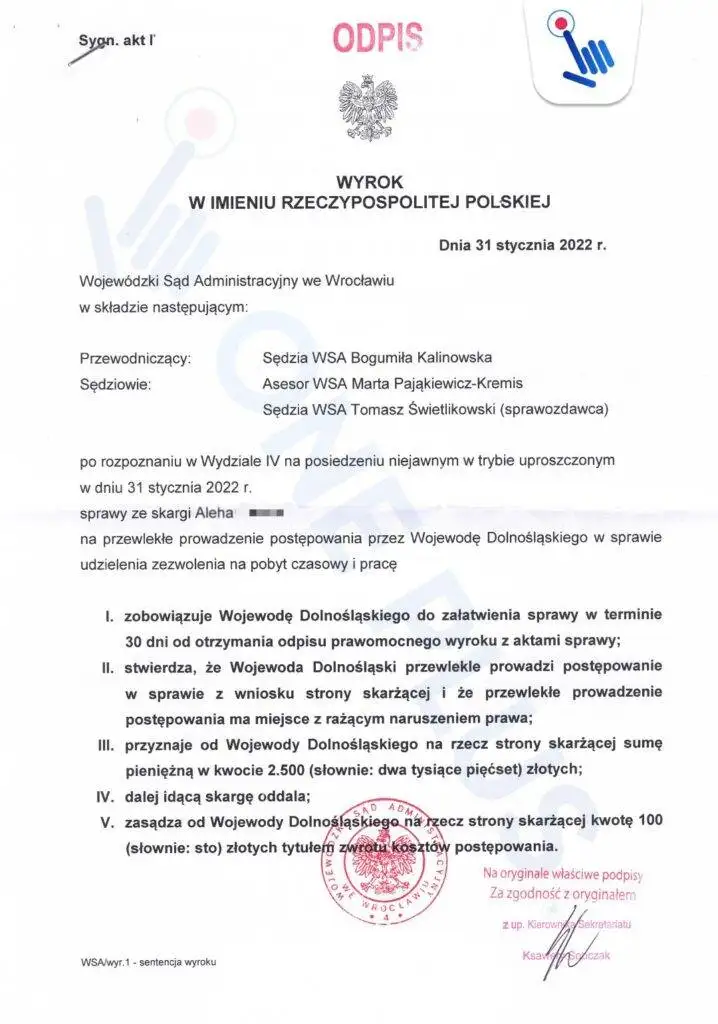
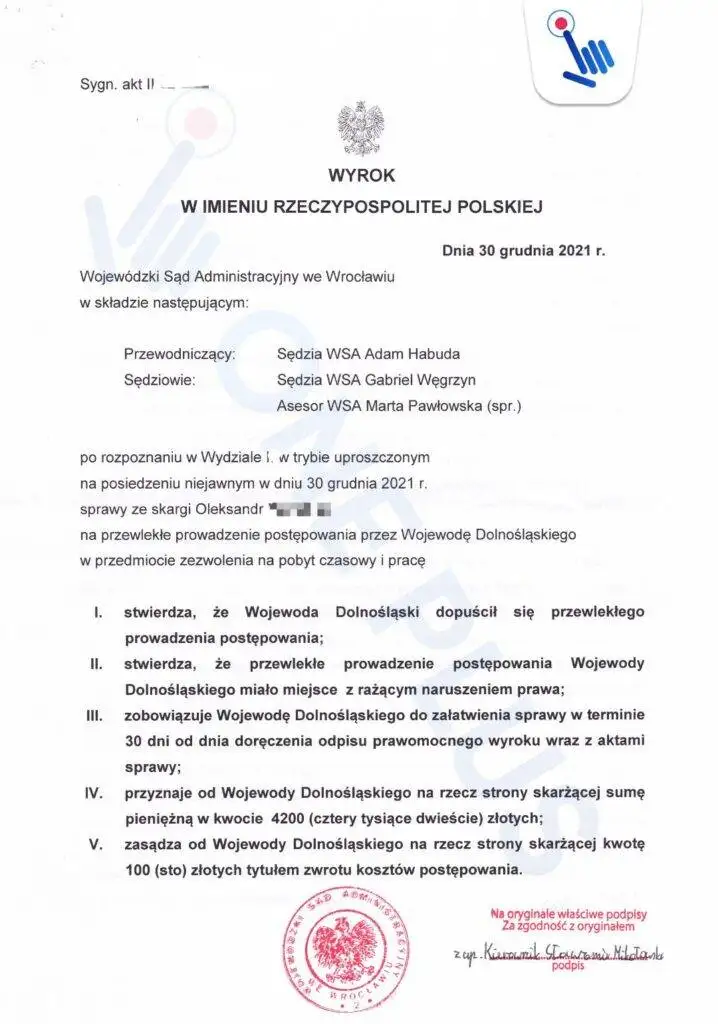
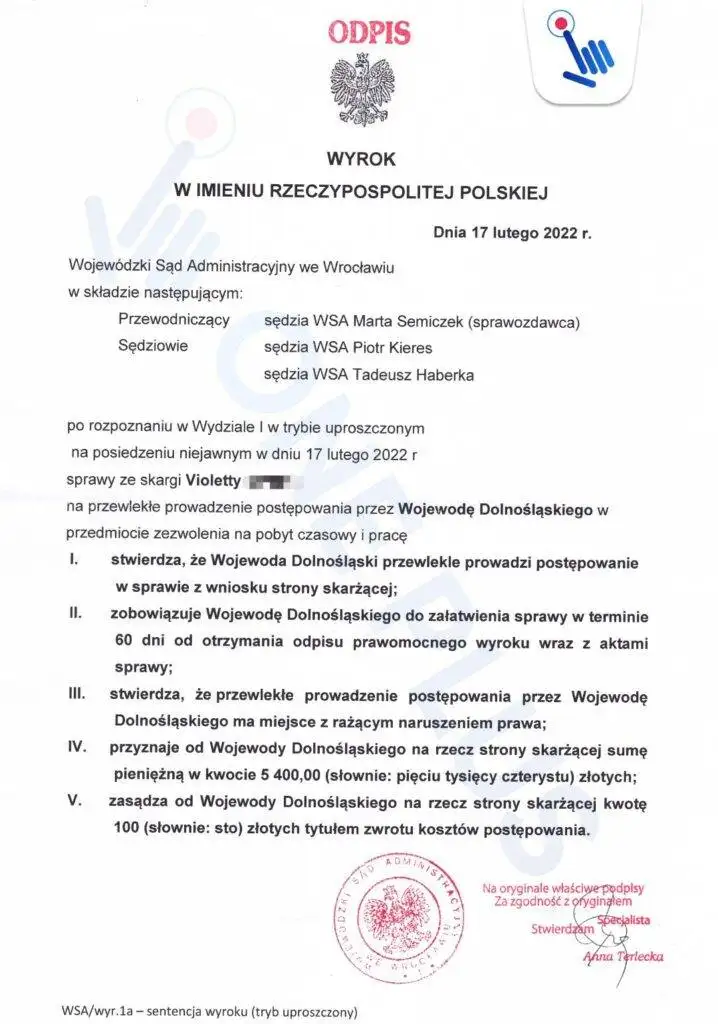
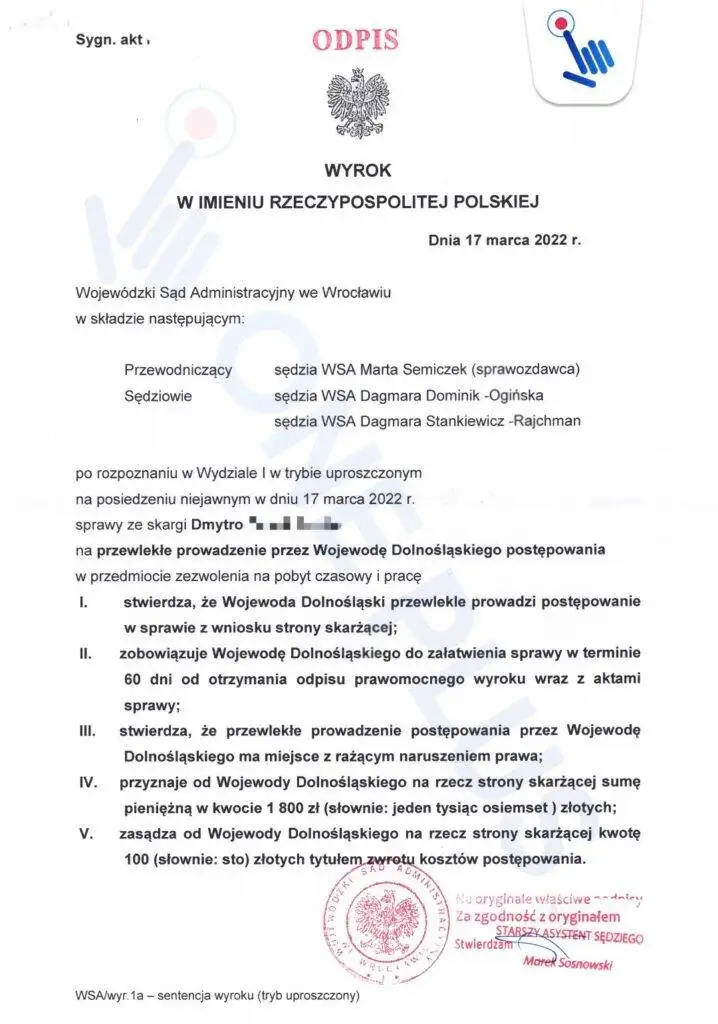
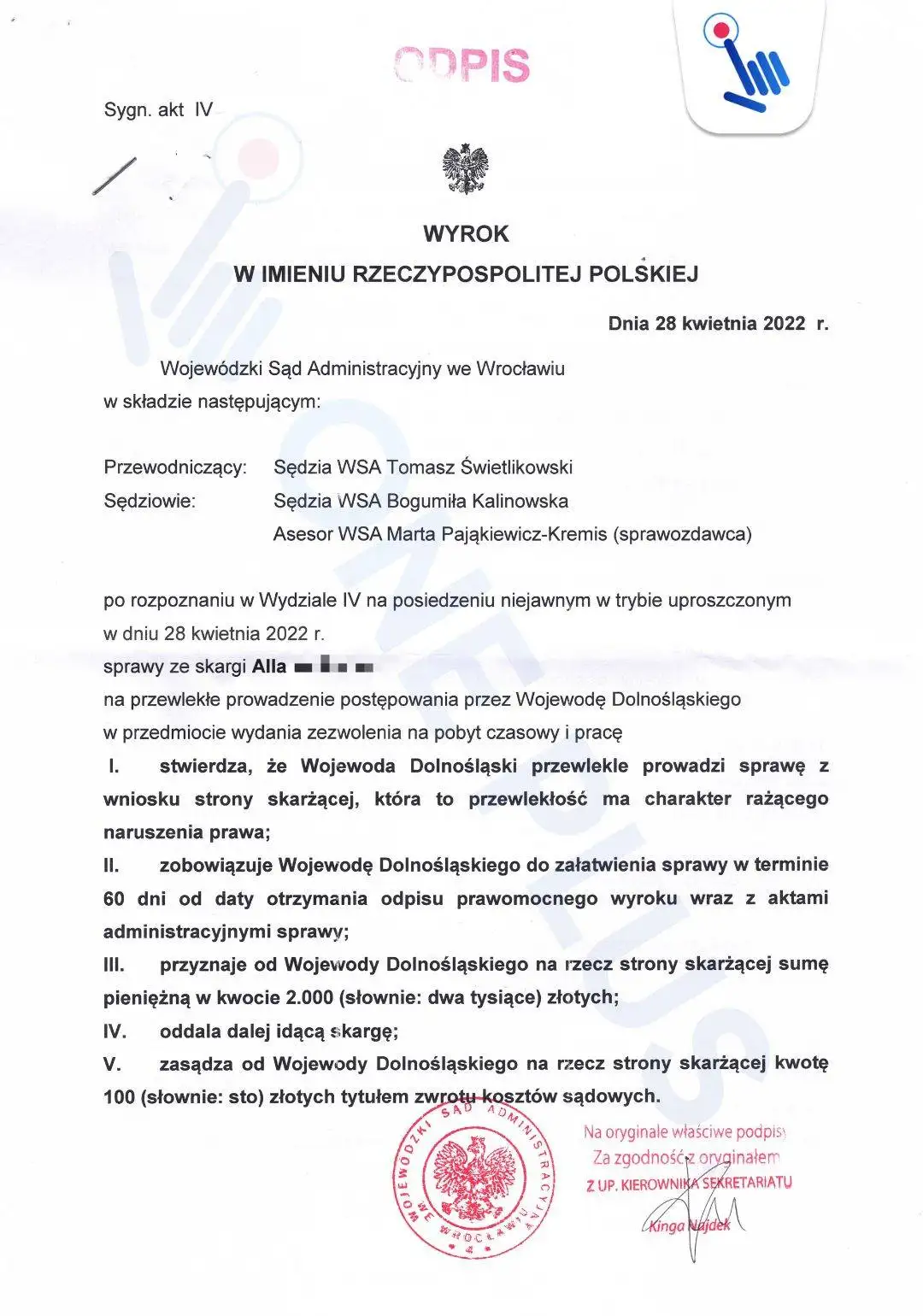
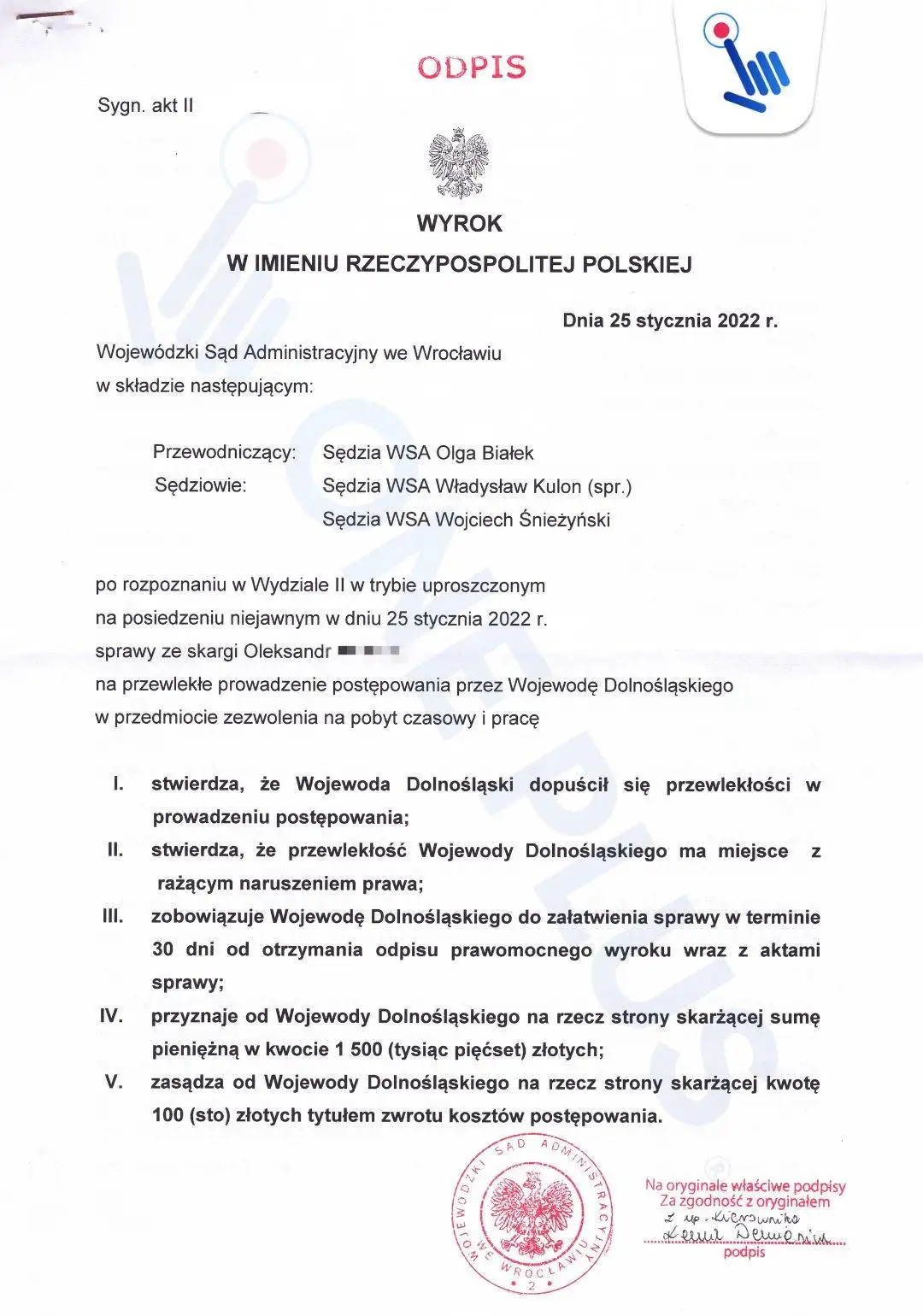
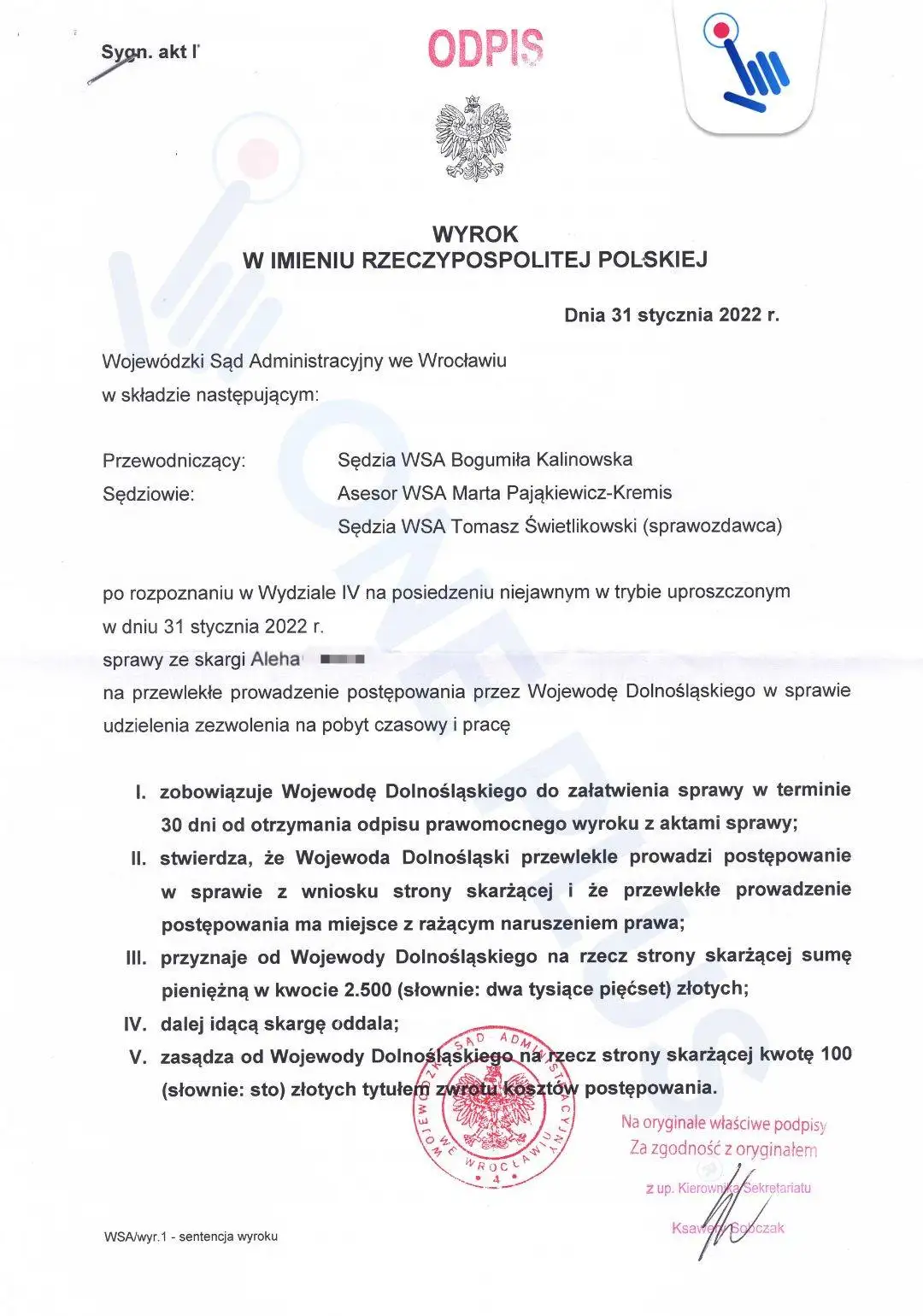
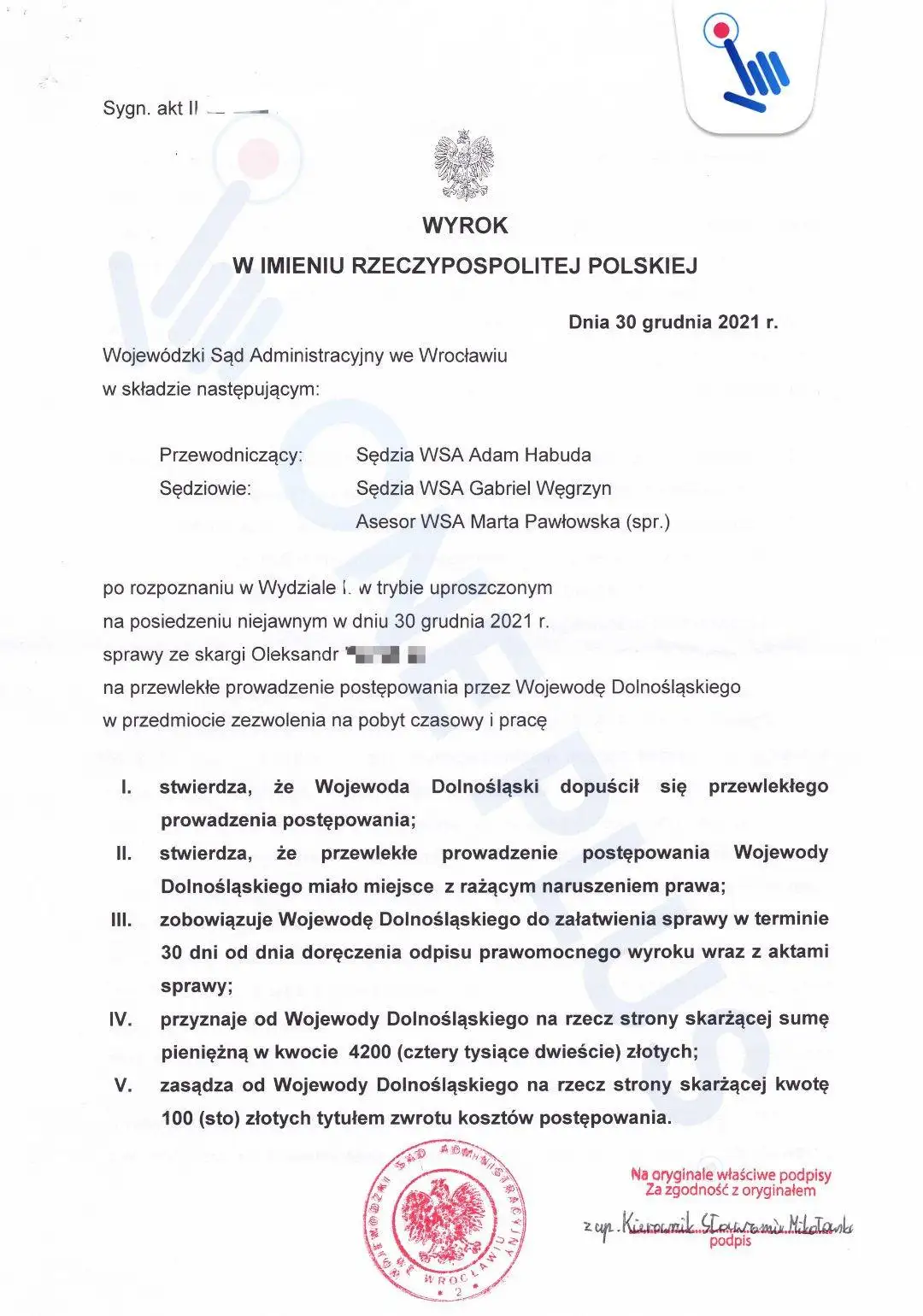
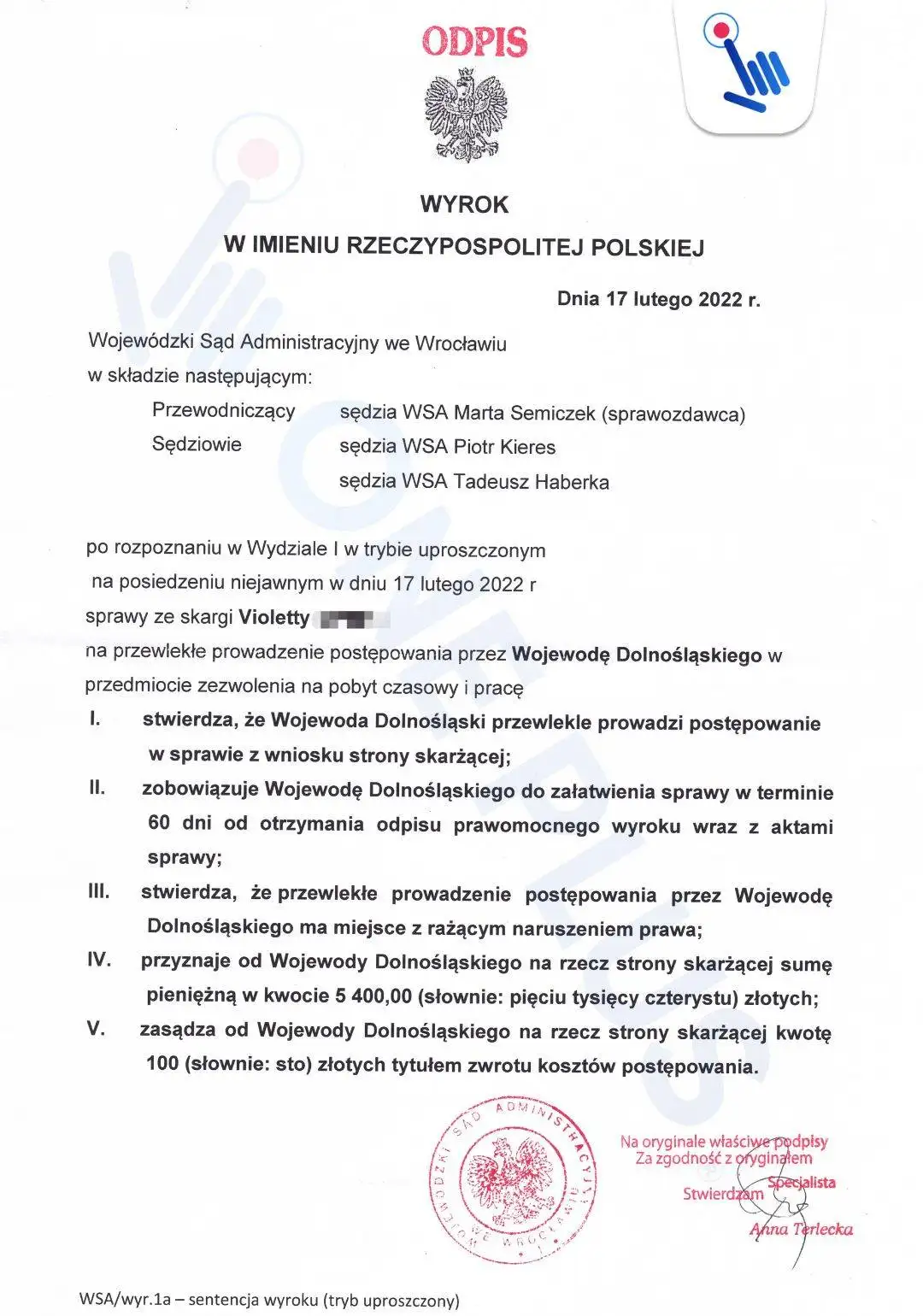
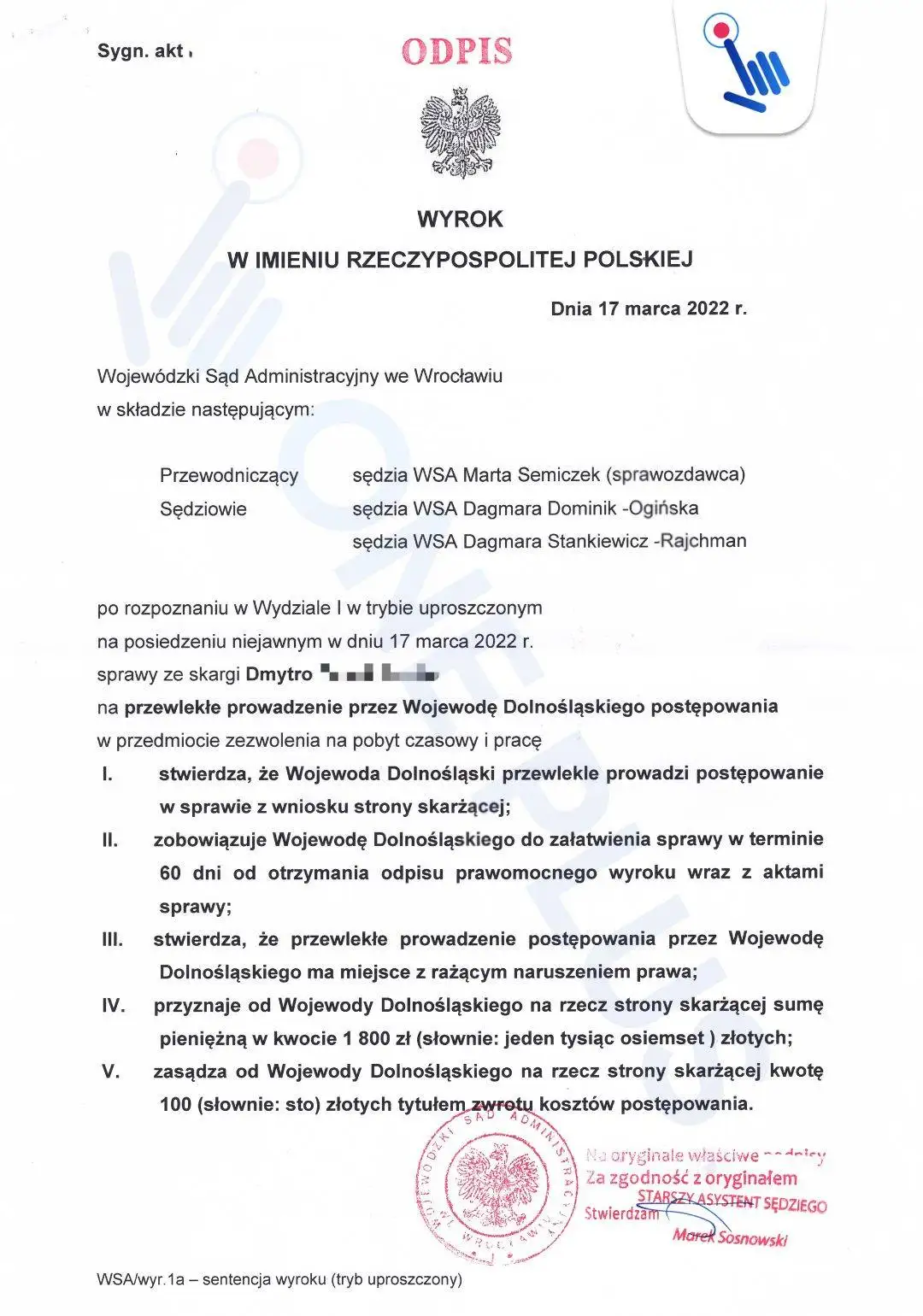
If those 180 days pass without an outcome, we read the correspondence. We check whether the office is waiting for a document or a letter missed you, and we help add what is missing. Then we prepare a ponaglenie (a complaint about the delay). We work every day with inspectors at voivodeship offices in Wrocław, Warsaw and Gdańsk. We have also taken part in more than 25 inspections by state bodies, so we know which letters need a quick reply. The office decides the timing and the result, and we cannot guarantee either.
CUKR for employers and HR
A CUKR holder works without a work permit, and the employer no longer files the notification to the district labour office (powiatowy urząd pracy). Until the card is collected, the employee still works under UKR rules. What HR should check:
- the card and passport are valid; keep a copy in the personnel file;
- whether the employee has a pending work-based case: a CUKR filing closes it.
For a wider review of foreign staff files, see our employment legality audit and foreign employee legalisation for employers.
Refusal, appeal and what comes next
Refusals usually come from an unpaid fee, incomplete registry data or an interrupted UKR status. Common mistakes:
- an old passport or missing fingerprints in the register;
- 440 zł paid instead of 340 zł, or both fees sent to one account.
A refusal arrives as a decision. You can appeal within 14 days of the day you receive it, through the voivode to the Head of the Office for Foreigners (Szef UdSC). Count from the delivery date in the letter. Our residence permit appeal service covers this step.
After you collect the card
- Report every change of place of stay to the voivode who issued the card within 15 working days (Article 42u). A new meldunek or a PESEL update does not replace this notice.
- A stay outside Poland of 6 months or longer leads to withdrawal of the permit.
- If you do not collect the finished card within 60 days, it is cancelled.
- CUKR does not automatically give permanent residence, EU long-term residence or citizenship.
After three years
The card cannot be renewed. Before it expires, apply on general grounds, such as work or business, or for EU long-term residence once you have 5 years of qualifying stay. Years on the CUKR card count; years on UKR status alone do not.
How we work on CUKR cases
Filing through MOS is simpler than the old paper route, but the risks remain. Most appear before you press send. Typical ones are a broken UKR status, an old passport, missing fingerprints in the register or a photo that fails the check. Others are a fee paid to the wrong account or an open work-based case that filing will close. You can file without us. We are useful where those risks exist.
| Stage | What we do | What you do |
|---|---|---|
| Check | review status history, registers and open cases | tell us when you got PESEL UKR, whether you travelled, and whether a work case is open |
| Preparation | check the photo and payments, prepare the form | pay the fees, set up e-Doręczenia |
| Filing | explain the steps, review the form before sending | sign and submit yourself |
| After filing | read the office's letters, prepare a reply to a wezwanie, a ponaglenie if it drags | log in to MOS and tell us about new letters |
| Card | remind you about the 60 days and the address notice | collect the card in person |
Prices, net: from 500 zł for a check and help with filing, and from 700 zł with the office's letters after filing. Official fees are separate. The office letters and ponaglenie belong to running the case; see the price list further down this page.
Expert insight
Tatiana Vyborna, President of the Management Board at ONE PLUS, has more than 12 years of practice in residence and employment matters for foreign nationals. She graduated in law from the University of Wrocław and has represented clients in more than 25 inspections by the Border Guard (Straż Graniczna), the National Labour Inspectorate (PIP), the Social Insurance Institution (ZUS) and the Tax Offices (Urząd Skarbowy). Read Tatiana Vyborna's profile.
Before paying the fees, log in to MOS and confirm that the system shows your current passport, fingerprints and signature. Registry data can be corrected after payment; the 340 zł cannot be recovered after a refusal.
Not sure whether to file for CUKR or wait for a work-based decision? Tell us on our contact page when PESEL UKR was issued, whether you travelled for long, and whether a case is open.
Updated: 20 October 2026. Sources: Act on assistance to citizens of Ukraine, Articles 42c-42x and 100d (Journal of Laws 2026 item 1293); UdSC: Karta pobytu CUKR, questions and answers; MOS: Karta pobytu CUKR.






 4,7
4,7