
Permanent Residence Based on Karta Polaka
ONE PLUS helps holders of a valid Pole’s Card obtain permanent residence in Poland. Our office is in Wrocław, and we support clients throughout the country. We begin by checking your eligibility, legal stay and personal documents, then prepare a tailored checklist and complete the application in MOS 2.0. We review every attachment, arrange sworn translations or document legalisation where needed, prepare you for the appointment at the Voivodeship Office and deal with official requests during the proceedings. Our support continues until the decision and collection of the residence card. More than 405 clients have reviewed our work on Google Maps.
A valid Pole’s Card, also known as Karta Polaka, confirms that your Polish background, knowledge of the language and connection to Polish culture have already been assessed. For this reason, applicants do not normally have to prove their ancestry again or repeat the original Karta Polaka interview. The permanent residence permit is not granted automatically, however. The application must still be complete and accurate, and you must show that you genuinely intend to settle in Poland.
Every case starts with the documents the client actually has, not a generic checklist. Before filing, we compare the details in the passport, Pole’s Card, civil status records, translations and MOS 2.0 form. This allows us to identify different spellings of names, outdated addresses, missing passport pages or unexplained changes of surname before they lead to an official request and a longer waiting time.
What is permanent residence in Poland?
A permanent residence permit allows you to live in Poland indefinitely. The permit itself does not expire and is not connected to a particular employer, job, university or employment contract. Once the permit has been granted, you may work in Poland without a separate work permit and conduct business under the rules set out in Polish law.
After receiving a positive decision, you are issued a physical residence card valid for 10 years. When the card expires, you replace the document only. You do not apply for permanent residence again or prove the original legal basis for a second time. This distinction is important because the permit is permanent, while the plastic card has a fixed validity period.
Is a Pole’s Card the same as a permanent residence card?
A Pole’s Card is not a residence permit. It confirms your connection to the Polish nation and provides certain rights, but it does not allow you to remain in Poland indefinitely. If you want to settle in the country, you must submit a separate application for a permanent residence permit.
The term “permanent residence card” usually refers to the physical card issued after a positive permanent residence decision. Moving from Karta Polaka to permanent residence is therefore not a simple exchange of one document for another. Your Pole’s Card provides the legal basis, but the Voivodeship Office still conducts a separate administrative procedure and checks whether the conditions for permanent residence have been met.
Who can apply for permanent residence with a Karta Polaka?
You can apply for permanent residence based on a Pole’s Card if your Karta Polaka is valid and you intend to make Poland your permanent home. There is no fixed period that you must live in Poland before applying. The procedure may be started after arrival, provided that your stay in the country is legal.
The application must be filed no later than the final day of your legal stay. If your Pole’s Card is close to expiring, has been damaged or contains outdated information, the situation should be reviewed before submission. Changes to your name, surname, marital status or passport details should also be properly documented so that the information in the application matches the supporting evidence.
Do I need to prove my Polish ancestry or attend another interview?
In a standard application based on a valid Pole’s Card, you do not normally need to submit birth certificates, archival records or other evidence concerning your Polish ancestors again. You are also not expected to repeat the questions about Polish history, language, culture and family traditions that formed part of the Karta Polaka procedure.
An in-person appointment at the Voivodeship Office is still required. During the appointment, an officer checks your passport, Pole’s Card and the originals of the documents uploaded through MOS 2.0. Your fingerprints and signature are also collected. If the application contains unclear or inconsistent information, the office may ask for additional evidence, written explanations or testimony, but this is not the same as repeating the original Pole’s Card interview.
Documents required for permanent residence
The exact document package depends on your circumstances and the office handling your application. A typical permanent residence application based on Karta Polaka includes:
- an electronic application for a permanent residence permit;
- a valid passport or another recognised travel document;
- current photographs meeting the official requirements;
- a copy of your valid Pole’s Card, with the original available for inspection;
- evidence that you genuinely intend to settle in Poland;
- documents confirming a change of name or surname, if relevant;
- sworn translations of documents issued in another language;
- a power of attorney if you are represented in the proceedings;
- any further evidence requested by the Voivodeship Office.
There is no single package that suits every applicant. A tenancy agreement, registered address, employment, studies, business activity or close family members living in Poland may support your declared intention to settle, but the evidence should reflect your real circumstances. The office is interested in a coherent picture of your life in Poland, not in the number of certificates attached to the application.
All scans must be complete, clear and correctly oriented. A missing passport page, cropped stamp, unreadable document or scan without the reverse side may result in a request for a replacement copy. We check the digital file before submission so that technical problems do not delay an otherwise straightforward case.
How can I prove my intention to settle in Poland?
Holding a Karta Polaka gives you the right to apply, but you must also show that you genuinely plan to live in Poland permanently. The office looks at your actual situation rather than relying only on a general declaration in the application. Relevant evidence may include a tenancy agreement, registered address, employment, education, business activity, family life or a child attending a Polish school.
You do not need to provide every possible type of evidence. The documents should fit your circumstances and remain consistent with the MOS 2.0 form. If you have only recently arrived and do not yet have a job, this does not automatically prevent you from obtaining Polish permanent residence. Employment is one possible indication of settlement, not a universal condition for this legal basis.
How do I apply for permanent residence through MOS 2.0?
Since 27 April 2026, applications for permanent residence in Poland have been submitted electronically through MOS 2.0. You need to create your own account, sign in through login.gov.pl, complete the form, upload your photograph and supporting documents, and sign the application electronically. A paper application submitted instead of the required electronic form will not be considered.
ONE PLUS helps clients prepare residence applications through MOS 2.0. We complete and review the form, compare it with your documents, organise the attachments and guide you through the final submission. The account belongs to the applicant, so you must log in and sign the application personally. Login details and access to an electronic signature should never be shared with a representative or another person.
Once the application has been sent, MOS generates an official receipt known as UPO. This confirms that the system received the submission and should be saved with the rest of your records. It is an important technical confirmation, but it does not by itself prove that the application is formally complete.
What happens after the MOS 2.0 application is submitted?
After the case has been registered, the Voivodeship Office arranges an in-person appointment. The officer checks your identity, passport, Pole’s Card and original documents, then collects fingerprints and a specimen signature. If a formal document is missing, the office may set a deadline for correcting the deficiency.
The application then moves to the substantive review stage. If the documents are complete and the facts are clear, the case may proceed without further action from you. If the inspector needs more information, the office sends a formal request, known in Polish as a wezwanie, explaining what must be provided and by what date.
It is important to monitor your MOS account, email and postal correspondence throughout the proceedings. A missed request, an outdated correspondence address or a response submitted after the deadline can cause a serious delay. ONE PLUS tracks correspondence in the cases we handle and prepares replies when the office asks for documents or explanations.
Is my stay legal while I wait for the decision?
Your application must be submitted no later than the last day of your legal stay in Poland. If you apply on time and correct any formal deficiencies within the deadline set by the office, your stay remains legal until the permanent residence decision becomes final.
The UPO receipt confirms only that the application reached MOS. It does not replace a visa or residence card and does not guarantee re-entry to Poland after travel abroad. Before leaving the country, check whether you will be able to return under a valid visa, visa-free travel rules or another document allowing you to cross the Polish border.
Legal stay while waiting for a decision and the right to re-enter Poland are separate matters. This is especially important for applicants whose visa or visa-free period expires during the permanent residence proceedings.
Permanent residence based on a Pole’s Card in Wrocław
Applications from people living in Wrocław and elsewhere in the Lower Silesian Voivodeship are handled by the Lower Silesian Voivodeship Office in Wrocław, formally known as Dolnośląski Urząd Wojewódzki we Wrocławiu. The responsible office is determined by where you actually live, not by your employer’s address, place of work or the location where the Pole’s Card was issued.
ONE PLUS is based in Wrocław and works with this procedure in practice. We prepare the MOS 2.0 application, check the evidence, explain which originals to take to the appointment and manage communication with the office. We also assist clients living in other parts of Poland. In those cases, the application is handled by the Voivodeship Office responsible for the applicant’s current place of residence.
Do I need employment, income or insurance?
An employment contract is not a mandatory condition for permanent residence based on a Pole’s Card. The permit is not tied to a particular employer, job title or minimum salary. Employment may support your intention to settle in Poland, but it is not the only way to do so.
Generic residence checklists often include income and insurance documents for every type of application. In a Karta Polaka permanent residence case, these are not universal requirements simply because they appear on such a list. The correct documents depend on the legal basis and your individual circumstances. We review what is actually relevant instead of adding unnecessary paperwork that does not help the inspector understand the case.
Do foreign documents need sworn translation or an apostille?
Documents issued in a foreign language generally need to be submitted with a Polish translation prepared by a sworn translator registered with the Polish Ministry of Justice. This applies, for example, to civil status records or documents explaining a change of name. The translation should use personal details consistently with the passport and the rest of the application.
ONE PLUS arranges sworn translations of documents and checks names, dates and other details throughout the file. If a document issued abroad requires an apostille or another form of legalisation, we explain what is needed before filing. You can also use our apostille and document legalisation service.
How much does permanent residence with a Pole’s Card cost?
A holder of a valid Pole’s Card is exempt from the stamp duty normally charged for granting a permanent residence permit. A separate fee is payable for issuing the physical residence card, which currently costs PLN 100.
If an authorised representative acts in the proceedings, a PLN 17 stamp duty for the power of attorney will usually apply. Sworn translations, document legalisation, notarisation and the cost of obtaining additional records are charged separately. The ONE PLUS service fee depends on the support you need. We review the case, explain the work involved and agree on the price before starting.
Financial assistance for holders of a Pole’s Card
After applying for permanent residence, a holder of a Pole’s Card may file a separate application for financial assistance to help cover the initial cost of settling in Poland. The benefit may be granted for up to nine months and, if the statutory conditions are met, may also cover the applicant’s spouse and minor children living in Poland.
The application for financial assistance must be filed within three months of submitting the permanent residence application. Missing this deadline may mean that the benefit application will not be considered. Because it is a separate procedure, the residence application alone does not start the payment process. ONE PLUS can prepare the benefit application and check the supporting documents before filing.
How long does a permanent residence application take?
The statutory processing period for a permanent residence case is up to six months, but it does not always start on the day the form is sent through MOS 2.0. The calculation may depend on completing the in-person appointment, providing fingerprints and original documents, correcting formal deficiencies and submitting the evidence needed to confirm the legal basis.
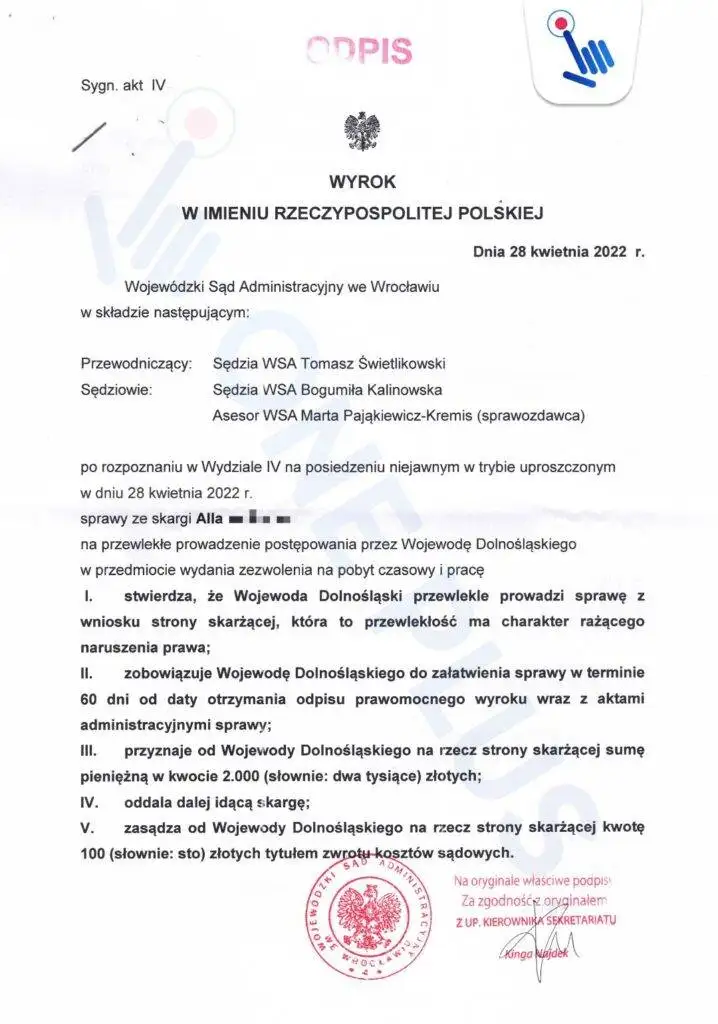
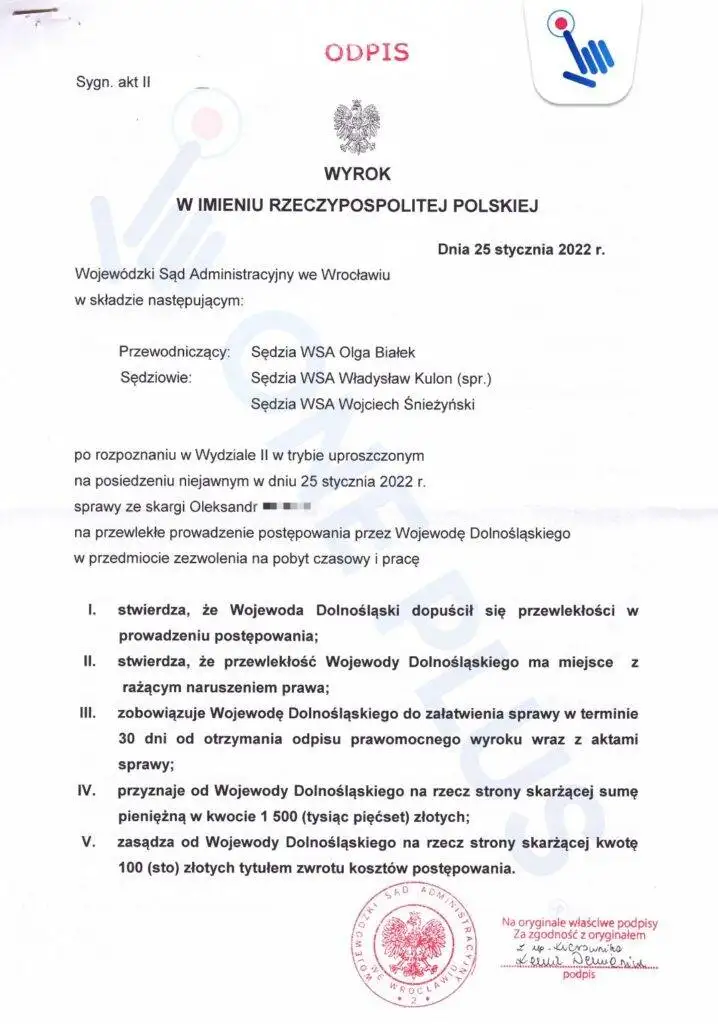
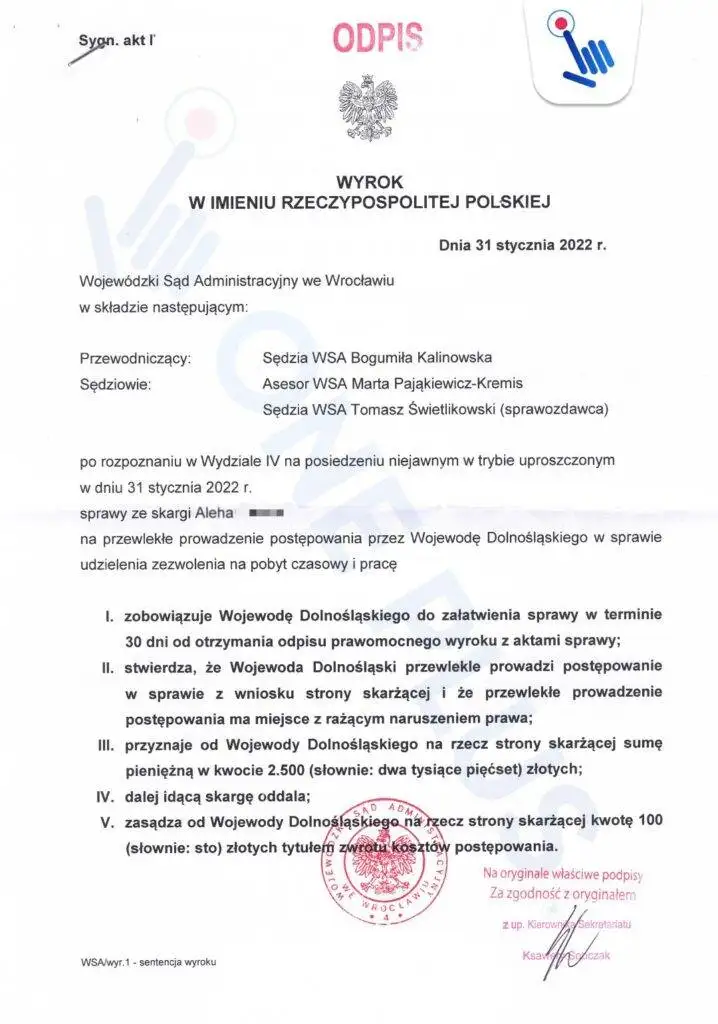
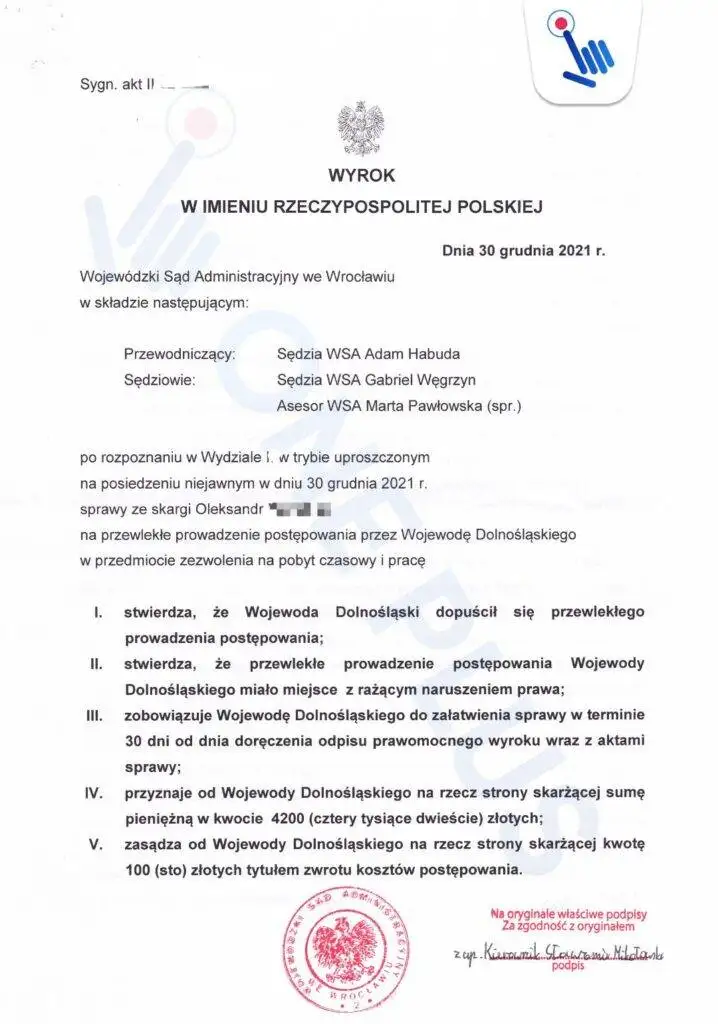
Actual waiting times vary between Voivodeship Offices and depend on the office’s workload, the circumstances of the case and the speed of replies to official requests. No immigration company can guarantee the exact date of a decision. If a case is taking too long, ONE PLUS reviews its status and checks whether lawful measures are available to move the proceedings forward.
What commonly delays a Karta Polaka permanent residence case?
In our experience, most delays are not caused by the Pole’s Card itself. They usually result from avoidable problems such as different spellings of a name, a surname changed after marriage without supporting evidence, incomplete passport scans, missing sworn translations or an address that does not match the documents.
Incomplete fields in the MOS application and missed deadlines also cause problems. A well-prepared file should allow the inspector to see immediately which document proves each important fact. Before filing, we organise the evidence, compare personal details across the entire package and explain any difference that could otherwise lead to an additional request.
Starting early also matters. Waiting until the final days of legal stay leaves little time to correct a translation, obtain a missing civil status record or resolve a problem with the Pole’s Card. Early document review gives you more options and reduces unnecessary pressure during submission.
Can the Office refuse permanent residence?
A Pole’s Card gives you the legal right to apply for permanent residence, but it does not guarantee a positive decision. The office may refuse the permit if the applicant provides false information, fails to submit required documents or if another statutory ground for refusal applies.
If you receive a negative decision, check the appeal deadline immediately. The reasons given by the office determine whether the case should be supplemented, challenged or approached in another way. ONE PLUS reviews refusal decisions and helps clients plan the next legal step.
What rights come with Polish permanent residence?
A permanent residence permit allows you to live in Poland indefinitely, work without a separate work permit and change employers without applying for a new residence status. You may also conduct business under the conditions set by Polish law.
Together with a valid passport, the residence card allows short visits within the Schengen Area, usually for up to 90 days in any 180-day period. Polish permanent residence does not automatically allow you to live or work permanently in another EU country, as each country applies its own immigration rules.
Permanent residence also creates a stable basis for planning your future in Poland. It removes the need for repeated temporary residence applications and may open a shorter route to Polish citizenship if you meet the statutory conditions.
What happens to my Karta Polaka after permanent residence is granted?
Once you receive a permanent residence permit, your Karta Polaka becomes invalid by law. The document must be returned to the competent voivode within 14 days. Your right to live in Poland is then confirmed by the residence card issued on the basis of your permanent residence permit.
This does not mean that you lose the rights connected with your new status. The permanent residence permit replaces the Pole’s Card as the document confirming your right to remain in Poland.
When can I apply for Polish citizenship?
If your permanent residence permit was granted because you held a Pole’s Card, you may qualify to apply for recognition as a Polish citizen after at least one year of continuous and legal residence under that permit. The one-year period is linked to the permanent residence status, not the date when the physical card is collected.
You must also meet the other statutory conditions, including official proof of Polish language proficiency at a minimum B1 level. ONE PLUS helps clients prepare applications for Polish citizenship and manages the procedure until a decision is issued.
What if I have Polish ancestry but no Pole’s Card?
A Pole’s Card is not the only route to Polish permanent residence. If one of your parents, grandparents or more distant ancestors was Polish, you may be able to apply for permanent residence based on Polish ancestry.
An ancestry-based application follows a different evidential route. You need to prove the Polish nationality of the ancestor and document every generation connecting that person to you. Birth certificates, marriage certificates, records of name changes and archival documents may all be relevant. ONE PLUS reviews the family line, helps obtain missing evidence, arranges translations, prepares the application and provides individual preparation for the interview with the inspector.
How ONE PLUS handles your permanent residence case
We begin with a detailed review of your Pole’s Card, passport, legal stay and supporting documents. You receive a personalised list showing what is ready, what is missing and what should be corrected before filing. We then prepare the MOS 2.0 form, check every field against the evidence and organise the attachments in a clear order.
After submission, we prepare you for the in-person appointment, monitor correspondence and draft responses to requests from the Voivodeship Office. If the inspector asks for further evidence or an explanation, we prepare the reply within the required deadline. Our support continues until the decision, and after a positive outcome we explain how to pay for and collect the residence card.
Expert help with permanent residence based
If you hold a valid Karta Polaka and plan to settle in Poland, start with a professional review of your documents. It is easier to correct missing evidence, different personal details or translation issues before the MOS 2.0 application is submitted.
ONE PLUS supports permanent residence applications in Wrocław and throughout Poland. Our team combines practical experience with careful document preparation, and more than 405 clients have reviewed our work on Google Maps. We prepare the application, check the supporting evidence, guide you through the appointment and manage communication with the Voivodeship Office until the decision.
Book an individual legal consultation to discuss your case. After the review, you will receive a tailored document list, a practical plan of action and a clear explanation of the next steps.






 4,7
4,7