Slovak residence card and life in Poland
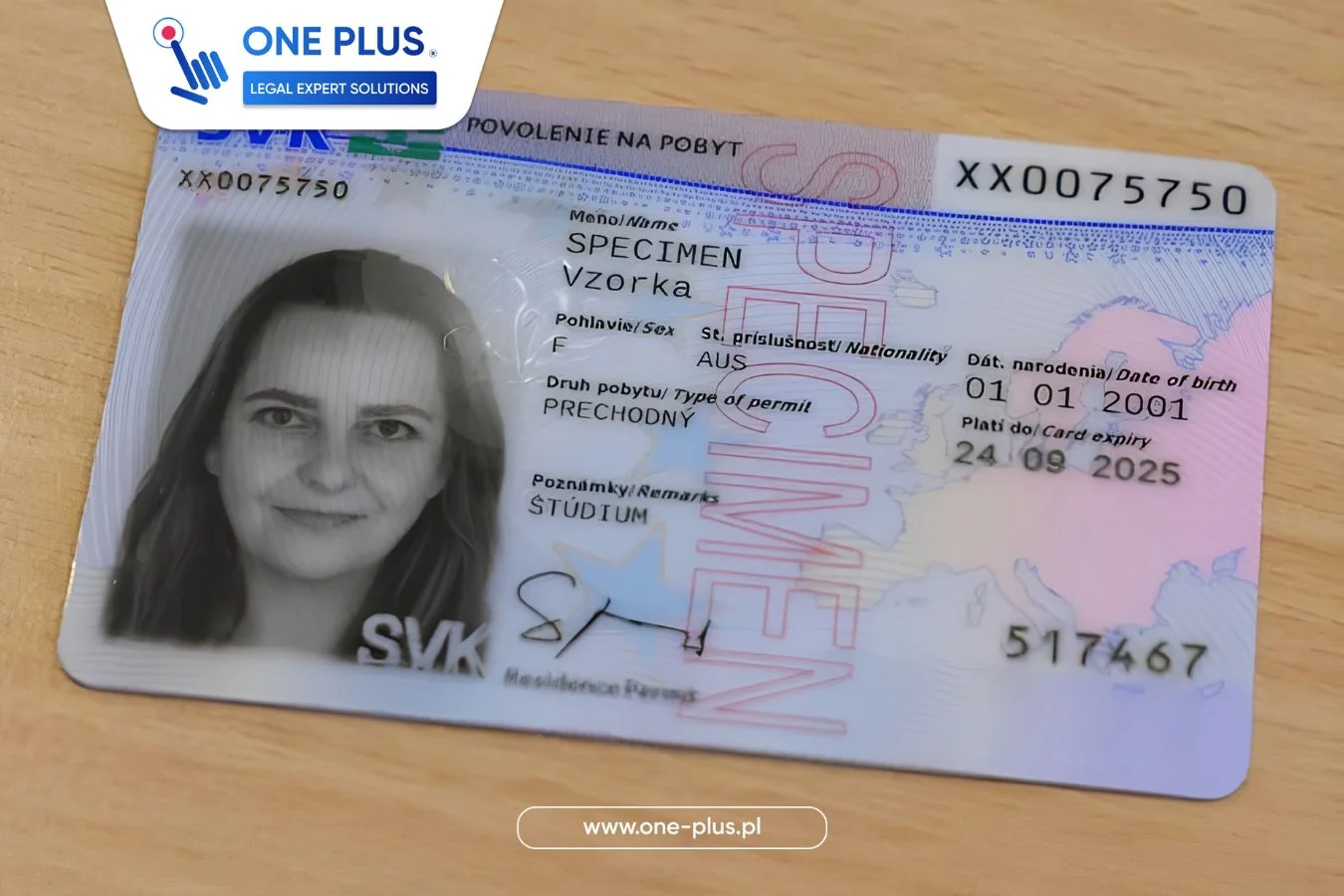
Slovak card and life in Poland: why it does not replace Polish legalisation
ONE PLUS helps with a Polish residence card, stay legalisation for foreigners, business registration and complex migration cases in Poland. Tatiana Vyborna, the company’s lead expert with more than 11 years of hands-on experience working with voivodeship offices, does not recommend treating a Slovak card as a full solution for living in Poland.
In recent months more and more foreigners have come across ads for so-called “Slovak legalisation”. People are promised a quick document, no queues, the chance to live in Poland, work, open a business and skip waiting for a Polish residence card.
In practice the picture looks completely different. There is a huge gap between attractive advertising and real Polish law. And it is at this stage that many foreigners start facing serious problems.
What a Slovak card actually gives you in Poland
One of the most common mistakes is the belief that a card from another Schengen country automatically allows you to live in Poland on a permanent basis.
A Slovak document does not become Polish legalisation simply because both countries are in the Schengen Area.
A residence document from another EU country allows only a short stay in Poland. That means up to 90 days within any 180-day period. For long-term life in Poland, a foreigner needs a Polish ground of stay.
If a person:
- works in Poland;
- rents a home in Poland;
- runs a business in Poland;
- pays taxes in Poland;
- plans to obtain an EU long-term resident card or Polish citizenship;
then they need a Polish legalisation procedure, not a document from another country.
That is why ONE PLUS specialists always advise building legalisation under Polish law from the start, instead of looking for temporary schemes through other states.
Why the expiry date on the plastic guarantees nothing
Many people look only at the card’s expiry date. For example, if a Slovak card shows three years, it feels as if the person can calmly live in Poland for the whole period.
But temporary protection in the EU works differently.
What matters is not only how long the card itself is valid, but also whether the legal regime under which it was issued still applies. If temporary protection rules change or the programme ends, the plastic card does not automatically turn into a full basis for residence in another country.
Our expert Tatiana Vyborna notes that misunderstanding this mechanism often leads foreigners into problems with further legalisation in Poland.
Ukrainians with PESEL UKR: where the main risk appears
For Ukrainian citizens the situation is especially sensitive.
Polish PESEL UKR status is linked specifically to Poland’s temporary protection system. Obtaining temporary protection in another EU country may affect that Polish status.
Why a Slovak card can create problems
Many Ukrainians see a Slovak card as a “backup document”. In practice it can lead to the loss of Polish UKR status.
And together with that, difficulties may appear with:
- further legalisation in Poland;
- moving to a CUKR card;
- running a JDG (sole proprietorship);
- working under Polish rules for UKR holders;
- the prospect of an EU long-term resident card.
Before obtaining any foreign document, you need to analyse how it will affect the person’s Polish status.
That is why ONE PLUS always reviews the client’s full situation, not only the fact of receiving a new document.
If a Ukrainian citizen does not have UKR
Even if a Ukrainian does not have Polish PESEL UKR, a Slovak card still does not become an automatic basis for living in Poland.
Yes, Poland’s special act temporarily extended certain stay rules for Ukrainian citizens until 4 March 2027. But it is important to understand: that is Polish legislation, not an advantage created by a Slovak document.
In other words, a Slovak card itself does not create long-term Polish legalisation.
Working in Poland on a Slovak card
Advertising often creates the impression that a Slovak card automatically solves lawful work in Poland. In practice everything is far more complex.
What foreigners need to understand
For lawful work in Poland you need:
- lawful stay;
- a Polish work permit or oświadczenie (employer declaration).
But even if work is formally possible, that still does not mean full legalisation of life in Poland.
The main problem appears later — at the stage of applying for a Polish residence card based on work.
If a person stays in Poland on a document from another Schengen country, serious limits often arise when trying to open a temporary residence and work procedure.
That is why the scheme:
Slovak card → work in Poland → Polish residence card
is not considered a stable or safe legalisation path.
Why it is better to apply for a Polish residence card straight away
ONE PLUS specialists handle foreigner cases across Poland every day and know how offices work in practice.
If a person plans to:
- live in Poland for a long time;
- work officially;
- open a business;
- obtain EU long-term resident status;
- apply for Polish citizenship;
it is much safer to build legalisation through Polish grounds of stay from the beginning.
Slovak card and business in Poland
Business deserves a separate look, because this is where advertising manipulations appear most often.
Does a Slovak card give the right to JDG
For running a sole proprietorship (jednoosobowa działalność gospodarcza / JDG), Polish status is what matters.
If a foreigner does not have a matching Polish ground of stay, a Slovak card does not automatically create the right to open a JDG in Poland.
This is especially true when a person has lost UKR status or never had it.
And what about a spółka z o.o.
With a limited liability company (spółka z o.o.) the situation is different.
A foreigner can register a company in Poland even without a Slovak card. Moreover, holding a Slovak document does not give any extra advantage here.
For legalisation through business in Poland, what matters is:
- real income;
- taxes;
- ZUS contributions;
- the company’s activity;
- contracts;
- the foreigner’s role in the business.
So ONE PLUS specialists assess not the presence of foreign plastic, but the real prospect of obtaining a Polish residence card through business activity.
When a Slovak card actually makes sense
A Slovak document can be a logical choice only in one case — if the person truly plans to live in Slovakia.
That means:
- working in Slovakia;
- running a business there;
- paying taxes;
- staying within the Slovak legalisation system.
But if the person actually lives in Poland and tries to use a Slovak card as a “way around the Polish office”, that is a completely different situation.
The problem is not Slovakia itself. The problem is that a document from one country is sold as a solution for living in another.
Which legalisation path to choose in Poland
Every foreigner’s situation needs an individual review.
Depending on the circumstances, the right option may be:
- a residence card based on work;
- a residence card based on business;
- an EU Blue Card;
- a CUKR card;
- family reunification;
- an EU long-term resident card;
- Polish citizenship.
ONE PLUS helps foreigners choose a safe and lawful legalisation path — without risky schemes or doubtful shortcuts. During legal advice we review your documents, stay status and realistic next steps.
Tatiana Vyborna and the ONE PLUS team analyse each client’s situation individually, assess the prospects of the case, check the grounds of stay and guide the procedure through to an office decision.
If you truly plan to build your life in Poland, it is better to choose a path that matches Polish law and offers a future perspective. Reach out via our contact page — we can help assess your situation and plan safe legalisation, including a Polish residence card.
Slovak residence card in Poland in 2026 — what it actually gives you
More people ask whether a Slovak residence card in Poland in 2026 lets you live, work and pay taxes lawfully. ONE PLUS and Tatiana Vyborna — specialists in stay legalisation in Poland since 2015 — keep it simple: for everyday life in Poland you need a Polish residence basis, not a document issued by another EU country.
Ads for a “fast Slovak card” often skip Schengen limits, a clash with PESEL UKR or missing Polish address registration. The safer route usually goes through a residence card, and along the way you may need PESEL, address registration, a sworn translation and an apostille. For a longer plan, we also discuss Polish citizenship.
How ONE PLUS structures the case
We do not sell a promise of “foreign plastic”. First we check your status, job, family and whether you already hold PESEL UKR or another stay basis. Then we build a realistic timeline: which documents to gather, which office steps come first and where risks appear.
We work across Poland — the Wrocław office makes local meetings easy, and cases from other cities run remotely. In legal advice you get a gap list and step order. We do not guarantee an office outcome, but you leave with a clear action plan.
When to get in touch
If you already hold a Slovak document or are considering such an offer, write via ONE PLUS contact. We will explain whether, in your 2026 situation, the Polish route is safer from the start rather than building status on a foreign card.
