EU Long-Term Resident Permit in Poland in 2026
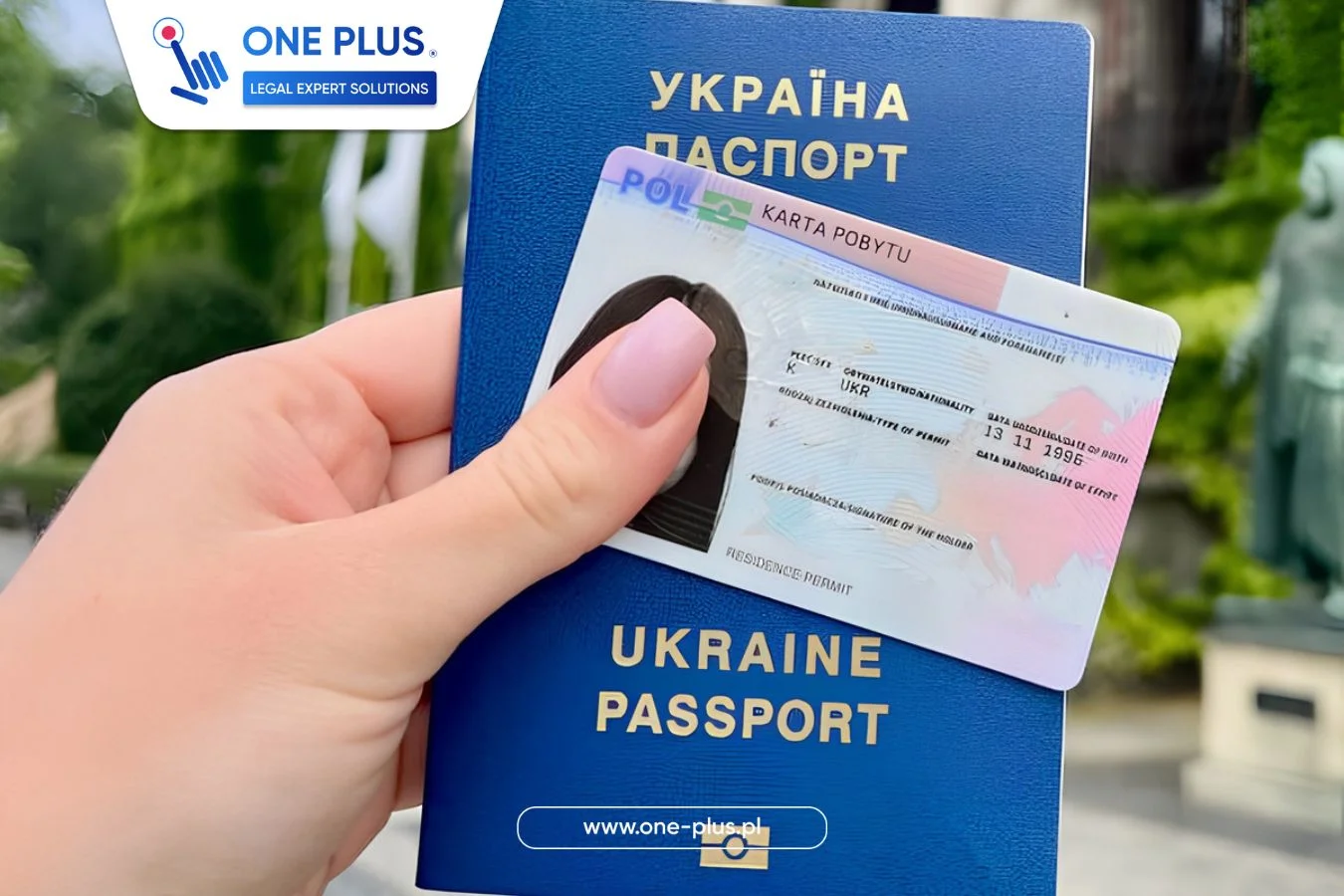
EU Long-Term Resident Permit in Poland in 2026
An EU long-term resident permit allows a foreign national to live and work in Poland indefinitely. In 2026, it remains one of the most secure residence statuses available to people who have lived legally in Poland for several years and plan to build their future here.
For many foreign nationals, applying for an EU long-term resident permit (zezwolenie na pobyt rezydenta długoterminowego UE) is the natural next step after several years of working, running a business, studying or living with family in Poland.
ONE PLUS has provided immigration and residence support in Poland since 2018. We assist clients with temporary residence permits, EU long-term resident permits, EU Blue Cards, Polish citizenship and other immigration matters.
Before an application is submitted, we review the client’s circumstances and check whether all legal requirements are met. This includes calculating the qualifying period of residence, reviewing travel outside Poland, income records, PIT tax returns, Polish-language documents, health insurance and proof of accommodation. A thorough review at this stage helps identify potential problems and provides a realistic assessment of the applicant’s chances.
Tatiana Vyborna, Head of Immigration Projects and a specialist with more than 11 years of practical experience in Polish immigration law, notes that most refusals are not caused by a complete lack of eligibility. They are usually the result of incorrectly prepared documents, mistakes in calculating the qualifying residence period or a misunderstanding of the legal requirements.
What Is an EU Long-Term Resident Permit?
An EU long-term resident permit is an indefinite residence permit available to foreign nationals who have lived legally in Poland for the required period and meet the conditions set out in Polish law.
It is important to distinguish between the residence status and the physical document confirming it. EU long-term resident status is granted indefinitely, while the physical residence card is issued for five years. When the card expires, it must be replaced, but the holder does not need to apply for the underlying status again.
This is one of the most secure forms of residence available in Poland. It makes it easier to work, change employers, run a business and plan your long-term future in the country.
Who Can Apply?
The main requirement is at least five years of continuous and legal residence in Poland immediately before the application is submitted.
Simply living in Poland for five years is not always enough. The Voivodeship Office reviews the applicant’s complete residence history, including:
- the legal basis of their stay in Poland;
- any gaps in their legal residence;
- the amount of time spent outside Poland;
- the sources and stability of their income;
- whether taxes and social security contributions were paid;
- whether they have valid health insurance;
- whether they can prove a legal right to occupy their accommodation.
Continuity of residence is particularly important. As a general rule, a single absence from Poland must not exceed six months, while all absences combined must not exceed ten months during the qualifying five-year period. Different and more flexible rules may apply to EU Blue Card holders in certain circumstances.
Incorrectly calculating the qualifying period or failing to account for time spent outside Poland is one of the most common reasons for refusal. It is therefore important to review not only previous residence permits and decisions but also the actual dates on which the applicant entered and left Poland.
Which Periods Count?
Different periods of legal residence may count towards the required five years. These can include residence based on employment, business activity, family reunification, an EU Blue Card or another qualifying residence permit.
Periods of study require particular attention. Many foreign nationals assume that all the time they spent studying in Poland counts in full. In most cases, however, residence under a student visa or a temporary residence permit for university studies counts as half of the actual period.
Under specific conditions, EU Blue Card holders may also include qualifying periods of residence in other EU Member States. However, they must still meet separate requirements concerning the amount of time spent in Poland immediately before applying.
Not every period of legal residence is treated in the same way. Each case should therefore be assessed individually by reviewing previous decisions, visas, residence cards, passport stamps and actual travel dates.
Income and PIT Tax Returns
A stable, regular and legal source of income remains one of the main requirements for an EU long-term resident permit in 2026.
The Voivodeship Office examines the applicant’s financial circumstances over several years. As a general rule, income must be documented for the three years immediately preceding the application. For EU Blue Card holders, the relevant period may be reduced to two years.
The case officer may review PIT tax returns, employment contracts, income certificates, ZUS records, bank statements and other documents showing where the applicant’s income came from and whether it was received regularly.
The amount earned is not the only factor. The office also checks whether the income was legal and sufficiently stable, whether taxes and social security contributions were paid, and whether the information in the PIT returns matches the employer’s documents and official ZUS records.
Applications are often examined more closely when the applicant has changed employers frequently, had long gaps in employment, worked under non-standard contracts or earned income through business activity.
Health Insurance and Accommodation
Applicants must provide evidence of health insurance and a legal right to occupy their accommodation in Poland.
Health coverage is most commonly confirmed through the NFZ system as a result of employment or business activity. In certain cases, a private insurance policy may be accepted if it provides the level of coverage required by Polish law.
A legal right to accommodation can usually be confirmed with a tenancy agreement, proof of ownership or another document giving the applicant the right to live at the stated address.
A registered address, known in Poland as meldunek, or a simple declaration from the property owner may not be sufficient. The document establishing the applicant’s right to occupy the property should therefore be checked before the application is submitted.
Polish Language Requirement
Applicants for EU long-term resident status must prove that they speak Polish at a minimum level of B1.
Following changes that came into force on 1 July 2025, a certificate from a Polish post-secondary school (szkoła policealna) is no longer generally accepted as proof of Polish-language ability in this procedure. Transitional provisions applied to certain applicants, but the relevant period ended on 30 June 2026.
The most reliable way to meet the language requirement is to obtain an official Polish-language certificate at B1 level or above through the state certification system for Polish as a foreign language.
Other documents may be accepted where specifically permitted by law. For example, an applicant may be able to use a diploma from a Polish school or higher education institution if the programme was taught in Polish.
However, not every diploma automatically satisfies the language requirement. The type of institution, programme and language of instruction should be checked before relying on a particular document.
It is advisable to start preparing for the B1 examination well in advance. Places at examination sessions can be limited, and it may also take time for the official certificate to be issued.
Benefits of EU Long-Term Resident Status
EU long-term resident status offers considerably more security and flexibility than an ordinary temporary residence permit.
Once the permit has been granted, the holder can:
- live in Poland indefinitely;
- work without a separate work permit;
- change employers without applying for a new residence permit;
- establish and run a business;
- access healthcare and social security benefits under the applicable rules;
- apply for a mortgage or other financing, subject to the bank’s requirements;
- apply for residence permits for eligible family members;
- use facilitated residence procedures in certain other EU Member States;
- apply for Polish citizenship in the future after meeting the separate legal requirements.
An EU long-term resident permit issued by Poland does not automatically give its holder the right to live and work permanently in every EU country. Anyone moving to another Member State must meet that country’s immigration requirements and obtain the relevant local permit. However, EU long-term resident status can make the process easier.
For this reason, many foreign nationals see the permit as an important step towards a stable, long-term future in Poland.
Common Reasons for Refusal
Even an applicant who appears to meet the basic requirements may receive a refusal if the case has not been prepared correctly.
The most common reasons include:
- an incorrect calculation of the five-year residence period;
- excessive time spent outside Poland;
- gaps in legal residence;
- insufficient or unstable income;
- missing PIT tax returns for the required years;
- inconsistencies between PIT returns, employer documents and ZUS records;
- insufficient proof of the right to occupy accommodation;
- an unacceptable Polish-language document;
- errors in documents provided by the employer;
- insufficient evidence that a business is genuinely operating.
Most of these issues can be identified before the application is submitted. Reviewing the applicant’s residence history, travel, income and supporting documents in advance makes it possible to assess the risks and prepare the case properly.
Assistance With Your Application
Applying for EU long-term resident status requires careful preparation. An error in the residence calculation, an unacceptable language document or insufficient evidence of income can affect the outcome of the entire case.
Our specialists check whether the applicant meets the legal requirements, calculate the qualifying residence period, review travel outside Poland and verify PIT tax returns, income records, insurance and Polish-language documents.
We also prepare the application and supporting documents for submission through MOS 2.0. After the application has been filed, we monitor the case, manage correspondence with the Voivodeship Office, prepare responses to requests from the case officer and provide support until the final decision is issued.
We assist clients in Wrocław, Warsaw, Kraków, Poznań, Gdańsk and other cities across Poland. Our role is to identify potential problems in advance, prepare the documents correctly and strengthen the application for an EU long-term resident permit.
If you have lived in Poland for more than five years and are considering one of the country’s most secure residence statuses, it is worth reviewing your situation before applying. Preparing the documents early can help you avoid unnecessary delays and problems later in the process.
