
Residence permit refused in Poland: what to do next
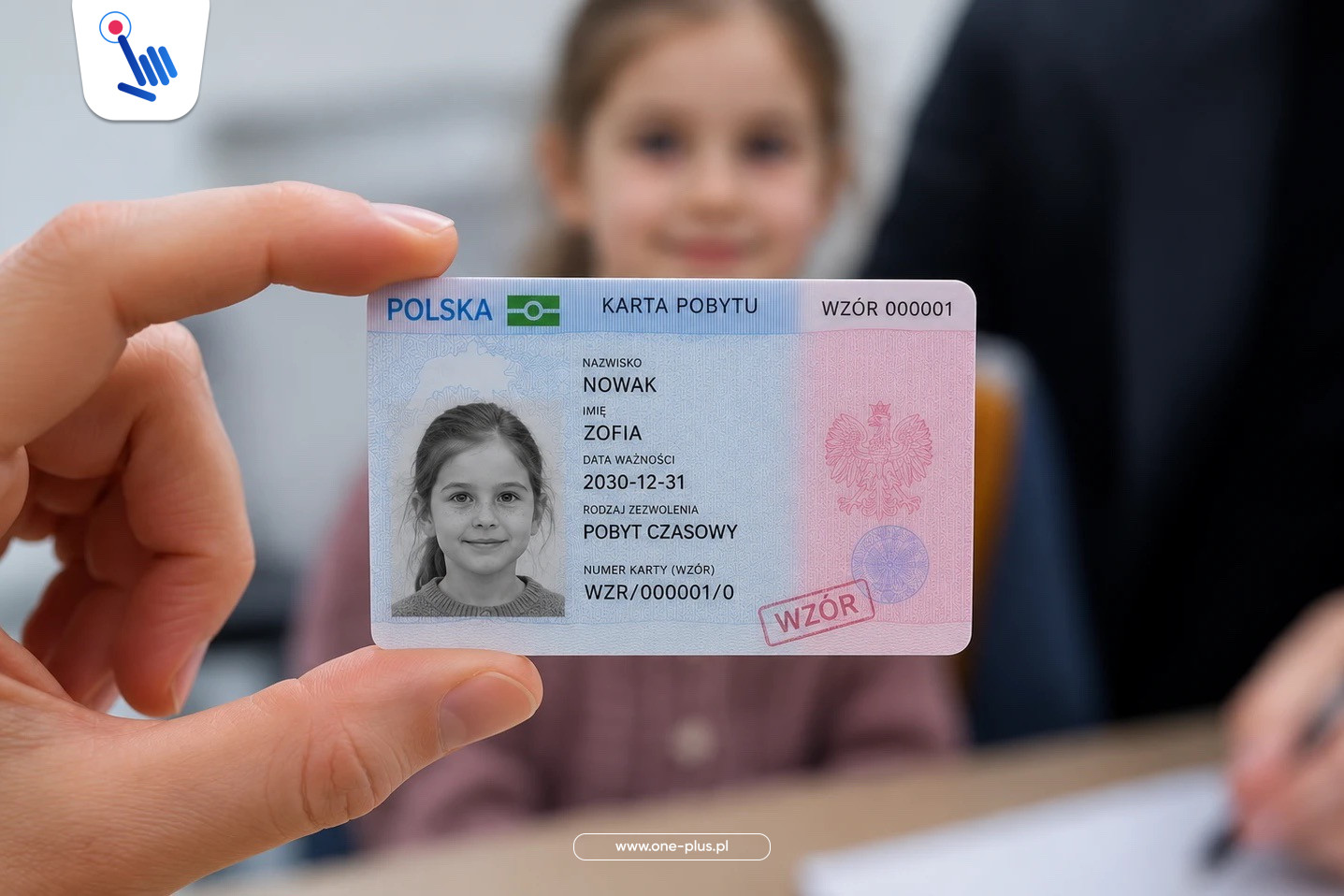
A residence card refusal usually arrives out of the blue: a registered letter from the voivodeship office (urząd wojewódzki), a few pages in Polish and the word “odmawia” near the top. Most people panic, check flights and wonder whether they will be thrown out of Poland tomorrow. You won’t. The voivode’s refusal is not final yet, you have time, and what you do in the first two weeks often decides how the case ends.
This article covers why permits are refused, how to read the decision, how to appeal, whether you can keep living and working in Poland in the meantime, and when it is better to apply straight away on a different basis. Each rule has a footnote to the law, and the sources are listed at the end.
In short
You have 14 days to appeal (odwołanie) from the day you received the decision.[1] You file it through the voivode who refused you, and the Office for Foreigners (UdSC) in Warsaw decides it. While the appeal is pending, your stay remains legal, provided your application was filed on time and without formal defects.[2] An appeal carries no stamp duty.
Once the refusal is final, you have 30 days to leave.[3] A complaint to the administrative court does not stop that clock. If you want to apply on a different basis, do it while the first case is still open: after a final refusal the voivode will refuse to even open the new case unless you have another basis for your stay, such as a visa.[4]
What to do in the first few days
If you already have the decision, go through these steps in order. They take a couple of evenings and can save you months.
- Find the delivery date: on the envelope, the post office receipt or the electronic confirmation. The 14 days run from that date. Put the last day in your calendar.
- Check what exactly you received: a refusal on the merits, a decision leaving the application unexamined, or a refusal to open proceedings. This determines the deadline and your next step.
- Read the reasoning (uzasadnienie) and list each reason for the refusal on a separate line. If your Polish isn’t good enough, get it translated or bring the decision to a consultation.
- Next to each reason, write the document that answers it. If you don’t have it, work out where to get it within a week.
- Choose your route: an appeal, a new application on a different basis, or both. Typical cases are covered below.
- Send the appeal by day 14 at the latest, by Poczta Polska registered post, or hand it in at the voivodeship office’s filing desk (kancelaria). Keep the receipt and a copy.
- Don’t leave Poland until you know which document will get you back in.
Which case is yours
Refusals look alike, but the way out differs. Find your situation below.
Refused over documents you do have
Say the office decided that bank statements, a contract or a certificate were missing, but you have them or can get them quickly. This is the best case for an appeal: you attach what was missing and show where the case officer went wrong. Sometimes the voivode cancels such a refusal within a few days.
The basis really is gone
You lost your job, dropped out or closed your company. Arguing with the refusal makes little sense. File a new application on a different basis while the appeal deadline is still running, because during that time your stay is legal. It often makes sense to appeal as well, so the first case doesn’t close too early.
UdSC has already decided
If UdSC upheld the refusal, you have 30 days to leave. You can still go to court, but that won’t let you stay. You can stay only on another basis: a visa, another residence card, UKR status, or a new application filed while the appeal was still pending.
You are Ukrainian with UKR status
A residence card refusal does not by itself end your temporary protection. Usually there is no need to panic, but check your status. More in the section for Ukrainian citizens below.
Application left unexamined or not opened
This is not an ordinary refusal: the deadline and the way to challenge it are different, and you need to act faster. Details further down.
Why permits are refused
The reason is in the reasoning part of the decision. Usually it is one of the situations below. Once you know yours, the next step is clear: prove your point, add documents or change the basis.
The purpose of stay was not proven
This is the most common reason. Stating your purpose (work, study, business, family) is not enough: the law requires you to prove it with documents valid on the date of the decision. Permits are refused when the employer did not confirm the job, the contract ended, the company has no real activity, the studies were interrupted or the case officer doubts the marriage. The decision usually says “the conditions for granting the permit have not been met”.[5]
Money, housing and insurance
Many permits require stable income, health insurance and somewhere to live. You can be refused if your income is below the required level, statements for the required period are missing, the insurance expired while the case was pending, or your address cannot be confirmed. Stability is what counts: one good salary last month won’t make up for six months without income. If the problem is the policy, you can buy one online in minutes, for example through ONE PLUS online insurance.
The employer and job conditions
For a work-based residence card, the case officer checks your employer as well as you. You can be refused if the company doesn’t pay its taxes and social security contributions, can’t afford salaries, your contract terms differ from those in the application, or your pay is below the minimum wage. The law lists separate grounds for refusal here.[6]
Registers, security and false data
Some reasons have nothing to do with your paperwork: an entry in the Polish register of foreigners whose stay is undesirable or in the Schengen Information System (SIS), a threat to security or public order, false information or forged documents. Tax debts and unpaid costs of an earlier removal belong here too, as does filing the application when your stay was already illegal.[5]
Your own mistakes
Some refusals come from the applicant’s own mistakes: ignoring a letter from the case officer (wezwanie), missing a deadline for documents or not turning up for fingerprints. Since 27 April 2026 applications go through MOS, and if you don’t come to give fingerprints or sign the application, the case is discontinued (umorzenie).[7] For the obligation to leave, that has the same effect as a final refusal.
What the decision says
A refusal decision (decyzja odmowna) has three parts. First the ruling (rozstrzygnięcie): who was refused what. Then the reasoning (uzasadnienie): the facts the case officer established, the documents assessed and the articles relied on. At the end comes information on where and by when you can appeal (pouczenie).
Read the reasoning first: it shows what, in the office’s view, was missing. Quite often a document was in the file but overlooked, or the case officer expected a paper nobody ever asked you for. Points like these become the core of your appeal.
Which decision you received
First check what exactly you were sent: the deadline and the way to challenge it depend on it.
A refusal on the merits (decyzja odmowna) means the case was examined and the permit was not granted. You can appeal within 14 days.
An application is left unexamined (pozostawienie bez rozpoznania) if you did not fix its defects after a letter from the case officer. The office sets that deadline itself, but it cannot be shorter than 7 days.[8] Your stay is legal during the case only if the application had no defects or you fixed them in time,[2] so if it was left unexamined, this protection does not cover you. The law provides no separate appeal here, so the usual way out is a new, complete application while your stay is still legal.
A refusal to open proceedings (postanowienie o odmowie wszczęcia postępowania) means the case never started, for example because the law does not allow this kind of application in your situation. You challenge it with a complaint (zażalenie), not an appeal, and the deadline is shorter: 7 days.[9]
When the deadline starts
All deadlines run from the day the decision was delivered, not from the date on the document. If you don’t collect a registered letter, the post office holds it for 14 days and leaves you two notices (awizo). After that it counts as delivered on the last day of that period, even if you never opened it.[10] So “I never got it” almost never helps: the clock is already running.
Keep the envelope, the electronic confirmation or the post office receipt with the date. If the last day falls on a Saturday or a public holiday, the deadline moves to the next working day.[11]
Appealing the refusal: 14 days
You file the appeal (odwołanie) within 14 days of delivery. It is addressed to the Head of the Office for Foreigners (Szef Urzędu do Spraw Cudzoziemców, Szef UdSC), often just called “Warsaw” or UdSC, but you file it through the voivode who refused you.[1][12]
How to file it
You cannot file an appeal through MOS; the MOS website says so itself.[13] Send it by registered post, take it to the voivodeship office’s filing desk, or file it electronically to the voivode’s e-Doręczenia address (the official e-delivery system). An ordinary e-mail to the office does not count.
By post, you are on time if you hand the letter in at a Poczta Polska branch before the end of day 14.[11] A courier doesn’t work that way: what counts is the day the letter reaches the office. Keep the postal receipt and a copy of the appeal.
What an appeal looks like
The formal requirements are minimal. By law an appeal needs no detailed reasoning: it is enough that it shows you disagree with the decision.[14] But such an appeal achieves almost nothing. A strong appeal usually contains:
- your details, postal address and the case number from the decision;
- addressee: Szef Urzędu do Spraw Cudzoziemców, through the voivode who issued the refusal;
- the decision you are appealing, with its number and date;
- your request: to cancel the refusal and grant the permit, or to send the case back for a fresh review;
- reasoning: an answer to each reason for the refusal, with references to documents;
- a list of attachments, the date and your signature.
The appeal is written in Polish. The more precisely it answers the points in the decision, the better your chances.
Which documents to attach
You can and should attach new documents. Which ones depends on the reason for the refusal.
Income: bank statements for the required period, your contract, salary certificates and, if you are employed, proof of ZUS contributions. Employer: the employer’s explanation, certificates of no tax or social security arrears and proof that the company actually operates. Insurance: a new policy covering the whole period. Housing: a rental agreement or the owner’s consent. Marriage or family: proof that you live together, such as a shared address, bills, photos and messages.
The office usually wants foreign-language documents with a sworn translation into Polish, which you can order from us: sworn translation of documents.
Do you need a lawyer
No, the law does not require a lawyer for an appeal. You can file it yourself or through a representative with a power of attorney (pełnomocnik), who can be any adult with full legal capacity.[15] An advocate or legal adviser is required only for a cassation appeal to the Supreme Administrative Court (see below).
How much it costs
An appeal carries no stamp duty (opłata skarbowa). If a representative files it, the power of attorney costs 17 zł, or nothing if it is given to your spouse, parents, children, brothers or sisters.[16]
Also, if your application was filed on or after 5 March 2026, the fee you paid is not refunded after a refusal or a discontinued case.[17] In that sense an appeal is cheaper than filing again.
If you missed the 14 days
A missed deadline can be restored, but only if it was not your fault, for example because you were in hospital. You ask for this within 7 days of the day the obstacle ended and attach the appeal itself.[18] You must prove the reason with documents. Forgetting, a holiday or “I didn’t realise it was a refusal” usually won’t do.
The voivode can change their mind
On receiving your appeal, the voivode first checks whether they made a mistake. If the appeal is fully justified, they can cancel the refusal and issue a new decision themselves, without sending the case to UdSC. They have 7 days for this; after that the case goes to Warsaw.[19]
In one client’s residence card refusal after a change of employer, the voivode cancelled the decision the day after the appeal. The same happened when a business-based residence card refusal was overturned in one day. This is most likely when the appeal points straight at the mistake and fixes it with documents.
How long you wait for a decision
By law UdSC has 90 days to decide an appeal.[20] In practice it often takes longer. In a case about an EU long-term resident card for a wife and child, the appeal was filed in February and the positive decision came in October 2026.
After 90 days you can file a ponaglenie (a complaint about the delay) through the Office for Foreigners, which is handling the appeal.[21] How this works in practice is explained on our page about speeding up a residence card case.
Don’t confuse this with the voivode’s deadlines. Until 4 March 2027 the deadline for voivodes to decide applications does not run, for all foreigners, not only Ukrainians.[22] This does not apply to appeals at UdSC.
What UdSC can decide
UdSC can uphold the refusal, cancel it and grant the permit itself, or cancel it and send the case back to the voivode for a fresh review.[23] If the case goes back, it continues and your stay remains legal.
Can you stay in Poland
Yes, if your application was filed on time: while your stay was legal, and either without defects or with the defects fixed in time. Then your stay is legal from the filing date until the decision becomes final.[2] The voivode’s decision is not final while the appeal deadline is running or while UdSC is reviewing the appeal.
The one exception is a case suspended at your own request. So don’t ask to “freeze” your case without a serious reason.
The stamp and the zaświadczenie
If you filed before 27 April 2026, the old rules apply and the stamp in your passport remains proof of legal stay. The voivode’s refusal does not “cancel” the stamp: it stays valid until the decision is final.
If you filed through MOS on or after 27 April 2026, no stamp goes in the passport. Instead the voivode issues a free zaświadczenie (certificate of filing; in full, zaświadczenie potwierdzające złożenie wniosku) with a QR code. It shows the filing date and restates the rule on legal stay.[24] During the appeal it works just like the stamp.
Work
Whether you can work during the appeal depends on your basis. If you applied for a residence and work permit to continue working under your current permit, you can keep working on the same terms until the decision is final, including while the appeal is pending.[25] That right ends once the refusal is final.
If you changed employer or job conditions, your right to work is checked separately: legal stay alone does not let you work for any employer. How to arrange this is explained on our page about the work permit in Poland.
Travel
Neither the stamp nor the zaświadczenie is a visa. They confirm that your stay is legal, but they don’t let you travel freely around Schengen or guarantee re-entry.[26] If you leave, you can only come back on a valid visa, visa-free or with another document. So while the appeal is pending, don’t travel without a separate consultation. Ukrainians with UKR status have different rules, but that status can also be lost after a long stay outside Poland.
Court: WSA and NSA
If UdSC upholds the refusal, you can challenge its decision at the Voivodeship Administrative Court in Warsaw (Wojewódzki Sąd Administracyjny, WSA). The complaint (skarga) is filed within 30 days of delivery, again through the Office for Foreigners, not directly with the court.[27] The court fee (wpis) in foreigners’ cases is 300 zł.[28] If you can’t afford it, you can ask the court for legal aid (prawo pomocy): an exemption from costs and a court-appointed lawyer.[29]
Your status during the court case
This is where people most often get it wrong. A complaint to the court does not stop the decision from being enforced.[30] The UdSC decision is already final, your legal stay based on the application ends, and the 30 days to leave run from the day that decision was delivered to you. A complaint to the WSA does not extend them.
The court can cancel an unlawful decision, but it does not let you stay in Poland while the case goes on. If you want to stay, secure another basis in advance.
Cassation appeal to the NSA
If the WSA dismisses your complaint, the next step is the Supreme Administrative Court (Naczelny Sąd Administracyjny, NSA). First you must ask the WSA for the written reasoning of its judgment within 7 days of its announcement or, if it was given in a closed session, of the delivery of its operative part. The cassation appeal (skarga kasacyjna) is filed through the WSA within 30 days of receiving the judgment with reasoning. Only an advocate or a legal adviser (radca prawny) can prepare it; you cannot file it yourself.[31] The court fee is half the first-instance fee, so 150 zł.[28] We also prepare court complaints: see our page on complaints to the court.
30 days to leave
After a final refusal you must leave Poland within 30 days. This applies to refusals of temporary residence, permanent residence (pobyt stały) and EU long-term resident status, and to discontinued cases.[3]
When the 30 days start
If you did not appeal, the voivode’s refusal becomes final when the 14-day appeal period ends, and the 30 days start then. If you appealed and UdSC upheld the refusal, they run from the day its decision was delivered. By law, those 30 days themselves count as legal stay.[3]
If you don’t leave
The voivodeship office notifies the Border Guard (Straż Graniczna) of the final refusal. If you stay beyond the 30 days without another basis, the Border Guard can issue a return decision (decyzja o zobowiązaniu cudzoziemca do powrotu), usually with a ban on entering Poland and the Schengen area, in this situation for 6 months to 3 years. You can appeal it within 7 days to the Commander-in-Chief of the Border Guard, not to the Office for Foreigners.[32]
An entry ban and an SIS entry cause trouble for a long time: refused visas and residence cards, and possibly being turned back at the border. Staying on and hoping for the best costs far more than leaving on time and applying for a visa later.
If you have another basis
The obligation to leave does not apply if your stay is legal on another basis,[3] for example a valid visa, another residence card, UKR temporary protection, or a new application filed while your appeal in the first case was pending. In that last case the protection lasts while the second case is open. If the second application is left unexamined or the office refuses to open proceedings, the 30 days are again counted from the UdSC decision.
Applying on a different basis
Sometimes an appeal is not the best route. If the basis really is gone (you lost the job, dropped out, the marriage broke down), there is no point arguing with the refusal. You need a new basis: work instead of study, business instead of work, family reunification instead of work. Timing is everything here.
While the case is still open
While the appeal deadline is running or the appeal is pending, your stay is legal.[2] So a new application filed then meets the legal requirement of being in Poland legally, and nothing in the law forbids a second application while the first case is open. Filed on time and without defects, it gives its own protection of legal stay, and after a final refusal in the first case the 30-day obligation to leave does not apply until the second case ends.[3] This follows from the wording of the law; there is no official guidance on this situation.
Often the wise move is both: appeal the refusal and file a new application in parallel.
After a final refusal
Here the law is strict. If, on the day you file, you are already obliged to leave within 30 days of a final refusal, the voivode will refuse to open proceedings on your new application,[4] unless you have another valid basis for your stay, such as a visa. An application filed after a final refusal does not make your stay legal while it is processed.
Hence the classic mistake: “I’ll wait for Warsaw, and if they say no, I’ll apply on the basis of work.” Once UdSC has decided, it is too late to apply.
Which basis to choose
It depends on what you have right now. Most often it is a residence card based on work, a residence card based on business, a residence card based on studies or family reunification. Specialists with a degree and a high salary can get the Blue Card. If you have lived in Poland for a long time, check whether you qualify for a permanent residence card or an EU long-term resident card. All temporary residence applications now go through MOS; see our page on the residence card through MOS.
The new basis must be real and backed by documents. Applying “for anything” just to get proof of filing is risky: such an application will almost certainly be refused too, and that second refusal will get in the way of future cases.
Fees for a new application
Stamp duty is 340 zł for temporary residence, 440 zł for temporary residence and work, and 640 zł each for permanent residence and EU long-term resident status, plus 100 zł for issuing the card.[33] Remember: for applications filed from 5 March 2026, the fee is not refunded after a refusal.
If you are from Ukraine
For Ukrainian citizens with UKR status a refusal is usually less dangerous. A residence card refusal does not by itself end temporary protection (UKR, ochrona czasowa). EU temporary protection has been extended until 4 March 2028, and while it lasts, your stay is legal on that basis.[34] This follows from several articles of the law; there is no official guidance on it. So check your status before deciding whether to leave. Protection can also end for other reasons, for example after a long absence from Poland.
If you applied for a CUKR residence card and were refused, your stay counts as legal until the refusal is final.[35] Other special extensions of legal stay for Ukrainians run until 4 March 2027. The dates are easy to mix up, so we always check the actual document, not general news.
All deadlines in one table
| Situation | Deadline | Counted from |
|---|---|---|
| Appeal against the voivode’s refusal | 14 days | delivery of the decision |
| Complaint against a refusal to open proceedings (zażalenie) | 7 days | delivery |
| Fixing defects after a letter from the case officer | at least 7 days | as stated in the letter |
| Restoring a missed deadline | 7 days | the end of the obstacle |
| The voivode cancels the refusal themselves | 7 days | receipt of the appeal |
| UdSC review of the appeal | 90 days by law | often longer in practice |
| Complaint to the WSA | 30 days | delivery of the UdSC decision |
| Request for the WSA’s written reasoning | 7 days | announcement of the judgment or delivery of its operative part |
| Cassation appeal to the NSA | 30 days | delivery of the WSA judgment with reasoning |
| Leaving after a final refusal | 30 days | the refusal becoming final, or delivery of the UdSC decision |
| Appeal against a return decision | 7 days | delivery |
Common mistakes
Waiting until the last day
Fourteen days fly by, especially if you need a translation, missing documents and papers from your employer. An appeal put together on the evening of day 13 usually shows it. Start in the first few days after you receive the decision.
Emotions instead of arguments
“I work honestly and pay my taxes” does not answer the case officer’s point that the file has no certificate of no arrears. Your appeal must answer every objection in the decision and back each answer with a document.
Mixing up the appeal and the court
Many people think a court complaint extends legal stay the way an appeal does. It doesn’t. After the UdSC decision the 30 days to leave are running, court or no court.
Putting off a new basis
If there is any chance the refusal will be upheld and you now have a job, a business or family here, file the new application while the first case is still open. After a final refusal this no longer works.
Leaving without a plan
A trip home during the appeal seems harmless until you find you can’t come back without a visa. Check first what you will re-enter on.
Ignoring your post and MOS
Letters from the voivodeship office, UdSC and the Border Guard count as delivered even if you don’t collect them. Check your letterbox, collection notices and MOS account, especially while the case is open. If your card has already expired, see also what to do with an expired residence card.
Costs and waiting times
Official appeal costs are minimal: no fee, and 17 zł for a power of attorney. Court costs more: 300 zł for a WSA complaint and 150 zł for a cassation appeal to the NSA, plus 17 zł for a power of attorney in court. A new application costs 340, 440 or 640 zł in fees plus 100 zł for the card.
As for time, an appeal can end within days at the voivode’s level if the voivode admits the mistake. At UdSC the law allows 90 days, and in practice it can take several months. Court usually takes even longer. A new application on a different basis starts from scratch, and until 4 March 2027 voivodes have no binding deadline to decide it.
Our fee for handling an appeal is in our price list: from 1200 PLN. We give you the exact amount once we have seen the decision and your documents.
How ONE PLUS can help
ONE PLUS has more than 12 years of legal practice in legalising foreigners’ stay. Our office is in Wrocław, but we handle cases across Poland: with voivodeship offices in different regions, the Office for Foreigners in Warsaw and the administrative courts. Our expert Tatiana Vyborna has worked in foreigners’ legalisation for more than 12 years.
When a client brings us a refusal, we first read the decision and the case file ourselves, not someone’s summary. We check the delivery date and work out the deadlines. Then we tell you honestly what is best for you: an appeal, a new application on a different basis, or both. If the refusal can be challenged, we write the appeal in Polish, gather the missing documents, deal with your employer and handle the case under a power of attorney until UdSC decides. If the basis needs to change, we prepare a new application in MOS while your stay is still legal.
Clients follow their case in their ONE PLUS online account and get a text message at every new step. You can see how this works in our case studies, for example a permanent residence refusal for “illegal stay” overturned.
More about the service is on our page about appealing a residence card refusal, and about all grounds for legalising your stay on our residence card in Poland page. The first consultation is free. If your situation is complicated and needs a detailed legal analysis, you can book an individual consultation; if you then order a service from us, its fee is credited towards the price. You can reach us through our contact page.
The outcome depends on the voivode, UdSC and the court, so we do not promise a positive decision. What we are responsible for is that no deadline is missed and every argument in your favour gets into the file.
Laws and sources
The deadlines and rules in this article were checked against the law in force in November 2026. This is general information and does not replace a review of your own case.
- Art. 129 § 1 and § 2 Kodeks postępowania administracyjnego (KPA), Dz.U. 2025 poz. 1691: an appeal is filed through the authority that issued the decision, within 14 days of delivery.
- Art. 108 ust. 1 pkt 2 and ust. 2 ustawy o cudzoziemcach, Dz.U. 2025 poz. 1079 z późn. zm.: stay is legal from the day of filing until the decision is final, unless the case is suspended at the foreigner’s request.
- Art. 299 ust. 6, 7 and 8 ustawy o cudzoziemcach: 30 days to leave after a final refusal or a discontinued case; these 30 days count as legal stay; the obligation does not apply if the stay is legal on another basis.
- Art. 99 ust. 1 pkt 9 ustawy o cudzoziemcach: the voivode refuses to open proceedings if, on the day of filing, the foreigner is obliged to leave under art. 299 ust. 6.
- Art. 100 ust. 1 ustawy o cudzoziemcach: grounds for refusing a temporary residence permit.
- Art. 117a ustawy o cudzoziemcach: separate grounds for refusing a residence and work permit.
- Art. 106i ustawy o cudzoziemcach as amended by the MOS act, Dz.U. 2025 poz. 1794: the case is discontinued if the foreigner does not appear in person, give fingerprints or sign the application.
- Art. 64 § 2 KPA: a letter asking to fix defects, with a deadline of at least 7 days, otherwise the application is left unexamined.
- Art. 61a and art. 141 § 2 KPA: refusal to open proceedings and a complaint (zażalenie) against it within 7 days.
- Art. 44 KPA: a letter not collected from the post office counts as delivered on the last day of the 14-day holding period.
- Art. 57 § 4 and § 5 KPA: a deadline ending on a Saturday or public holiday moves to the next working day; the deadline is met if the letter is handed in at Poczta Polska before it ends.
- Art. 22 ust. 2 ustawy o cudzoziemcach: the Head of the Office for Foreigners (Szef Urzędu do Spraw Cudzoziemców) is the second-instance authority for the voivode.
- MOS, residence and work permit, section on appeals: appeals are not filed through the MOS portal; Warsaw has 90 days to decide.
- Art. 128 KPA: an appeal needs no detailed reasoning; it is enough to show disagreement with the decision.
- Art. 33 § 1 KPA: a party’s representative can be any natural person with full legal capacity.
- Ustawa o opłacie skarbowej, Dz.U. 2026 poz. 1395, annex, part IV: 17 zł for a power of attorney; exemption for a spouse, parents, children, brothers and sisters.
- Art. 113c ustawy o cudzoziemcach, added by act Dz.U. 2026 poz. 203: the fee is not refunded after a refusal or a discontinued case, for applications filed from 5 March 2026.
- Art. 58 KPA: restoring a deadline; the request is filed within 7 days of the day the reason for missing it ended, together with the appeal itself.
- Art. 132 § 1 and art. 133 KPA: the authority may change its own decision if the appeal is fully justified; the case is passed to the second instance within 7 days.
- Art. 112a ust. 4 ustawy o cudzoziemcach: an appeal is decided within 90 days.
- Art. 37 § 3 KPA: a ponaglenie is filed with the higher authority through the authority handling the case.
- Art. 100d act on assistance to citizens of Ukraine, Dz.U. 2026 poz. 1293: until 4 March 2027 the voivode’s deadline to decide does not start, and a deadline already running is suspended.
- Art. 138 § 1 and § 2 KPA: the second instance upholds the decision, cancels it and decides the case itself, or sends the case back for a fresh review.
- Art. 108 ust. 1 pkt 1 and ust. 3-7 ustawy o cudzoziemcach as amended by the MOS act: a zaświadczenie (certificate of filing) instead of a stamp; for cases started before 27 April 2026 the previous rules apply.
- Art. 21 ust. 1 and 3 ustawy o warunkach dopuszczalności powierzania pracy cudzoziemcom, Dz.U. 2025 poz. 621: work on the same terms until the final decision on an application to continue working.
- MOS, questions about procedures: no stamp is put in the passport when filing through MOS, and filing does not give the right to travel freely around Schengen.
- Art. 13 § 2, art. 53 § 1 and art. 54 § 1 Prawo o postępowaniu przed sądami administracyjnymi (PPSA), Dz.U. 2026 poz. 143: complaint to the WSA within 30 days, filed through the authority; the competent court is the one where the authority is based.
- § 2 ust. 3 pkt 8 and § 3 regulation on court fees (wpis), Dz.U. 2021 poz. 535: 300 zł in foreigners’ cases, half of that for a cassation appeal.
- Art. 243 PPSA: the right to legal aid (prawo pomocy).
- Art. 61 § 1 PPSA: a complaint to the court does not stop the decision from being enforced.
- Art. 141 § 2, art. 175 § 1 and art. 177 § 1 PPSA: request for reasoning within 7 days; cassation appeal within 30 days, only through an advocate or legal adviser.
- Art. 302 ust. 1 pkt 1, art. 318, 319 and 321 ustawy o cudzoziemcach: return decision, entry ban from 6 months to 3 years, appeal within 7 days to the Commander-in-Chief of the Border Guard.
- Ustawa o opłacie skarbowej, annex, part III; MSWiA regulation on fees for documents, Dz.U. 2022 poz. 1583: 340, 440, 640 zł and 100 zł for the card.
- Art. 106 ust. 1 ustawy o udzielaniu cudzoziemcom ochrony, Dz.U. 2026 poz. 862; gov.pl: temporary protection extended until 4 March 2028.
- Art. 42x act on assistance to citizens of Ukraine: stay is legal until the final decision on a CUKR application.

Frequently asked questions
14 days from the day the decision was delivered to you. If you didn’t collect the letter, it counts as delivered on the 14th day the post office held it. A refusal to open proceedings has a shorter deadline: 7 days.
It is the voivode’s decision, written in Polish. At the top it says what was refused (usually with the word “odmawia”), then comes the reasoning with the grounds and articles of the law, and at the end it says where and by when you can appeal.
Yes, if you filed your application while your stay was legal and it had no defects. Your stay is then legal until the decision is final, including during the appeal. Your proof is the stamp in your passport or, for MOS applications filed from 27 April 2026, the zaświadczenie (certificate of filing).
If you applied for a residence and work permit to continue your current job, you can keep working on the same terms until the decision is final, including during the appeal. That right ends once the refusal is final. In other situations your right to work has to be checked separately.
It is addressed to the Head of the Office for Foreigners, but you file it through the voivode who refused you: by post, at the voivodeship office’s filing desk or to its e-Doręczenia address. You cannot file it through MOS or by ordinary e-mail.
No. You can file it yourself or through a representative with a power of attorney, who can be any adult with full legal capacity. An advocate or legal adviser is required only for a cassation appeal to the NSA.
There is no official fee. If a representative files it, the power of attorney costs 17 zł. Our fee for preparing an appeal is in the ONE PLUS price list and depends on how complex the case is.
30 days from the day the refusal becomes final. If UdSC upheld the refusal, the 30 days run from the day its decision was delivered. This does not apply if you have another legal basis for your stay.
No. A complaint to the WSA does not stop the decision from being enforced, and the 30 days to leave keep running. To stay in Poland, you need another basis for your stay.
Yes, but ideally while the first case is still open: during the appeal deadline or while the appeal is pending. If you file after a final refusal, within the 30 days to leave, the voivode will refuse to open proceedings, unless you have another valid basis for your stay, such as a visa.
If it was not your fault, you can ask for the deadline to be restored within 7 days of the day the obstacle ended, attaching the appeal. You must prove the reason with documents.
For applications filed from 5 March 2026, the stamp duty you paid is not refunded after a refusal or a discontinued case. That is why an appeal is often better value than filing again on the same basis.


